


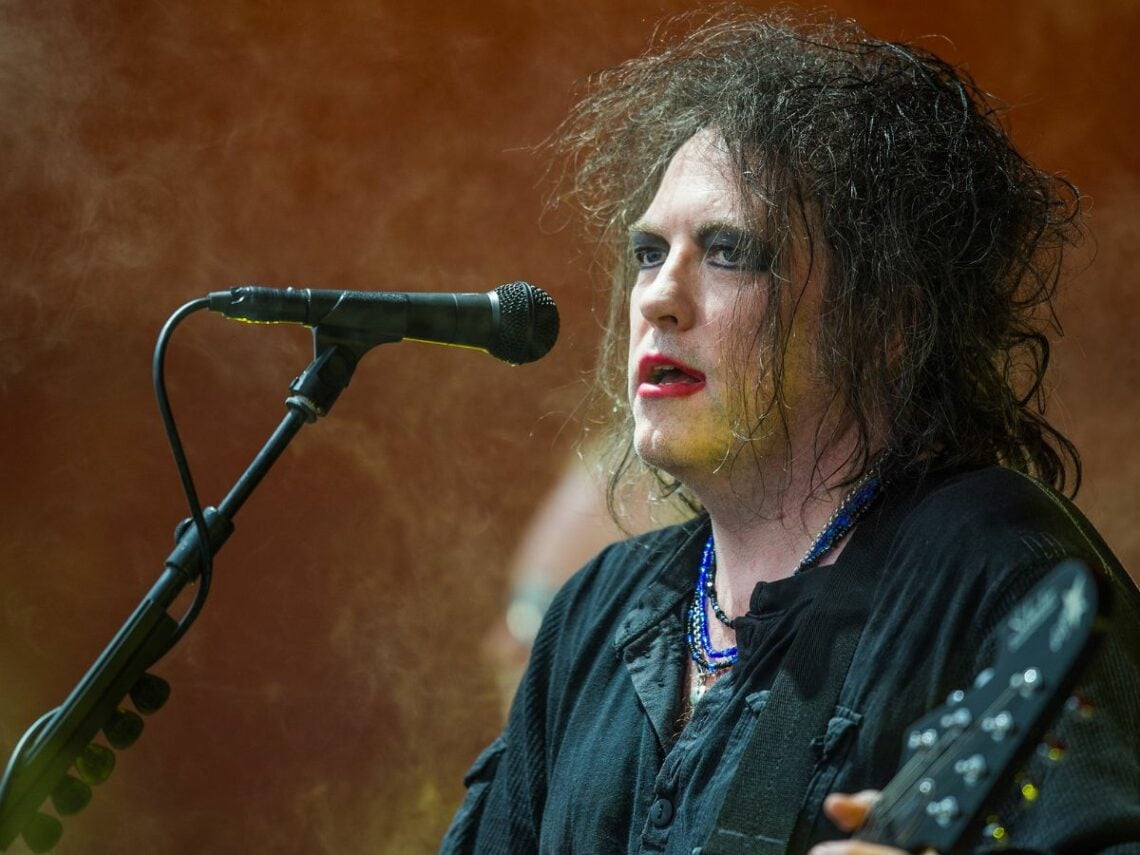
The Cure’s Robert Smith explains why Joy Division were “the best thing I’d seen”

The latter half of the 1970s gave birth to some of the greatest alternative rock bands of all time. Many groups rose from the ashes of punk, maintaining the genre’s sensibilities while incorporating a greater breadth of influences, from electronica to funk. One of the most impactful post-punk bands from the era was inarguably Joy Division.
The band was formed by Bernard Sumner and Peter Hook after witnessing the seminal 1976 Sex Pistols gig at Manchester’s Free Trade Hall, also attended by the likes of Mark E. Smith and Morrissey. This group of musicians, all tied together in a historic moment, were inspired by the raw energy of the Pistols, subsequently forming their own bands as a result.
At the time, Sumner and Hook needed a frontman, so they hired Ian Curtis on the basis that they got on well as friends. It turned out Curtis possessed the ability to become one of the greatest frontmen of the decade, harnessing a mysterious air that made live performances enthralling to witness. Moreover, his deep voice was perfect for the moody tones of the band’s instrumentals.
Although the band, originally known as Warsaw, began making songs with a classic punk feel, they soon streamlined their sound, releasing their debut album, Unknown Pleasures, to much critical success. The album failed to chart, but that didn’t stop Joy Division from being appreciated by their contemporaries. The Cure, who emerged in 1978, two years after Joy Division formed, became another significant post-punk act. Lead singer Robert Smith was a massive fan of Joy Division, describing them as “just fantastic”.
During an interview with Radio Urbana in 2013, Smith detailed his love for Joy Division, recalling a time when they opened for The Cure. He said: “In 1980 we did a thing in London at the Marquee Club…we picked the four bands we wanted to play with us, and Joy Division were one of those bands…I heard Unknown Pleasures on the radio on John Peel, and they were just fantastic.” Smith also described them as “the best thing I’d seen,” although “not eve”, because – after all – he had seen “Bowie and the Stones”.
He explained: “They were of that generation of bands which is my generation of bands they were so powerful…that was our best show that year, I think, we went on after them and we had to really we had to try hard to match what they did… it’s a shame about Ian Curtis… it’s like Jimi Hendrix or Kurt Cobain…people that good come around far too infrequently.”
Curtis died shortly after playing with The Cure, committing suicide in May 1980. Joy Division turned into New Order, although bassist Peter Hook sparked a petty feud between his band and The Cure after suggesting they were sellouts in his 2012 memoir, Unknown Pleasures: Inside Joy Division. However, Smith hasn’t let this get to him, continuing to chat with the other members when he sees them at festivals. He told Radio Urbana: “I’ve always loved New Order I think they’re one of the best bands. […] They’re a good example of a band that gets better as they get older.”
