


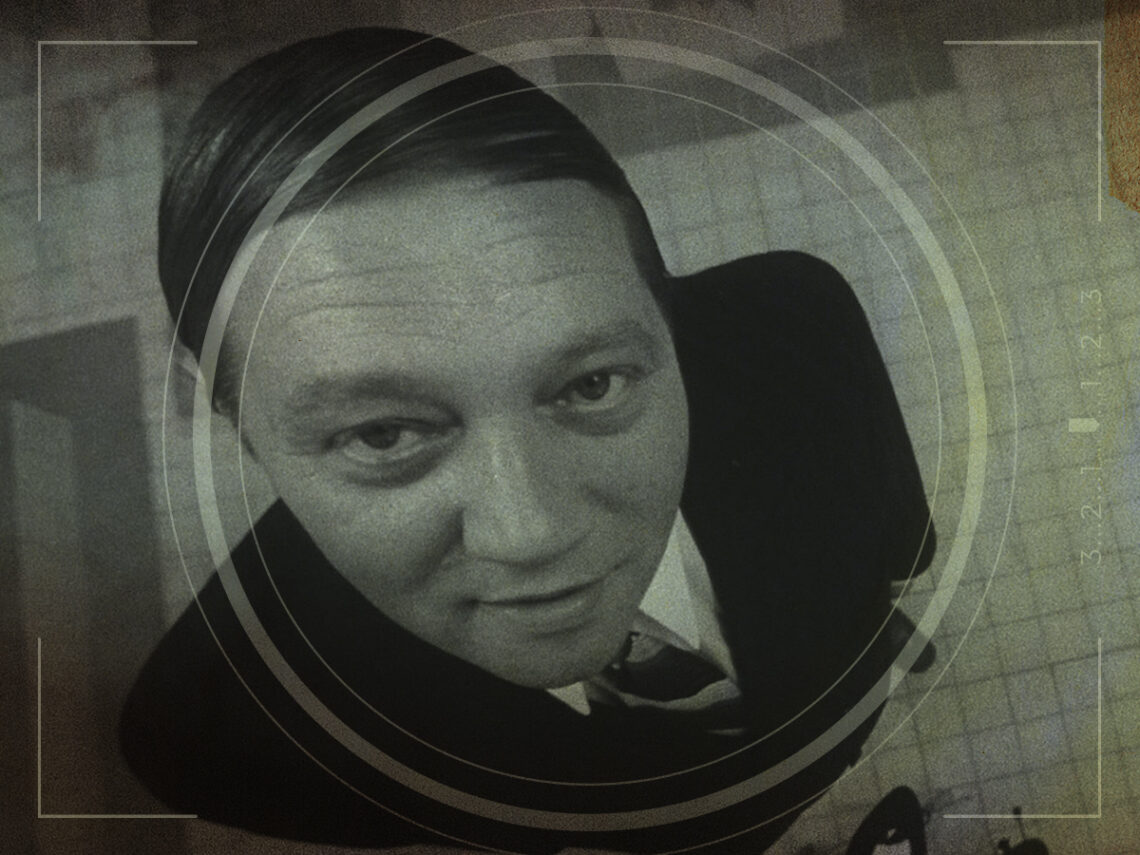
‘The Cremator’: a terrifying descent into fascism

We’re currently living in terrifying times. If the re-election of Donald Trump has shown us anything, it’s how easily people can be won over by fascism. With large proportions of US citizens fully getting on board with the President’s authoritative rule and praising his horrifying ideas to ‘Make America Great Again’, you have to wonder what Trump could possibly do to turn a Red voter against him.
In 1969, Juraj Herz made the black comedy horror movie The Cremator, which follows a middle-class man’s descent into fascism in 1930s Prague. What’s most striking about watching the film in 2025 is how the themes Herz explored—about a time almost 100 years ago—are still so scarily relevant today.
Karel Kopfrkingl, the film’s protagonist, works as a cremator and finds immense pleasure in ‘liberating’ people from life and suffering. However, his preoccupation with purity, control, and death quickly leads him down a pipeline towards Nazism, with Herz using dark humour and unconventional filming techniques – like usual camera angles – to show the absurd nature of this period in history when normal people turned on those who weren’t deemed ‘pure’ and fell under the spell of Adolf Hitler’s fascist ideology.
In recent years, there has been a notable shift in online spaces towards conservatism, from an increase in incel culture to trad-wife content and conspiracy theorists. It doesn’t take long for personal insecurities, a longing for tradition and the installation of the ‘correct’ gender roles, and fear and suspicion of people who are ‘different’ to seep into many people’s attitudes, it seems. This is both horrifying and sadly unsurprising, and it’s the kind of thing that The Cremator attempted to communicate many decades ago.
The Cremator shows us how easy it is for someone to slip into delusional modes of thinking, where reality becomes warped, and individuals become manipulated by ideology and false promises. Karel’s preoccupation with death makes him an easy target, with his descent into Nazism requiring very little from him in terms of empathy. While he initially seems to believe that Nazism could solve many issues facing Europe, he soon grows colder and more distant from his humanity, and it becomes clear that he is drawn to the Party’s ruthlessness and championing of purity and supremacy.
As a man who feels a sense of superiority in his role as a cremator, it doesn’t take him long to find some twisted allure in the Nazi view of ethnic cleansing and playing God. Soon, Karel becomes murderous, even going as far as to kill his own family, losing himself in a sense of crazed madness. He kills his wife when he suspects she is Jewish, which leads him to target his children, too, successfully killing his son, whom he hates for being effeminate and thus ‘weak’.
Herz’s film uses dark comedy, absurdity, and uncanniness, both thematically and stylistically, to convey the true horrors of fascism. Karel is taken under the Party’s spell, with his friend, Walter Reinke, targeting Karel’s weakest spots to persuade him of the Nazi Party’s supposed brilliance.
This is a tale of madness and brutality and one that shows how easy it can be for people to find hope and a sense of salvation in terrifying modes of thought. Karel turns into a monster over the course of the film, quickly becoming more and more detached from his surroundings. It is often hard to imagine how people turn to right-wing ideology, but The Cremator highlights how totalitarian governments allow citizens to give in to their darkest impulses and actually find the space to exercise their deepest desires without punishment. It’s scary, but sadly, the movie harnesses a message that still feels incredibly poignant.
