


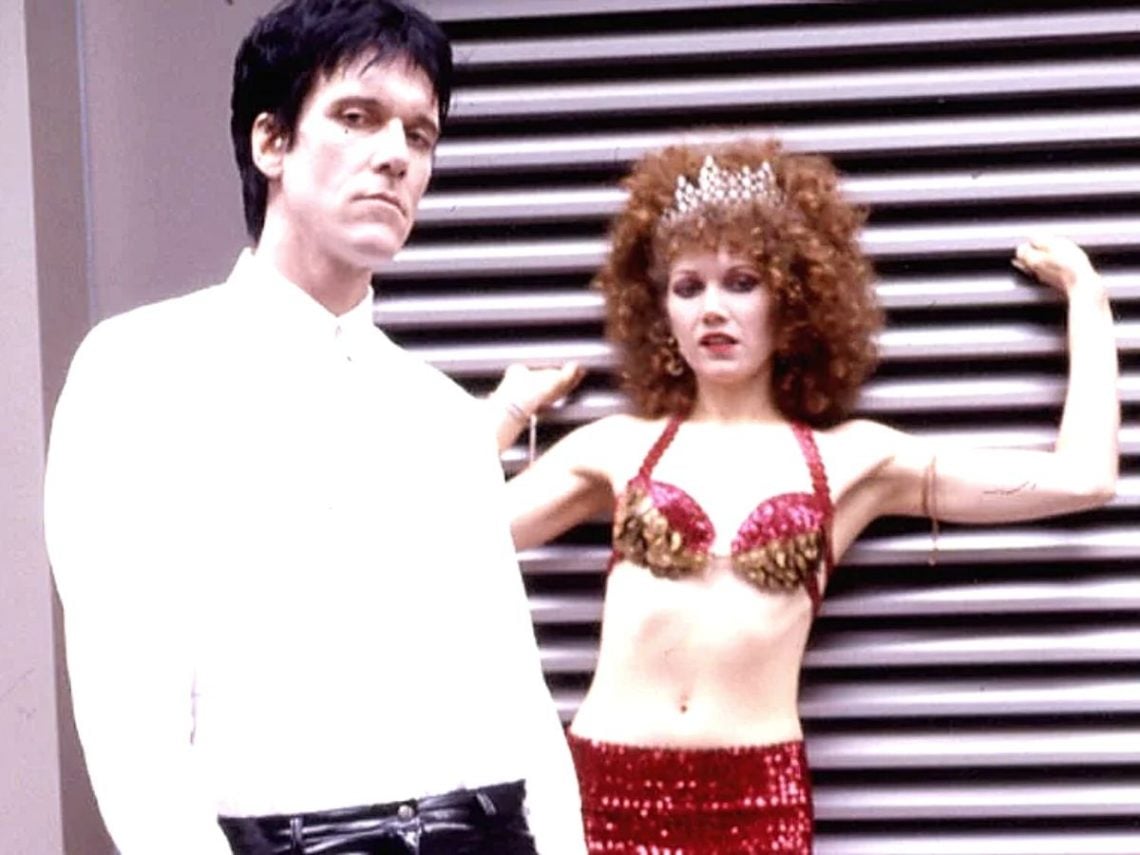
The Cramps: the life and times of America’s scariest band

When Erick Lee Purkhiser and Kristy Marlana Wallace first met in 1972, there was nothing punk about either of them. The two dressed and acted like traditional hippies that populated the Sacramento, California, area at the time, including freely partaking in LSD and studying otherworldly phenomena. When the pair discovered a shared love of rock music, along with similar interests in horror films, fashion, and the occult, the pair began to take in old-school novelty records, glam rock, and the hardened edge of bands like The Stooges to begin the first steps of becoming The Cramps.
After a brief detour to Ohio, Purkhiser and Wallace eventually found themselves in New York City in 1975, just as the punk revolution was beginning to come into its own. Taking on new stage names for themselves, Purkhiser became Lux Interior, while Wallace became Poison Ivy Rorschach. To differentiate their shows from the hordes of other bands at the time, the duo decided to market The Cramps as “psychobilly”, the first use of the term.
“The Cramps weren’t thinking of this weird subgenre when we coined the term ‘psychobilly’ in 1976 to describe what we were doing,” Poison Ivy told Marc Spitz in the book We Got the Neutron Bomb: The Untold Story of L.A. Punk. “To us all the ’50s rockabillies were psycho to begin with; it just came with the turf as a given, like a crazed, sped-up hillbilly boogie version of country. We hadn’t meant playing everything superloud at superheavy hardcore punk tempos with a whole style and look, which is what ‘psychobilly’ came to mean later in the ’80s. We also used the term ‘rockabilly voodoo’ on our early flyers.”
Permanently rotating around Interior and Ivy, The Cramps solidified their first classic lineup with guitarist Bryan Gregory and drummer Nick Knox. For the first decade of the band’s existence, they played without a bass player, with Ivy providing twangy lead guitar lines on her Gretsch 6120. Favouring the reverb-heavy sounds of classic rockabilly and pairing it with the frenetic energy of punk and the ghoulish imagery of classic B-movie horror films, The Cramps became leaders in the horror punk movement, although their early term “psychobilly” soon became their best-known genre tag.
By the time the band’s debut, Songs the Lord Taught Us, became available in 1980, Gregory had left the band as the remaining members relocated to Los Angeles. Former The Gun Club member Kid Congo Powers was hired as Gregory’s replacement. A second album, Psychedelic Jungle, was released in 1981, but a contract dispute with their record company, IRS Records, stalled their recording career until 1983. By that point, Powers had left, and the merry-go-round of different musicians had begun.
Around 1985, Ivy decided to add bass to 1986’s A Date With Elvis. Across their first decade, The Cramps became notorious for their wild live shows featuring Interior’s sexually charged demeanour and wild stage antics. Usually scantily clad and prone to ending up bloodied by the end of a show, Interior became one of the most formidable frontmen in punk. All the while, Ivy stood by the side, playing her guitar with an icy detachment from her husband’s wild and perverse actions.
As A Date With Elvis became an international hit in 1986, The Cramps found themselves increasingly in demand as a touring act throughout Europe. However, their American concerts were still restricted to small clubs. In 1991, drummer Nick Knox left the group. Harry Drumdini would become the band’s longtime drummer from that point forward, with a rotating cast of bass players eventually falling by the wayside. In their final incarnation, the group consisted of only Interior, Ivy, and Drumdini.
The final Cramps album, Fiends of Dope Island, was released in 2003. The band continued to perform live for a number of years, with venues including stadiums, festivals, dingy clubs, and most notoriously, a mental hospital. All the while, the band was credited for reviving drag culture, camp, and 1950s sounds in their music. Although they were pioneers, the band ultimately came to an end when Interior died of an aortic dissection in 2009, bringing one of music’s most unique bands to a sudden and tragic end.
