


The Cover Uncovered: The meaning behind the Dead Kennedys debut ‘Fresh Fruit for Rotting Vegetables’

The genre of punk is a kaleidoscopic one. Through its many years of existence and numerous different spin-offs, punk has delivered various notable figures and moments. Beginning with the outrageous proto-punk of Iggy and the Stooges, the genre was consolidated by the “first wave”, which featured the likes of Sex Pistols and The Clash before it metamorphosed into the broad landscape we know today.
One of the best bands that emerged off the back of the first wave was the San Francisco outfit Dead Kennedys, a group who brought political passion to the fore as well as genuine creativity. Some fans even claim that Dead Kennedys might have been the most dynamic outfit to break ever through. Although the band is still going strong today, with only two original members, it’s almost universally accepted that their most important era came during their first period from 1978 to 1986, when frontman Jello Biafra led them.
Although the rebellious Biafra has now almost left music entirely to seek new creative pastures, his work with the band is regarded as some of the most important in the punk canon. Cuts such as ‘Holiday in Cambodia’ and ‘California Über Alles’ remain the most famous signifiers of this. They are anthems that appeal to every generation of punks. Augmenting their influence is that the band’s political message is as prescient as it’s ever been.
For many fans, the band’s 1980 debut, Fresh Fruit for Rotting Vegetables, is their masterpiece. The record boasts the aforementioned tracks as well as ‘Kill the Poor’, ‘I Kill Children’, and the uber-surreal cover of Elvis Presley’s ‘Viva Las Vegas’. A brilliant way to announce the band’s arrival and re-energise the genre for the new decade, it is the only record to feature drummer Bruce Slesinger and guitarist Carlos Cadona.
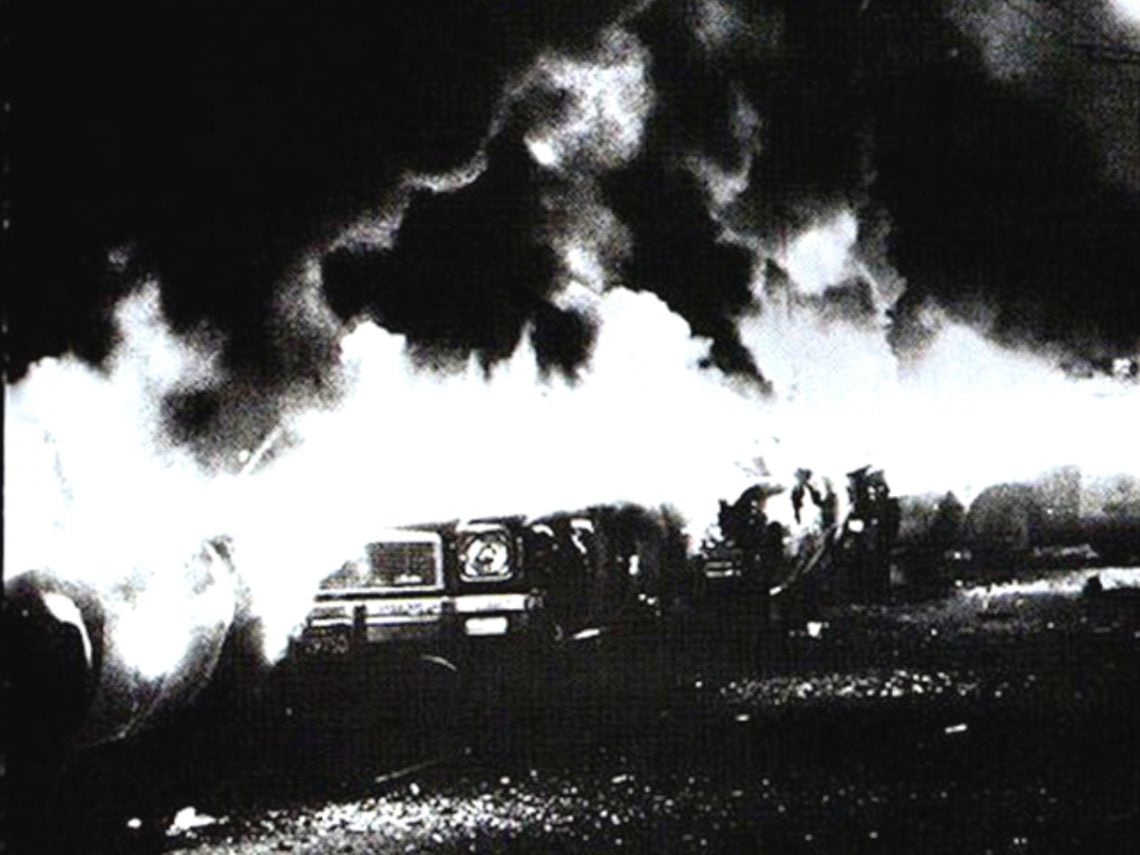
Aside from the music across its 33-minute duration, arguably the most notable feature of the album is the cover art, which features a row of burning cars, with the story behind it an important one.
On May 21st, 1979, the band’s native San Francisco experienced one of its darkest nights when former Board of Supervisors member Dan White climbed through a window of City Hall and shot LGBT politician Harvey Milk and then-Mayor, George Moscone. Although he later declared his intention to kill the pair, as well as two other board members, one of the most controversial trials in America’s history ensued. White was eventually convicted of manslaughter and sentenced to only seven years in prison, but he would only serve five.
As Milk was among the most prominent living LGBT heroes, San Francisco’s gay community and its allies were outraged by the assassinations. A riot unfolded outside of City Hall, and the evening became known as the ‘White Night Riots’, leaving 140 people injured. The most profound symbol of the reaction to the murders was that a row of police cars was set on fire. The SFPD had long been an antagonist of the city’s gay community, a position exacerbated by White being a former policeman.
It is the row of burning police cars that we see on the front of Fresh Fruit for Rotting Vegetables. Later, Biafra reaffirmed his stance on the matter. When he was running for Mayor, one of his policies called for the erection of a statue of Dan White, with eggs, tomatoes and stones available nearby for throwing at it.
