


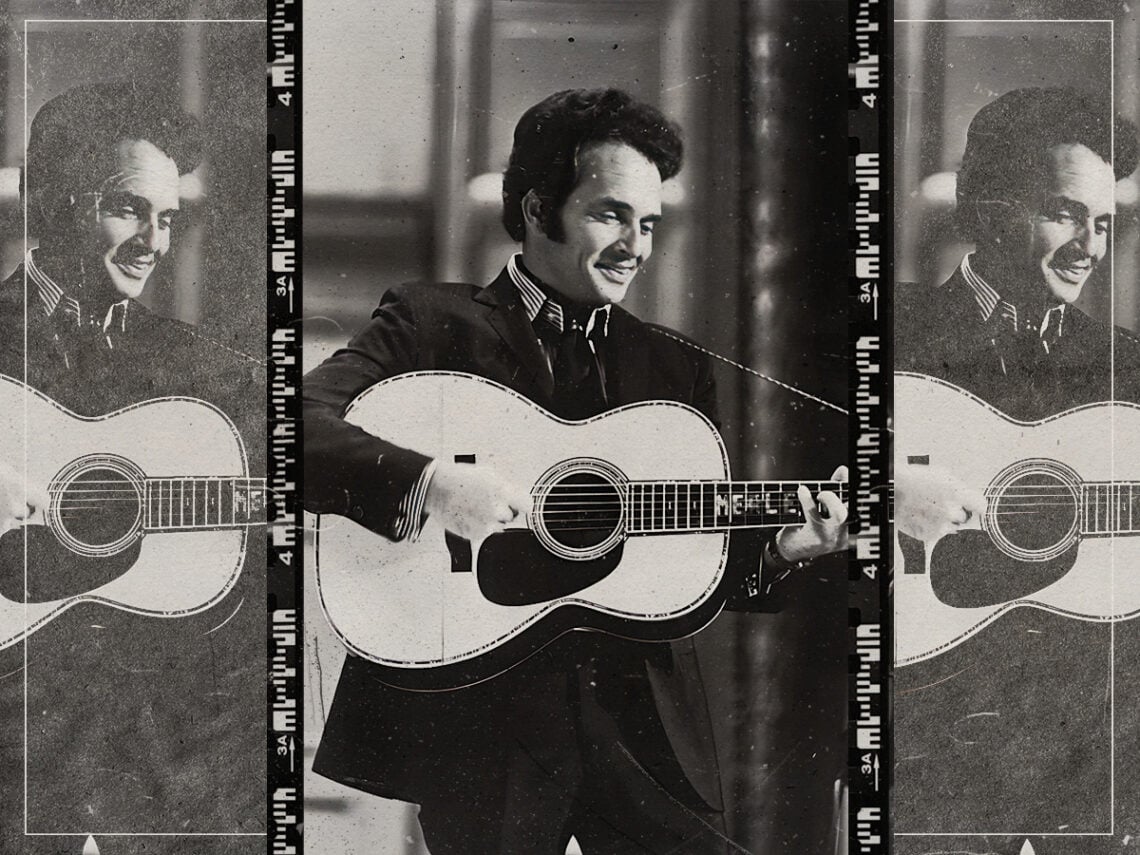
The modern country song that turned Merle Haggard mad: “I fucking hate that song”

The over-polished whims of the Nashville sound were no match for outlaw country legends like Merle Haggard.
Haggard, along with several other rebellious shadows – Waylon Jennings, Willie Nelson, and Johnny Cash – took the earlier, traditional sounds of genres like rockabilly and fused them with a folk-rock edge, rivalling the over-produced sounds emerging from Nashville with a statement about rawness, authenticity, and open and honest storytelling.
Most of what they set out to do was to give voices to those who hadn’t had it before, or at least hadn’t had it on the same level as some of Nashville’s biggest icons. Over in that arena, the sounds gave the false impression that those in country music came from privileged or better-off backgrounds, without much thought given to the original premise itself – that of those from working-class backgrounds had to work doubly hard to make ends meet.
In Nashville, it was all about being accessible. At the time, many actually saw it as closer to mainstream pop than country and rockabilly, with singers like Patsy Cline and Jim Reeves leading the charge with Nashville country’s smoother, more melodic and vocally driven sound. Outlaw country, on the other hand, emerged as its antithesis, focusing on real-world voices and the multitude of emotions that categorise everyday working-class life.
For many reasons, this is what made Haggard such a defining name in the movement. For other folk rock legends like Tom Waits, Haggard opened people’s eyes to the possibilities of country in a way that no one else had. Haggard, according to Waits, made it seem like people from small ponds could not only follow their dreams, but eventually sing about all the hardships of that specific journey, shedding light on the grittiness of living through struggle.
When Haggard passed away, Waits said he was the only singer who took “the lives of common ordinary folks who we had all stopped seeing and put them in songs and gave them a voice, and kept them alive.” He added, “‘Haggard songs’ are lived in, broke in and filled with longing – his last name will always be an adjective.” Emmylou Harris repeated the same sentiment, once saying no one can hold a candle to Haggard.
As a strong figure who never minced his words both in and outside of the recording studio, Haggard also had his share of savage opinions about others. A true outlaw country icon, Haggard made it known that if something irked him, mostly if it had to do with specific developments in the country genre and popular songs that didn’t sit right with him. In the 1990s, he expressed his disdain for modern country, singling out Martina McBride’s ‘Independence Day’ as one he especially hates.
“We don’t have the enthusiasm in music right now,” Haggard told the San Francisco Chronicle. “We don’t even have songs you could date a time period by. You’ve got girls singing about beating up their boyfriends. ‘Independence Day.’ I hate that fucking song.” Years later, he backed up this claim by expressing all the reasons why modern radio country music falls short, saying that they’re all trying too hard and that they all sound the same.
He also criticised radio more generally for lacking “substance”, arguing that any music with anything real to say gets shunned for radio play. According to Haggard, all that’s left are lacklustre imitations of things that were once good, things that outlaw country revolutionised but which have been diluted through the ages.
