


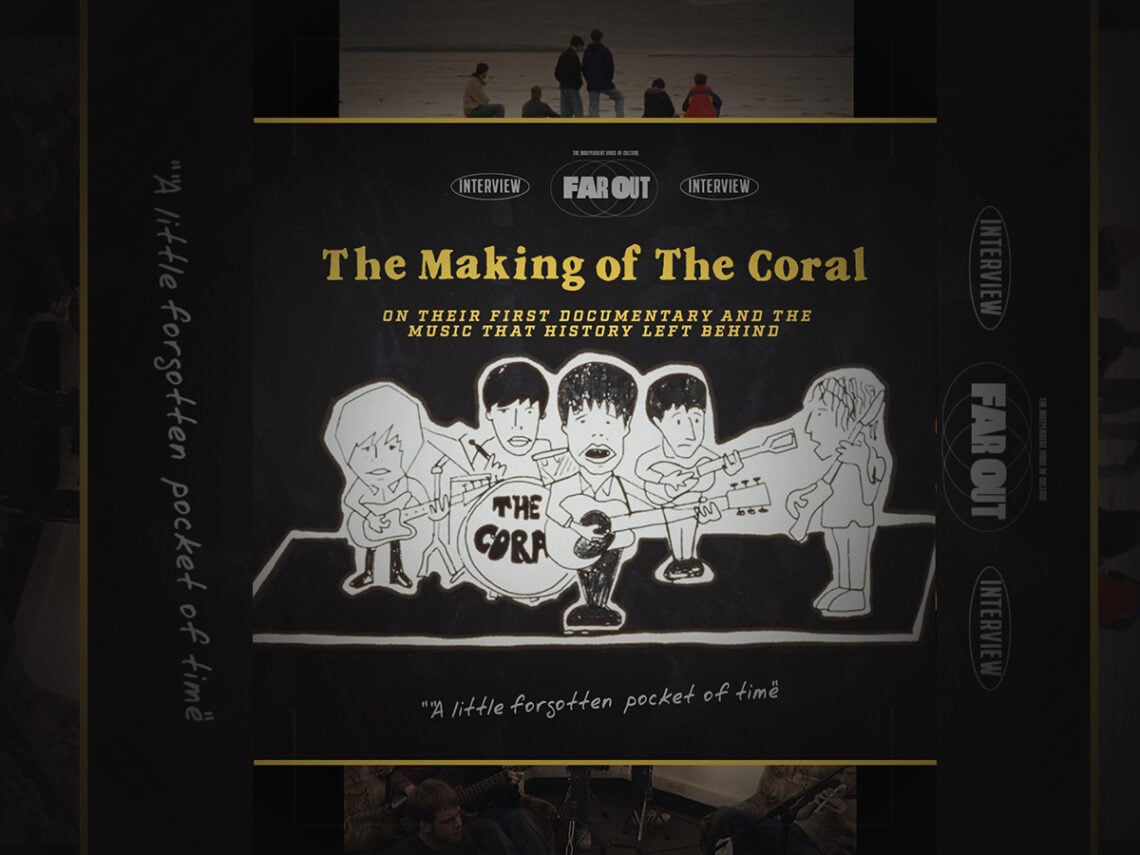
“A little forgotten pocket of time”: The Coral on their first documentary and the music that history left behind

“The line between enthusiasm and delusion, if you can tread that line, that’s the best place to be,” advises The Coral frontman James Skelly. But he can speak for himself.
When you’re telling the story of any band, it always starts in the same place: with someone scratching their head and wondering where the best place to start is. As I write up this interview with Skelly, I realise telling a story about the band who decided to tell their story will land you in a similar predicament. I straddle that line between enthusiasm and delusion, and would prefer to be someplace else.
You probably know The Coral from the debut self-titled album, so that seems like a good place to start, but there is so much more to that record than just its creation. Do I begin by telling you about the fateful night on the beach when Skelly worked out how he wanted the record to sound? Do I take you back even further to before The Coral were a band and instead considered themselves a ghost-hunting business? Well, I think the best place to start is in the middle of our interview, when Skelly spoke about the restrictions they placed on director James Slater and how that led to their documentary, Dreaming of You, exceeding their expectations.
“Our pre-requisite, our only thing was we don’t want talking heads on it, we don’t wanna be on it, we don’t want the thing where there’s someone fixing their mic and sitting in a chair before they do the interview like other ones,” explained Skelly, “Sometimes, I think putting limitations on people makes things better, because you can’t go the easy way […] Limitation is the mother of invention, I think.”
That. Right there. “Limitation is the mother of invention”: That’s our starting point.
We find ourselves in the late 1990s, early 2000s. Britpop is dead; the sound has been dominated by built-up horn sections that make the tracks resemble show tunes as opposed to the raw style of music that people were initially drawn to. The next step for most musical historians is the ‘Meet Me In The Bathroom’ movement, as The Strokes, Yeah Yeah Yeahs and LCD Soundsystem rise to fame in the US, while rock romantics such as Pete Doherty and The Libertines make waves in the UK. But there was a period of time before that, one where music lacked direction, where there wasn’t a specific mainstream sound, and where a lot of the bands who were making music at the time have been forgotten.
James Skelly met his Coral bandmates shortly prior to this period, when they started up their own ghostbusting business, a Merseyside rendition of the Hollywood classic that swapped expensive props for cereal boxes. “It was the time of Ghostbusters in the ‘80s. You had four channels, you had to entertain yourself,” said Skelly, “We had a master system, I think. Paul Duffy [Coral bassist] made the ghostbuster ectoplasm box thing out of a cornflake box, and we’d go round because there was a lot of old stuff that looked haunted.”
He continued, “I think at one time we did have an idea of it being a legitimate business. Ian [Skelly, Coral drummer] did posters and everything. That was probably the first incarnation of The Coral. No one ever booked us, fortunately.”
Years down the line, this group of haphazard vagabonds decided to leave ghosts behind and dedicate their time to chasing shadows instead. They made a band and found themselves attempting to create music during a period that was notoriously devoid of inspiration. In the gap between Britpop and the indie boom, what was there? Well, if you were to ask Skelly, quite a lot. A poorly documented variety in the musical world meant that all bets were off, people could make whatever style they saw fit, and because of the absence of a specific scene, the public was open to near enough anything. For The Coral, that meant combining the sound of Liverpool and Wales.
However many rough drafts into debut singles had passed, the band found themselves on the beach one night, smoking weed and wishing for everything and nothing at the same time. In a slight drugged-up haze, it was this evening that the iconic sound they would come to be known for presented itself.
“It was a moment of revelation, really, that we had,” said Skelly, “I remember we were down the beach where we used to go and smoke weed, and I remember looking. You could see the docks of Liverpool, and Wales was on your left, and we just had this loose idea that we were gunna combine the beat thing of Liverpool and the harmonies and the eccentric psychedelic thing of the Welsh bands like Gorky’s and Super Furry’s. I think that night we wrote ‘Simon Diamond’, and we were off then.”
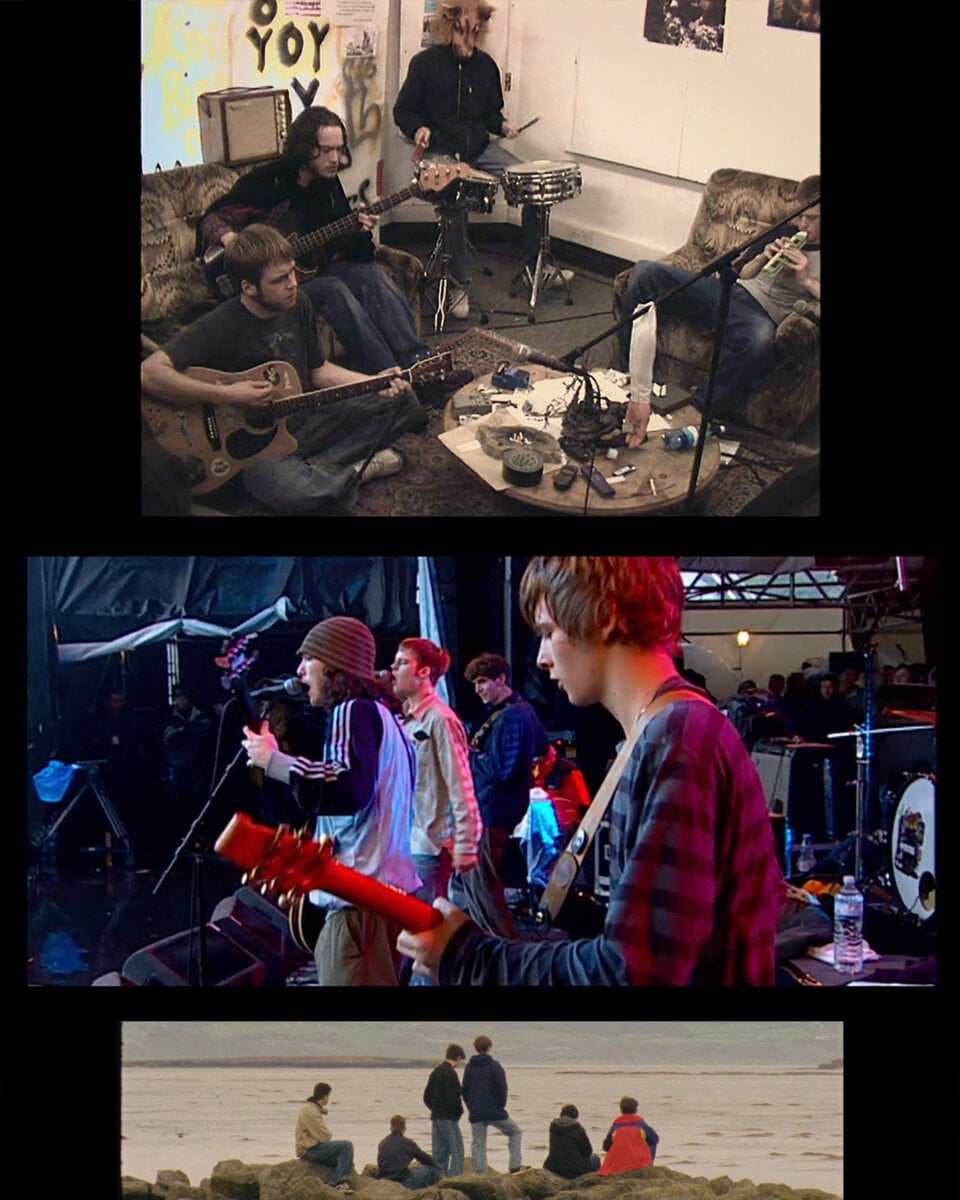
The band was on the same page simultaneously. Revelation hit like waves did the sand, and suddenly, they were lost in the current of their own innovation. “It’s just that thing,” explained Skelly, “You’re all young, you’re taking the same drugs, you’re going to the same places and living out of each other’s pockets. There’s an element of it when you become psychic with each other.”
The inspiration that led to The Coral creating such an iconic debut album is enough for a story in itself, but when it came to putting together their debut, they wanted to do more than just focus on themselves. When people sit down to watch Dreaming Of You, they won’t just develop a better understanding of The Coral, but they will be taken back in time, back to a period of musical freedom that history seems to have neglected. The band were keen when putting together the film that they reflected not just their innovation, but the innovation that was happening all around them at the time.
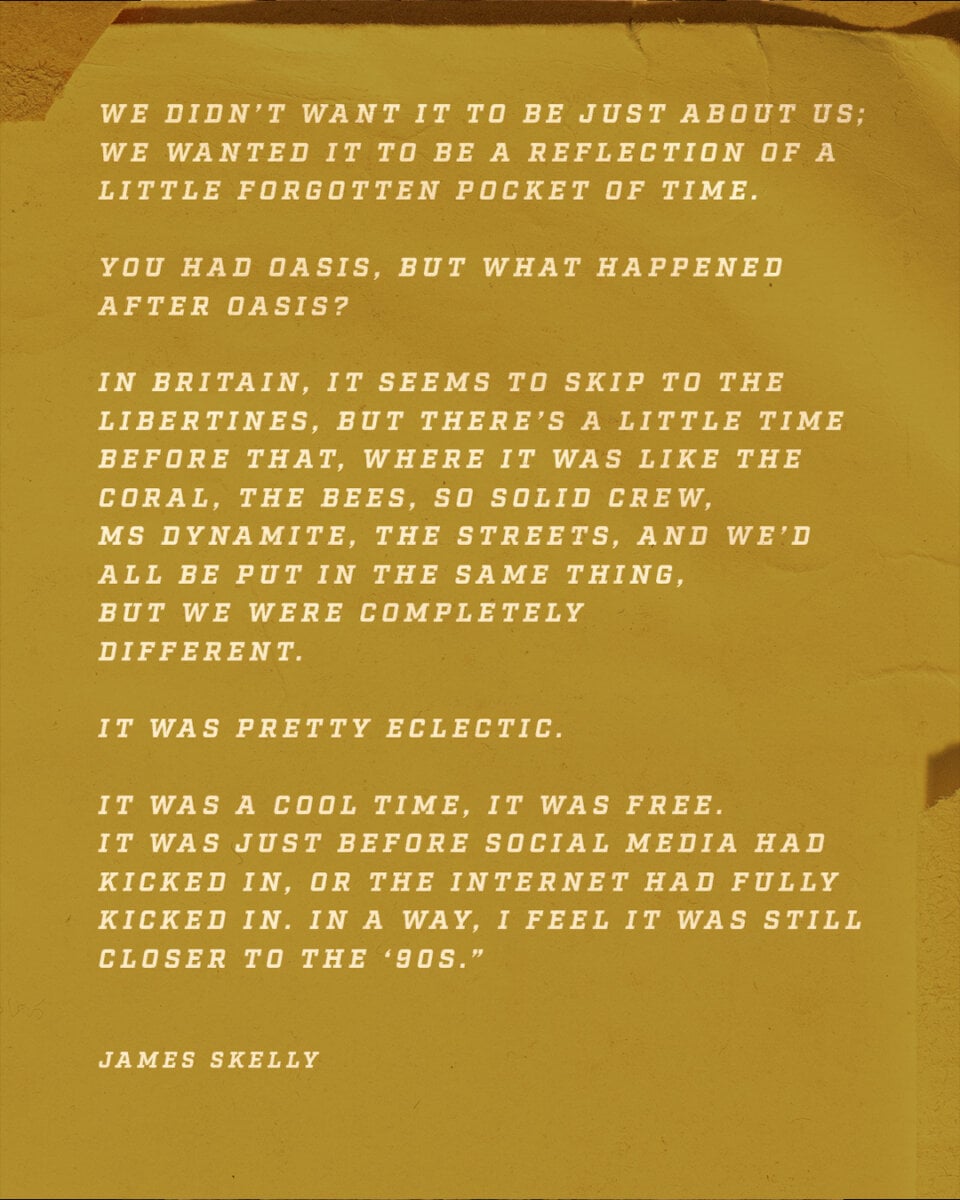
“We didn’t want it to be just about us; we wanted it to be a reflection of a little forgotten pocket of time. You had Oasis, but what happened after Oasis? In Britain, it seems to skip to the Libertines, but there’s a little time before that, where it was like The Coral, The Bees, So Solid Crew, Ms Dynamite, The Streets, and we’d all be put in the same thing, but we were completely different. It was pretty eclectic,” explained Skelly, noting, “It was a cool time, it was free. It was just before social media had kicked in, or the internet had fully kicked in. In a way, I feel it was still closer to the ‘90s.”
The period of time that this documentary represents has been bottled up and shaken into every second of this film. Animated sections, an 8-bit remake of The Coral’s music, and old concert footage and photos act as their very own time capsule. This blind spot was where the limitations that spur invention were as strict as ever, and one where the name ‘The Coral‘ was first placed in front of music lovers around the country.
Was it delusional to have believed that such a strange moment in music history would breed such talent? Maybe. But as James Skelly himself admitted, every creative needs a bit of delusion in them. To reiterate, “The line between enthusiasm and delusion, if you can tread that line, that’s the best place to be,” he said, before finally adding, “I’m still there”.

Never Miss A Beat
The Far Out New Music Newsletter
All the latest New Music from the independent voice of culture.
Straight to your inbox.