


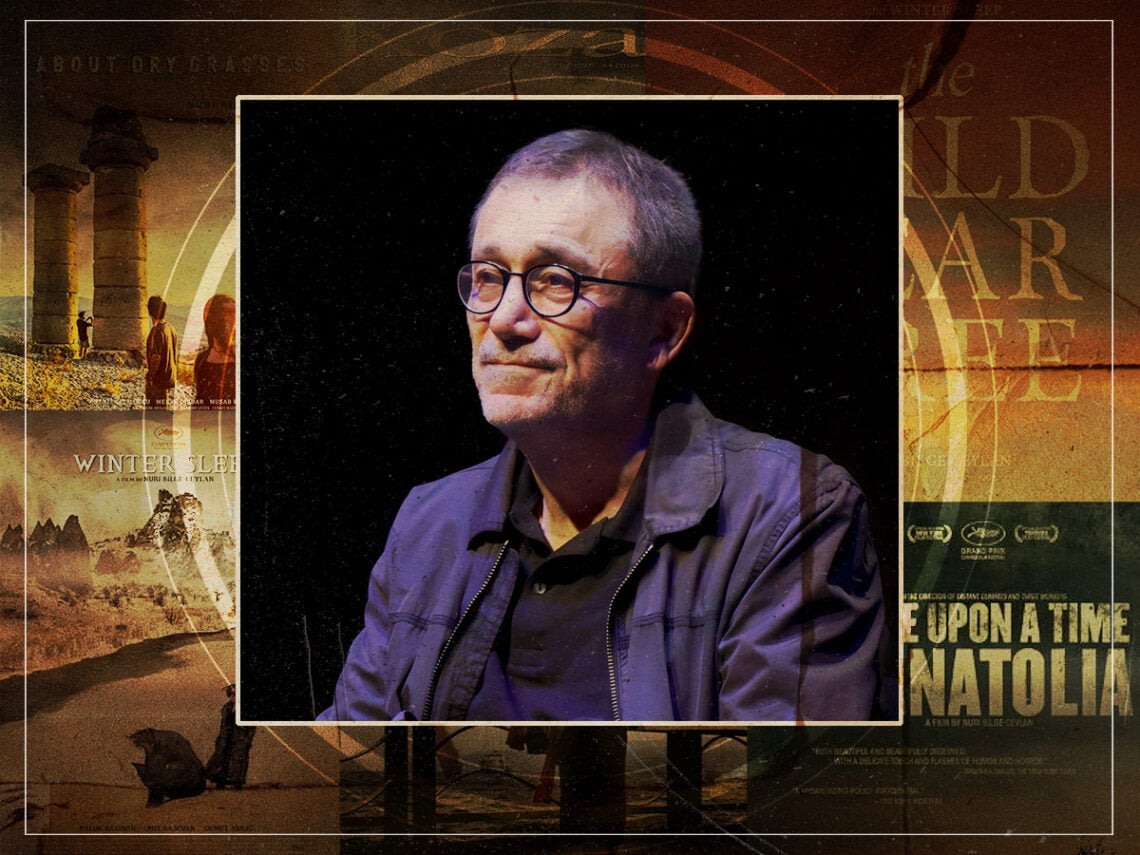
The continued excellence of Turkish auteur Nuri Bilge Ceylan

One of not only Turkish but international cinema’s leading lights, Nuri Bilge Ceylan has developed a style that’s distinctly his, and used it as the backdrop to nine features to date that all shine a light on various aspects of the human condition in their own enthralling way.
His seventh film Winter Sleep earned him the prestigious Palme d’Or from the Cannes Film Festival, and like all of his work, it’s rooted deeply in resonant cultural and socio-political themes. Not just the tale of a family struggling to run their small hotel in the Anatolia region, it doubles as a searing indictment on the ever-growing divides between the haves and have nots, the powerful and the powerless, and the constant and easily-identifiable struggles faced by those on the lower rungs of the ladder.
It’s been a hallmark of his work dating back to his 1997 feature-length debut Kasaba, which uses the perspective of a family’s children to explore how they navigate the growing complexities of life as they grow into adulthood. 1999’s follow-up Clouds of May finds a filmmaker returning to his hometown to capture family’s acting ability on camera in the name of posterity, but again trades in his signature motifs.
In many circumstances, filmmakers have been obligated to evolve their approach to continue displaying their growth and maturity as writers or directors. However, each of Ceylan’s movies are distinctive and different enough that even though he can always be relied upon to touch on many of the same themes and issues, each time out it feels demonstrably different, with his back catalogue now presented as an interwoven tapestry that captures the feeling of both himself as a person and the nation at large at the time he made them.
It’s even led to some lofty comparisons to Anton Chekhov in terms of the strict reliance to modernism and pushing real concerns to the forefront of self-created works, but as Ceylan admitted to The Guardian, it isn’t an accident the two have regularly found themselves spoken of in the same sentence.
“In all my films I believe there is an element of Chekhov, because Chekhov wrote so many stories. He had stories about almost every situation, and I love them very much,” he explained. “So maybe he’s influenced the way I look at life. Life follows Chekhov for me, in a way. After reading Chekhov, you begin to see the same kind of situations in life. And in the scriptwriting stage, I remember the stories somehow, so yes, Chekhov is here.”
The estrangement between families, the mundanity of everyday life, and the aching realities of the human experience have all been prevalent in Ceylan’s work since the beginning. Atmosphere has always been key. The auteur’s use of sound – or lack thereof – only heightens the sense of ease or emotional attachment instilled in audiences, while his preference for shooting many of his characters from behind has been interpreted as a means of urging the viewer to create their own understanding of their motivations.
It’s authentic, experimental, immersive cinema at its finest, all furnished with spectacular cinematography and contemplative, often philosophical dialogue that operates between conventional drama, vérité, and neorealism. And yet, all of his films are unmistakably the work of a single-minded filmmaker who manages to put their own signature on stories that carry wide-ranging emotional appeal.
Once Upon a Time in Anatolia might well be his magnum opus, a murder mystery that isn’t really a murder mystery at all. The three main characters may be on the search for a dead body, but there’s an undercurrent of gallows humour and the subversion of an entire genre in play, which reinvents a formulaic-sounding setup into a rumination on the very essence of morality.
Ceylan has thrived by doing the opposite of what’s expected from the storytelling parameters he’s operating within, whether it’s his belief that dialogue “shouldn’t carry much information about the film’s secrets or the meaning of the film,” or his desire to “be more subtle and more hidden” as part of his remit for “making the audience more active.”
Based on the acclaim and adulation to greet him thus far, it’s an approach that can’t be faulted, with Ceylan far and away one of the most potent voices international cinema has at its disposal.
