


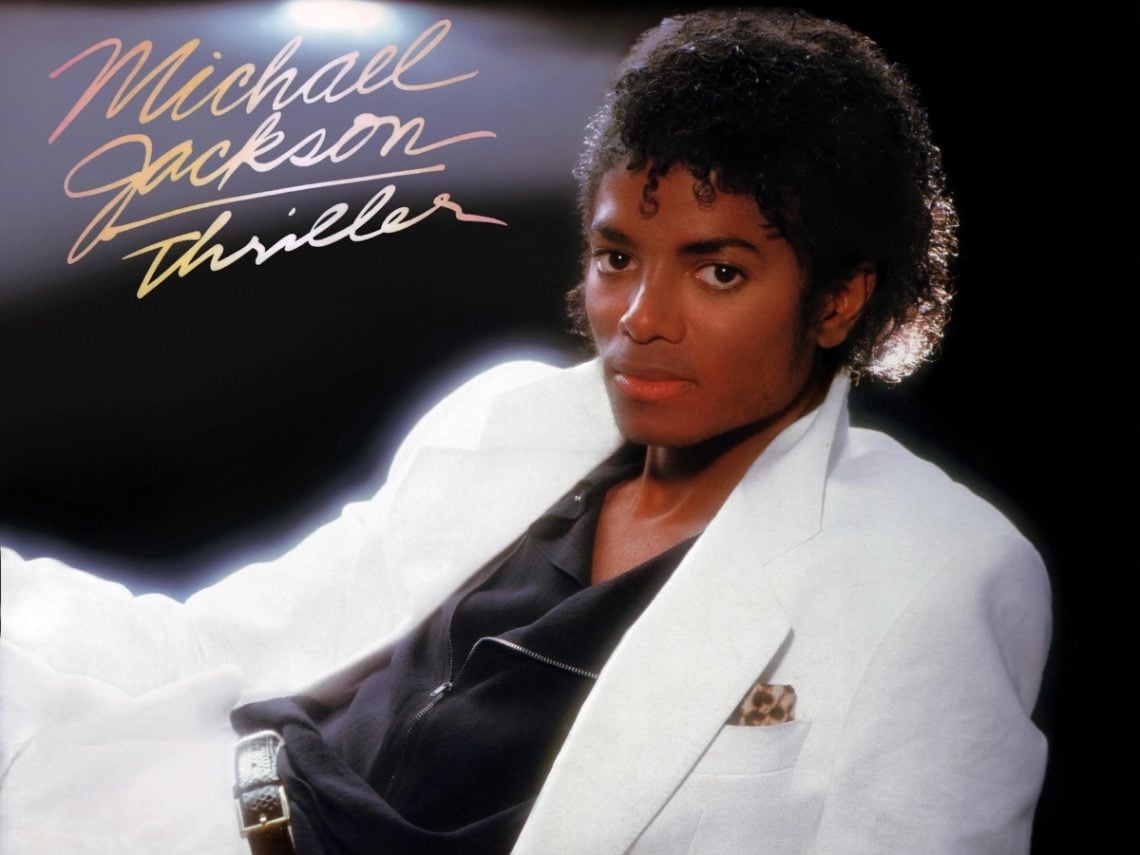
The complicated legacy of ‘Thriller’, 40 years later

There was nothing to untangle about Michael Jackson in 1982. The 24-year-old pop singer had been a star for nearly two full decades at that point, with celebrated singles from The Jackson 5 and an escalating solo career securing his spot as one of music’s most promising talents. 1979’s Off the Wall blended disco, funk, pop, and neo-electronica into a set of dancefloor-ready jams. For his next act, however, Jackson didn’t just want to be a pop star: he wanted to take over music completely.
Along with legendary arranger and producer Quincy Jones, who first worked with Jackson on The Wiz and helped assemble Off the Wall, Jackson sought to blend every genre of popular music into one undeniable stew. His new album was going to have pop music, but also funk bass lines, horror-inspired imagery, heavy metal guitar solos, delicate ballads, goofy duets, synthpop instrumentation, new wave attitudes, and everything in between.
Thriller remains one of the most ambitious cross-cultural projects in the history of popular music. With just nine songs, Jackson created an album that appealed to every kind of music fan, regardless of race, gender, or sexuality. It didn’t matter what you listened to: Thriller had something that appealed to you. When it was first released at the tail end of 1982, the album was immediately canonized and praised as the pop album of a generation. By the end of its first week in stores, Thriller had already sold one million copies.
The numbers behind Thriller aren’t just record-setting – they’re probably unbreakable. 37 weeks at number one in the US, 500 non-consecutive weeks on the Billboard 200, 30 times platinum certifications in the US alone, and global sales that range between 70 and 110 million units. Thriller is the best-selling album of all time, and the chances of another album replacing it at the top are slim to none.
Part and parcel to those numbers is the idea that nothing could possibly dominate culture as thoroughly as Thriller did. Thriller was the best-selling album of both 1983 and 1984, and for those two years, the songs, videos, imagery, and aftershocks of Thriller were everywhere in pop culture. Jackson almost single-handedly integrated MTV, while his duet with Paul McCartney not only solidified his place among pop music’s elite but also signalled a paradigm shift in the acceptance of black artists in the mainstream.
Jackson’s pure talent and skill were undeniable. His presence was magnetic, as proven by the videos for ‘Billie Jean’ and ‘Beat It’ that was in constant rotation for years after Thriller‘s release. Jackson took half a decade to produce his follow-up, but there wasn’t a single minute that Jackson was out of the spotlight. Thriller had enough juice to keep Jackson’s career afloat until the end of time.
In many ways, we’re seeing the limits of that being tested today. None of Jackson’s other albums had the power of Thriller – not his multi-platinum LPs like Bad or Dangerous, not any of his compilations, and not any of his retrospectives. So when Jackson transformed from a beloved entertainer to a subject of curiosity and controversy, Thriller became the stabilizing force in his legacy: you can say whatever you want about anything else in his life, but Thriller was still universal.
The ripple effect of Thriller can’t be understated: pop music is forever changed by it. Every major star, from Beyoncé to The Weeknd to Taylor Swift and beyond, had their approach to music shaped by Thriller. That’s impossible to ignore, even if it’s getting easier and easier to look the other way at Thriller. The truth is that it has little to do with the album, which is still acclaimed and sells more every year than almost every contemporary album. It has to do with Michael Jackson himself.
But if you want to look directly at Thriller, some aspects don’t quite hold up as well as they should. ‘The Girl Is Mine’ is often singled out for criticism, and it’s not hard to see why. A schlocky and laughably silky pop ballad duet, ‘The Girl Is Mine’ curdles the second that its yacht-pop backing track kicks in. Jackson’s titanic presence can’t save the track, and neither can Paul McCartney’s ageless voice. ‘The Girl Is Mine’ is just a bad song, but that’s just an outlier in the overall makeup of the album, right?
Maybe not so. Although classic tracks like ‘Billie Jean’ and ‘Thriller’ remain as cutting-edge as they were in 1982, other aspects of the album look dated and toothless. The faux-menace of ‘Wanna Be Startin’ Somethin’ and ‘Beat It’ are the most laughable parts of those legendary tracks, while the generic lyric writing in songs like ‘Baby Be Mine’ and ‘P.Y.T. (Pretty Young Thing)’ would sink those tracks if Jackson didn’t fully commit to them.
That’s more than can be said for the two major ballads that end the record, ‘Human Nature’ and ‘The Lady in My Life’. While Jackson’s voice is pristine, there’s not enough substance to elevate the two songs beyond generic ’80s prom slow dance material. The reputation of Thriller is usually seen as the perfect nexus between artist and material. The reality is that Jackson does most of the heavy lifting, and when he’s not writing his own material, the flaws of Thriller become a lot more obvious.
In a strange way, Thriller probably doomed Michael Jackson. From the minute it came out, there was no such thing as a private moment for the singer. Jackson’s life was on full display for 24 hours a day, and thanks to the pull of Thriller‘s biggest songs, the general public never wanted a moment away from him. Jackson had plenty of baggage and demons before Thriller: an abusive childhood and a strong spotlight from the time he was six certainly didn’t help his mental or physical health. But Thriller was what made Michael Jackson more than famous – it’s what made him a god to many.
That sainthood had plenty of challenges to it in the subsequent 27 years of his life. Jackson was one of the first stars to become the subject of the “art vs artist” debate, but it only went so far. Jackson was so beloved that millions of fans were willing to look the other way or simply disbelieve some of the most unsavoury aspects of what may or may not have been happening behind closed doors. When Jackson died in 2009, the outpouring of grief and celebration of his life was at least slightly incongruous with the reality of who he was, or at least, who he allegedly was.
There are no simple answers, and even if there were, they likely couldn’t pierce the armour that Thriller put on Jackson. It was protection when he needed it, but also an unbreakable cage when he didn’t. Thriller was everything, even when it should have theoretically meant nothing. To look at Thriller is often hand in hand with looking at the best of Michael Jackson. But maybe, just maybe, it’s time to take a more nuanced look at Thriller.
