


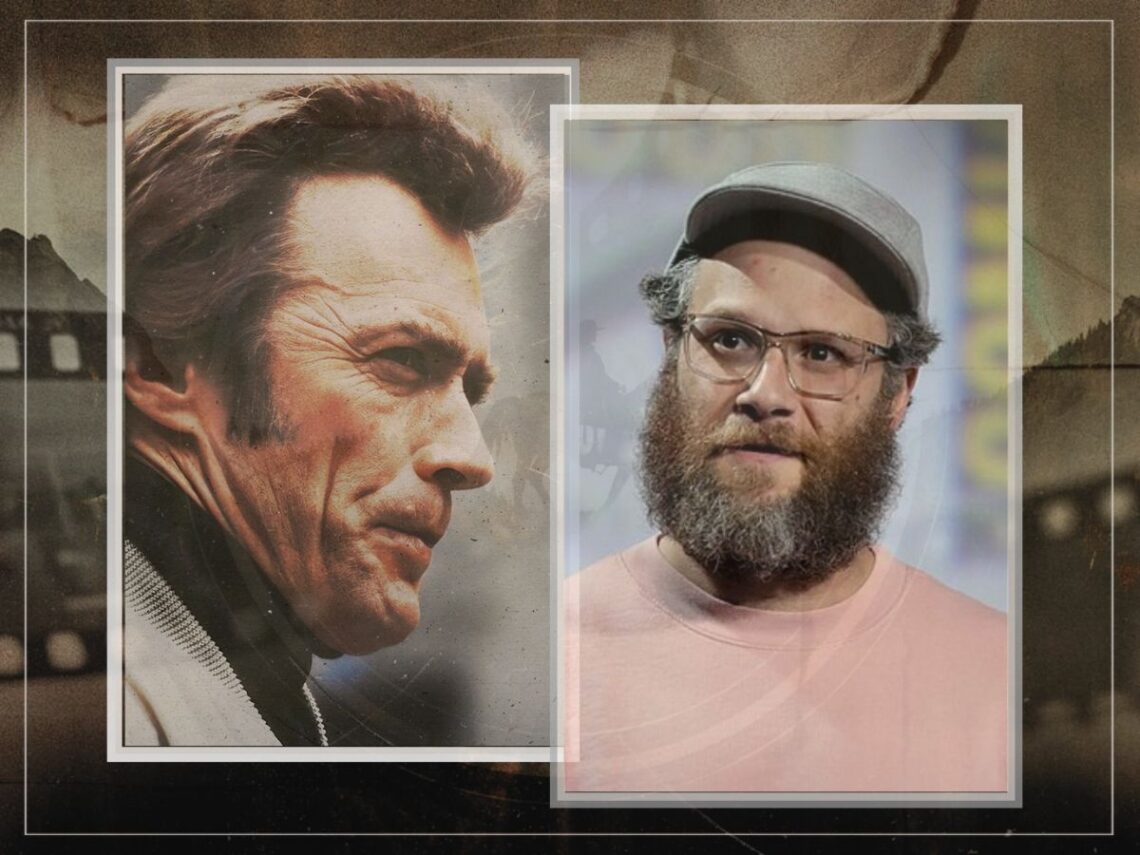
The Clint Eastwood movie Seth Rogen compared to Nazi propaganda: “I’m sorry if this offended anyone”

Films revolving around war or the military (predominantly the American military in Hollywood) have always been tricky, as almost anything that portrays the relevant people in a positive light can be interpreted as pro-war.
Top Gun, The Hurt Locker, Apocalypse Now, and more have all run across this issue, while facing criticism for inaccuracies. Such movies also typically don’t do a good job of considering the perspective of whoever the main characters are at war with.
Clint Eastwood’s 2014 film American Sniper, which earned an Oscar nod for ‘Best Picture’, was no exception, though actor Seth Rogen caught some flak for making a particularly unflattering comparison. The biopic follows the experiences of Navy SEAL sniper Chris Kyle, played by Bradley Cooper in a role that landed him his third Oscar nomination for acting. The emotional weight of the movie rests more on Kyle’s struggle to readjust to normal life after his tours in Iraq, highlighting the challenges many soldiers face after returning from service.
As the movie was headed into awards season, Rogen shared a tweet saying, “American Sniper kind of reminds me of the movie that’s showing in the third act of Inglourious Basterds”.
Quentin Tarantino’s Inglourious Basterds follows multiple intersecting storylines against the backdrop of World War II: An American black ops unit is planning to assassinate Hitler at a movie premiere in France, at a cinema managed by a secretly Jewish woman who is plotting her own revenge. The picture being screened at the event is an overtly romanticised account of a German soldier’s “heroic” actions on the battlefield, and is a big hit with the Nazi audience.
As everyone’s flailing plans collide, most of the main cast dies in a fiery inferno, including Hitler himself, in one of Tarantino’s famous alternate histories. This war film was also controversial due to the excessive violence and the changing of history, but it has ultimately stood the test of time. Christoph Waltz’s performance as the primary villain, SS officer Hans Landa, lives in legend, while Inglourious Basterds is often cited as Tarantino’s best film.
However, the comparison to American Sniper did not go over well with some audiences. Rogen quickly tried to mitigate his comment, later tweeting that his comparison was only due to both films focusing on snipers. “My comment about the movie was not meant to have any political implications,” said Rogen.
Adding, “Any political meaning was ascribed to my comment by news commentary. I’m sorry if this somehow offended anyone, but that was not my intention.”
On some level, all war films are political, and therefore most comments about them can be argued to be so as well. Most people probably don’t want to insult the sacrifice of veterans, and American Sniper does seem to be primarily focused on one soldier’s psychological reckoning, though how Eastwood depicts Kyle as a person was also the subject of debate. However, the bigger problems with the film lie in its failure to provide the full context of the Iraq War.
Rogen stoked the debate at the time surrounding the film, which is still a relevant topic today in how armed conflict is portrayed on screen. His casual comment may not have been the best way to approach the matter, but it does potentially get at what many people saw to be wrong with American Sniper.

Never Miss A Tale
The Far Out Clint Eastwood Newsletter
All the latest stories about Clint Eastwood from the independent voice of culture.
Straight to your inbox.