


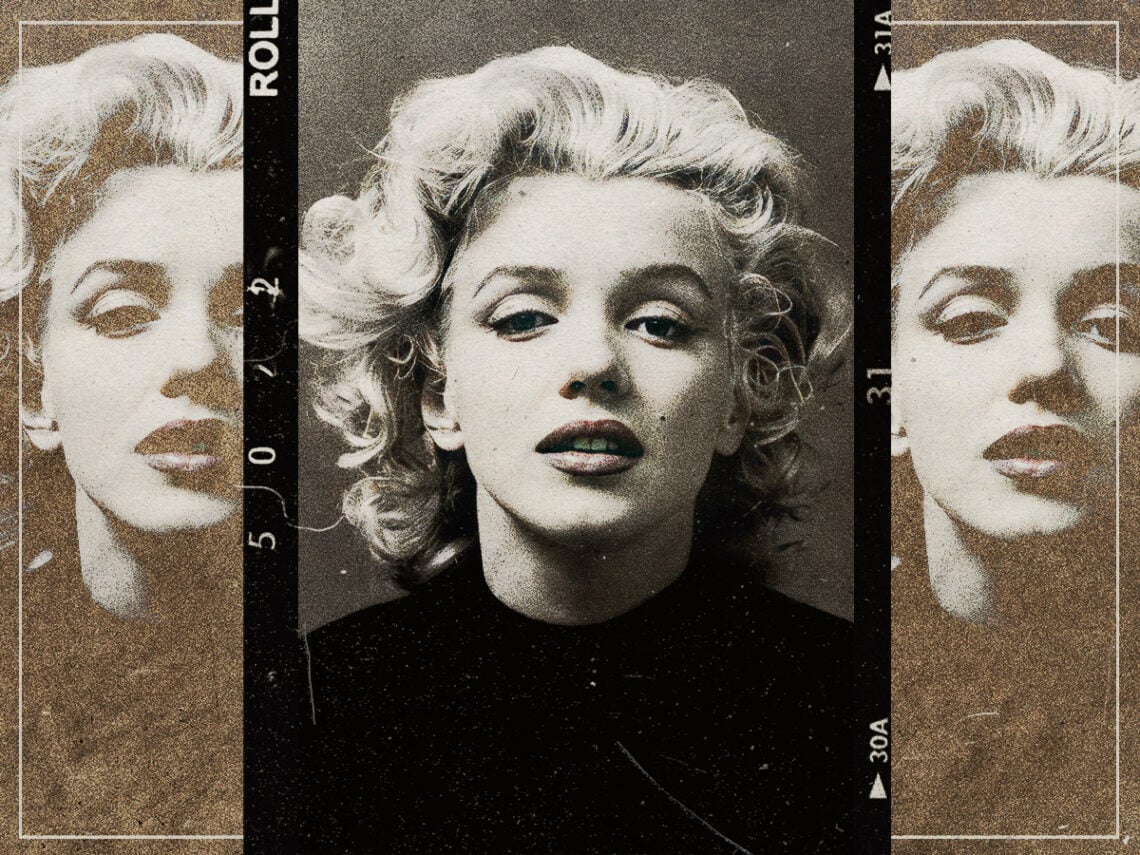
The chance encounter that changed Marilyn Monroe’s life

Marilyn Monroe was a siren, a starlet of the silver screen so transcendent her pop-cultural pull can be felt to this day. But in 1944, she was still just Norma Jean Dougherty, unaware of the prolific career she’d go on to have. “I knew how third-rate I was,” she reflected in her memoirs. “I could actually feel my lack of talent as if it were cheap clothes I was wearing inside. But, my god, how I wanted to learn, to change, to improve.”
At 18, with the Second World War raging on, the chance to change finally presented itself after she’d spent years pining for fame. At the time, her then-husband, Jim Dougherty, had enlisted in the Merchant Marines while she worked in a munitions factory. While Dougherty was shipped out to the Pacific, she worked diligently at the Radioplane Company.
In 1944, she came across David Conover, a photographer who’d been sent to take pictures of the all-female workforce by the US Army Air Forces’ First Motion Picture Unit, the idea being their faces might boost the mood of the soldiers. Conover was taken aback by Mortenson, who possessed all the natural magnetism Marilyn Monroe would come to personify. “You’re a real morale booster,” she later recalled him saying. “I’m going to take your picture for the boys in the Army to keep their morale high.”
It was that chance meeting that drove her to quit her job and start modelling for Conover and his colleagues, going to the lengths of defying her husband and signing a contract with the Blue Book Model Agency in 1945. “I moved down the assembly line, taking shots of the most attractive employees. None was especially out of the ordinary. I came to a pretty girl putting on propellers and raised the camera to my eye,” Conover recalled of their first meeting.
“She had curly ash blond hair and her face was smudged with dirt,” Conover added. “I snapped her picture and walked on. Then I stopped, stunned. She was beautiful. Half child, half woman, her eyes held something that touched and intrigued me.” The snapshot marked her first discovery, as well as the first crucial step on the path to becoming the icon she’d later become.
Her marriage fell apart as she continued to pursue modelling, but she was determined. She took classes so she knew how to work a camera and bleached her hair to her signature platinum blonde. “I wouldn’t settle for second best,” she later said of her almost obsessive goal. “I would take home photographs of myself to study how I looked and if I could improve myself posing in front of a mirror.”
In 1946, that work came to fruition. Monroe was on the radar of 20th Century Fox, who soon offered her a screen test. Although that contract fell through, it offered her a crucial window of opportunity, a key moment in her mission to become Marilyn Monroe, the movie star.
