


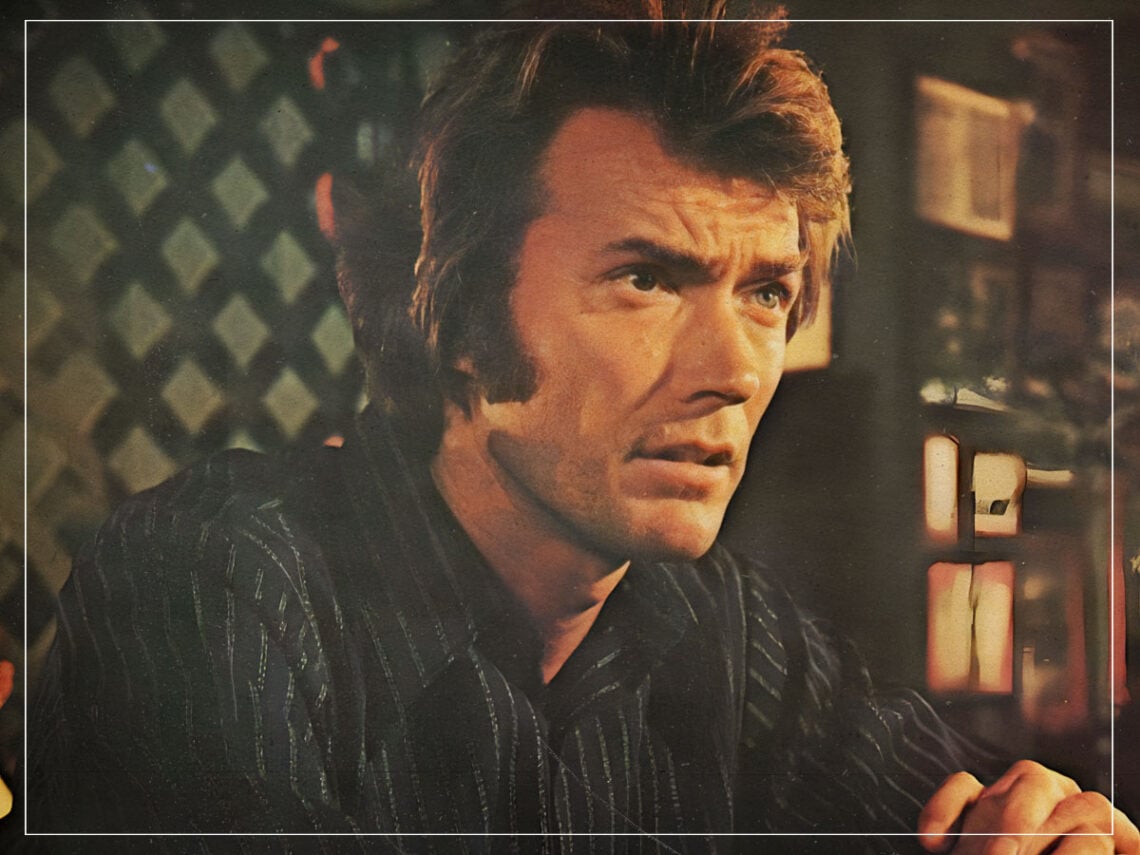
The career-defining movie Clint Eastwood thought would be a “piece of crap”

Into his tenth decade, the life of Clint Eastwood is a storied one. The actor traversed the pitfalls that lay themselves out for burgeoning performers and not only identified himself as more than just a Hollywood heartthrob but did so with a run of movies that defined an entire generation. If that wasn’t enough, he then took himself behind the camera and decided to direct movies as well as star in them. It was a decision which shaped the latter stages of his career.
There are many moments in a career as long as Clint Eastwood’s that can be considered defining turning points. The decisions, or avoidance of decisions, can have a lasting impact on your professional and artistic journey. There was one that almost saw Eastwood’s resume get that little bit lighter with the removal of a solid gold picture he almost never made.
Thankfully, the star decided to take the picture on and become an icon in the process, but there was a lot in the way of Eastwood becoming ‘The Man With No Name’. Like many actors of the day, with television in its relevant infancy and movies a pipedream that the majority of the world could barely get a sniff of, Eastwood almost accidentally got his turn in front of the camera. “I just kind of stumbled through the ’50s, doing bit parts and small parts here and there,” he said. “Some of them on live TV. Some of them on filmed TV. Once in a while, bit parts in the movies. At the end of the ’50s, in 1959, I got a test for a CBS hour show called Rawhide, and I got the job. Then I was employed, and actually making a living as an actor, and that was a dream for me. I went for about six years.”
Like any actor worth their salt, with Rawhide in the bank, Eastwood wanted to stretch himself creatively and take on new projects. The western was a comfortable spot for an actor like Eastwood to be in, but he also wanted to break out and enjoy the variety of scenery. With an agent finally procured, Eastwood was offered the chance to read for an unusual role and asked: “If I wanted to go to Italy and make a western, a remake of a Japanese film. I said, ‘No, I really don’t. I’m doing a western now and it’s on TV every week, and we have a little hiatus. I’d just like to have a few days off and go fishing or something.'”
His agent persisted, and Eastwood said yes to seeing the script. He confessed: “They asked me to read the script as a favour to the head of the William Morris Agency in Rome. I thought, ‘This is going to be a piece of crap.'” The script would end up changing his life, and Eastwood recognised the potential right away. “But when I read it, I said, ‘Hey, this is Yojimbo‘. See, I was big fan of [Akira] Kurosawa’s Yojimbo. At the time I saw it, I thought, ‘That would make a great western, but nobody would have the nerve enough to do it,’ as it was so wild.”
It was a thought that Sergio Leone had also had. The original movie is considered one of Kurosawa’s finest as the filmmaker examines a cross-cultural phenomenon by combining the samurai genre with themes from westerns. “I was so fed up with the world of Yakuza,” Kurosawa revealed. “So in order to attack their evil and irrationality, and thoroughly mess them up, I brought in the super-samurai played by Mifune. He was himself an outsider, a kind of outlaw, which enabled him to act flexibly, if sometimes recklessly. Only such a samurai of the imagination much more powerful than a real samurai, could mess up these gangsters. The film sort of evolved from there.”
The connection to Kurosawa, arguably Eastwood’s favourite director of all time, meant he was quickly signed on to make the movie. “I went over there and it was a very small picture. It was made for $200,000, but it was good. Then I went back and did the other two pictures. … I did [Fistful of Dollars], and then the next year, by that time, [Sergio Leone] had more money to put into productions. I made [For a Few Dollars More and The Good, the Bad and the Ugly], which were fantasy westerns. They were more operatic westerns than the others we grew up with, but very stylised, and Sergio was great for picking faces. Just looking at things a little different.”
Eastwood nearly gave up on the trilogy that changed his entire career before even reading a script. The Dollars trilogy is regarded as one of the finest ever produced in Hollywood, and there is no doubt that it would launch Eastwood’s career as a movie-making actor. Though he assumed it would be awful, the introduction of two of the most important directors of his life would change his outlook. Kurosawa’s influence would see him take on the picture, but Leone’s way of working would change his life forever, as he candidly notes: “He had a different way of looking at the size and scope of films. I learned a lot from him.”

Never Miss A Tale
The Far Out Clint Eastwood Newsletter
All the latest stories about Clint Eastwood from the independent voice of culture.
Straight to your inbox.