


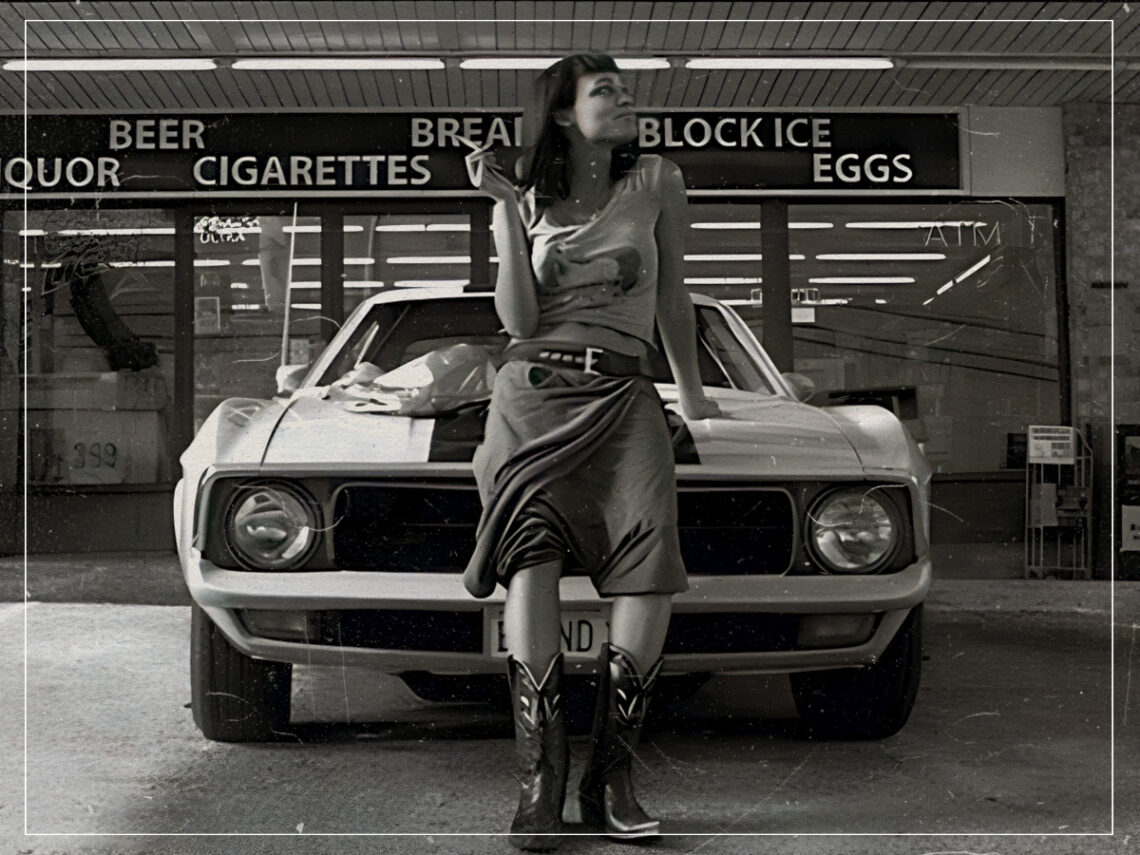
Murder by Chevy Nova: The iconography of the car in Quentin Tarantino’s ‘Death Proof’

Quentin Tarantino has never made a movie that could objectively be called terrible, but most people would agree that Death Proof stands out as his weakest feature by far, even if it was never intended to be released as a standalone film to be enjoyed independently.
Instead, the filmmaker and close cohort Robert Rodriguez severely overestimated how much the general ticket-buying public shared their appreciation of sleazy 1970s cinema, with the Grindhouse experiment cratering at the box office. They wanted to pay tribute to their love of double features, intermissions, and all the bells and whistles that came with it, but audiences simply didn’t care.
In an attempt to recoup its losses, distributor Dimension Films split Tarantino’s Death Proof and Rodriguez’s Planet Terror and released them individually, but that didn’t do much to stem the financial bleeding, either. It was a noble attempt at reviving a long-dormant aspect of the cinematic experience, but both films still retain their individual merits.
In the case of Death Proof, the shining light is undoubtedly Kurt Russell’s deliciously sleazy performance as Stuntman Mike, a veteran of the film industry who moonlights as a murderer. However, he’s not technically the villain of the piece because, without his trusty 1970 Chevy Nova, he’s just a fairly creepy guy without a weapon of mass destruction.
The seed of the idea was born from Tarantino’s interest in how stunt performers would ‘death-proof’ their vehicles for the more dangerous set pieces, so he took that concept and put his own spin on it. Instead of being a straightforward slasher, Death Proof became a horror movie where the vehicle is the killer, with Stuntman Mike taking a perverse pleasure in using his souped-up rig as a means to claim his latest victims.
Movies like Christine and Duel had used a similar notion to turn automobiles and other assorted vehicles into monstrous figures that terrorise the screen, but Death Proof took things to a whole new level. Without a shred of CGI in sight, Tarantino used old-fashioned practical techniques to put the various stunt cars through the ringer, establishing it as being along the same lines as Jason Voorhees or Michael Myers. Sure, the Chevy Nova can be hurt, wrecked, and possibly even destroyed, but it’ll be back in one way or another with its thirst for claiming lives remaining undiluted.
Even the way Tarantino frames the jet-black vessel of doom is evocative of classic horror, with the Chevy Nova often found skulking into the frame or lingering in the background, all while the characters who end up being thrown around until their dying breath remain completely unaware of the terrors that lie in store. That doesn’t apply to the grandstanding third-act chase sequence, though, but it still adheres to conventions with a distinct twist, considering the ‘final girls’ always end up plunged into a desperate battle against the entity that’s spent its entire time on-screen trying to bump them off.
Turning a car into a horror villain sounds ludicrous on paper, and it easily could have been played with tongue planted into cheek or come across as unintentionally funny, but through Tarantino’s eyes, the Chevy Nova becomes a force of nature, a malevolent force that creates a lurching sense of dread every time it appears. Russell helps immeasurably with his sadistically charismatic work as Stuntman Mike, but one doesn’t thrive without the other.
Just as Jason has his hockey mask, Michael has his overalls, and Freddy Krueger has his razor-fingered glove, Stuntman Mike has his Chevy Nova. They’re two peas in a murderous pod, but while the car would be just fine with somebody else of a suitably nefarious inclination behind the wheel, Mike would be lost without his trusty wheels.

Never Miss A Take
The Far Out Quentin Tarantino Newsletter
All the latest Quentin Tarantino content from the independent voice of culture.
Straight to your inbox.