


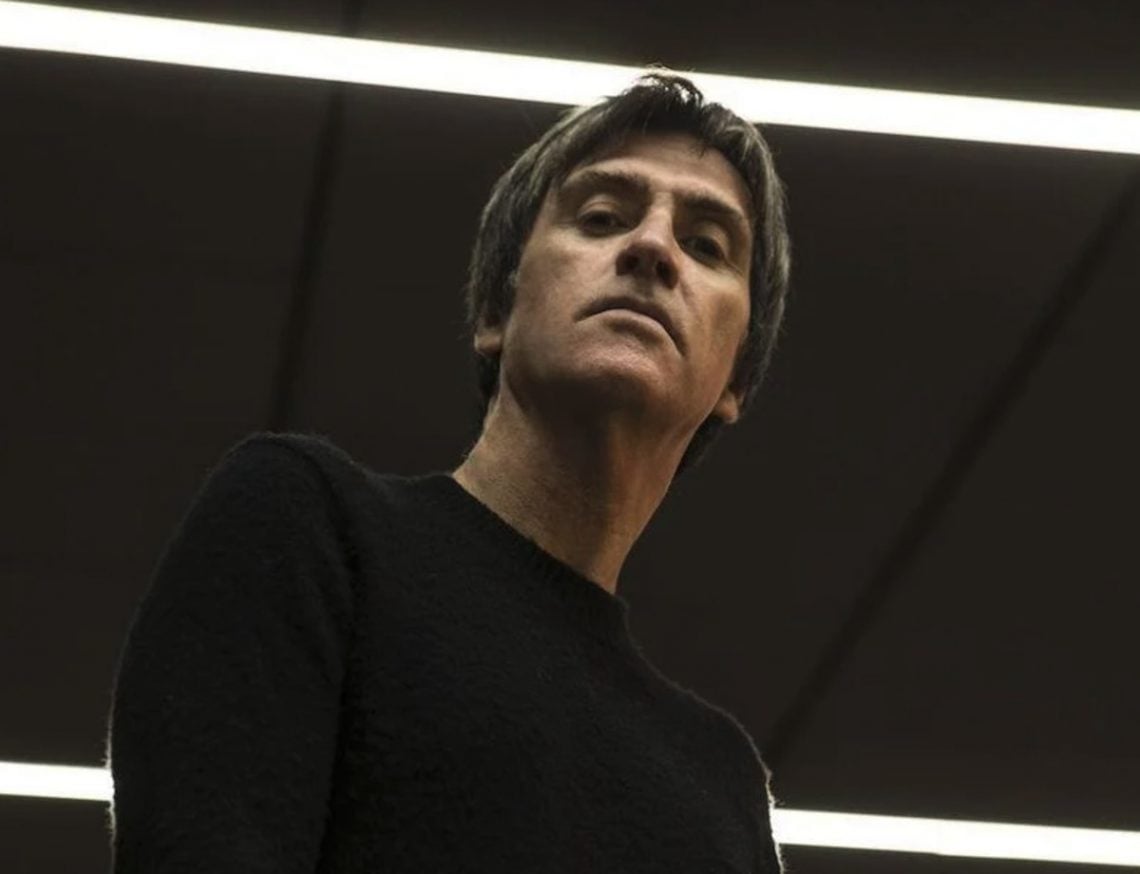
The one book that changed Johnny Marr’s life

During his tenure as the guitarist and co-songwriter in The Smiths, Johnny Marr almost single-handedly revived the UK indie music scene, making guitars effortlessly cool again just as they were on the precipice of being ousted by synth.
And as it turns out, the infamously quiffed Mancunian behind some of the most recognisable indie tracks ever to grace British airwaves didn’t just take inspiration from Bert Jansch and Manchester’s moody scenery – but from one unlikely author.
When asked what book had changed his life during an interview with The Guardian, Marr replied: “Aldous Huxley Complete Essays, volume VI, 1956-1963. Huxley was a lot more than just Brave New World and The Doors Of Perception. He got better as he got older. His lectures on transcendence are sublime.”
In the Complete Essays, Huxley revisits topics broached in the utopian hellscape ‘Brave New World’ in finer detail, tackling subjects from psychology to politics, history to the religious experience. But it was Huxley’s writings about his experiments with psychedelic drugs that made him a cultural mainstay. He went on to become a beloved figure of prominent psychedelic bands, most notably The Doors, whose name is a nod to Huxley’s novel.
Huxley was a student of philosophy and mysticism, and his work on psychedelics profoundly influenced American hippie counterculture in the ’70s alongside peers like Timothy Leary and Professor Steven Gaskin. So his essays seem an unlikely source of inspiration for Marr, whose music throughout his time in The Smiths was infamously tinged with a pretty strong dose of life’s more depressing realities – if ‘Suffer Little Children’ is anything to go by, the song inspired by the Moors murders, one of the first co-written by Marr and Morrisey.
There’s something quite bizarre about an artist so well associated with indie enjoying the work of Huxley, given that the two worlds seem so distinctly separate. And yet, Marr’s approach to songwriting has often been a fairly spiritual practice, and he reveres artists like Marc Bolan for writing in a more philosophical way.
Talking to Another Man before a gig, Marr once said: “Some songs work better without a narrative. In my mind, Marc Bolan is a great example of that, because his songs are essentially very nonsensical. If they’d made literary sense or if they had been a bit profound, then, you know, you would have lost everything that’s great about ‘Telegram Sam’ or ‘Jeepster’. Those songs set up an imagined narrative, an imagined environment, imagined characters, an imagined world that give it a sort of esoteric quality that perfectly complements this pseudo-rock and roll background. All of this stuff is magic to me.”
Marr’s open and effusive nature not only led him to Huxley’s teachings on spirituality but to discovering an experimental style of jangly guitar playing that solidified The Smiths as one of the best indie bands Britain ever produced. Who knew we had Aldous Huxley to thank?
