


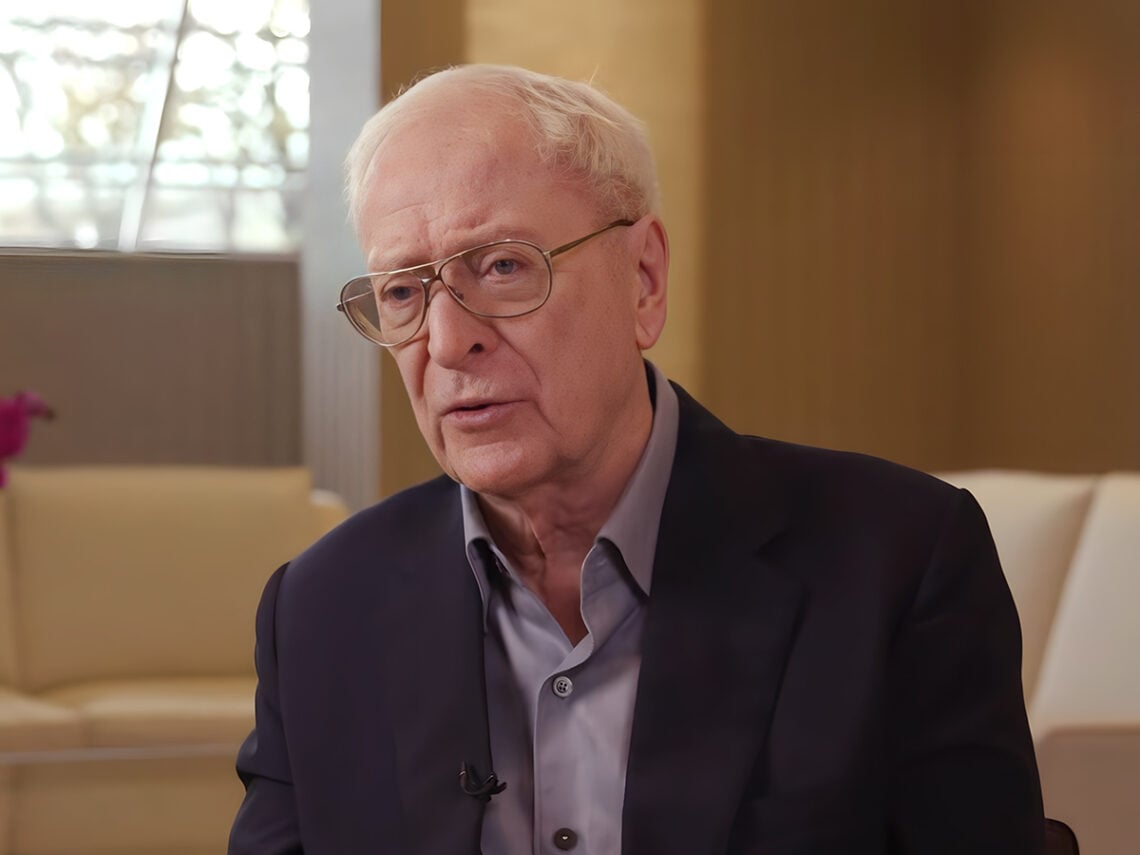
The “bloody marvellous” director Michael Caine loved every second of working with

The phrase ‘living legend’ is often overused when describing prestigious members of the film industry, but it is rarely more applicable than in the case of Michael Caine, who has appeared in nearly countless films and has been acting professionally since the early 1960s.
Caine grew up in Europe during World War II, entered the film industry during the Golden Age of Hollywood, witnessed its transformation through New Hollywood and the dawn of the studio era, and has received many accolades, including two Academy Award wins for ‘Best Supporting Actor’. Although Caine had seemingly retired from acting following the release of The Great Escaper, a moving British film in which he played a veteran of D-Day, he is expected to reprise his role in the sequel to The Last Witch Hunter alongside Vin Diesel.
One of the reasons is that Caine has been honest in his perspective on his experiences. He has always shown a tremendous amount of respect for his co-stars and collaborators, often singing their praises, but he has also been willing to admit when he’s been involved in a disappointment. While his frequent output ensures that not every film he appears in will be a masterpiece, it does ensure that he has no reason to lie when talking about his best experiences.
Caine was already a highly respected actor in the early 1970s, as he had earned an Academy Award nomination for his performance in the romantic drama Alfie, starred as the spy Harry Palmer in three films, and appeared in massive war epics like Zulu, Battle for Britain, and Too Late the Hero. However, he was asked to take on the most ambitious ordeal of his career when he was cast alongside Laurence Olivier in Sleuth, an adaptation of the Tony Award-winning mystery play of the same name.
Although capturing the phenomena of the 1970 play was going to be challenging when considering how culturally ubiquitous it had become, Sleuth had the advantage of an amazing director behind it in Joseph L Mankiewicz. While he had worked with many brilliant auteurs, Caine said that he was blown away by Mankiewicz’s directorial talents.
“If a director is satisfied with your work, he’ll move on to the next shot; if not, he won’t,” he recalled, “That’s the only signal you get. Joe Mankiewicz is bloody marvellous in that respect. He knows what you should want, he knows what you’ve got, and he also knows when you’ve got it. He’s one of those directors who says nothing if he likes what he sees, but if he starts questioning you, watch out-you know you haven’t got it.”
Mankiewicz came from a legendary family and had directed classics like All About Eve, The Barefoot Contessa, Cleopatra, and Guys and Dolls, but Caine said that he was so encouraging that he did not feel intimidated in the slightest.

“Mankiewicz is with you until you’re back on track,” Caine said, “Don’t rest. Don’t fight it. Your craft has to be malleable enough to be shaped and shaped and shaped until the final take, but not all directors are Joe Mankiewicz.”
Sleuth was sadly the last film that he ever directed, but it was a hit that earned him an Academy Award nomination for ‘Best Director’, and nominations for both Caine and Olivier in the ‘Best Actor’ race. Mankiewicz didn’t just live up to Caine’s expectations, but set a standard that every other director would be compared to.

Never Miss A Tale
The Far Out Michael Caine Newsletter
All the latest stories about Michael Caine from the independent voice of culture.
Straight to your inbox.