


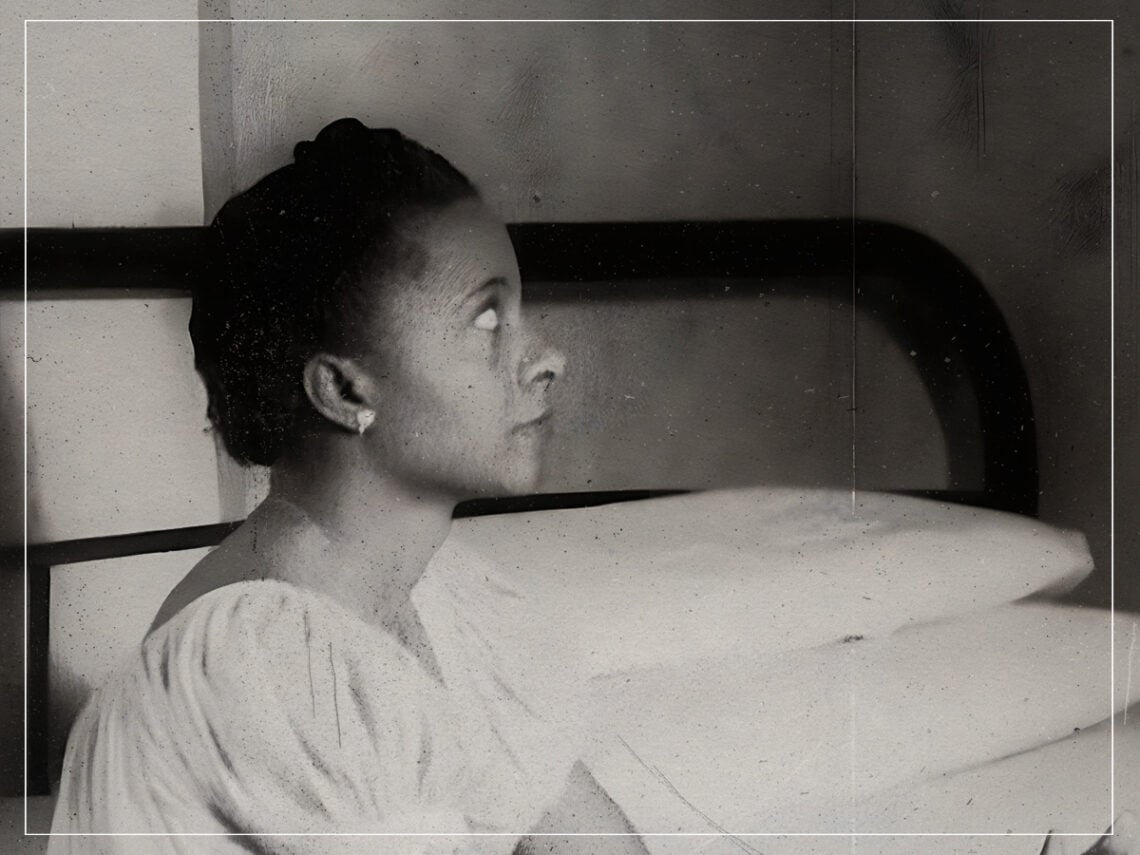
‘The Blood of Jesus’: an invaluable part of Black cinematic history

Although he wouldn’t become a mainstream name until the 1950s when he played the latter title character in The Amos ‘n Andy Show, a sitcom that hasn’t exactly aged well when viewed through a modern lens, Spencer Williams had already carved out a reputation for himself as being one of the pioneering figures in Black cinema.
He was integral to the creation of 1929’s The Melancholy Dame – regarded as the first African-American talkie – when he worked under producer Al Christie and began to develop his talents as a sound technician, assistant director, and on-camera performer. Two years later, he founded, self-financed, and built much of the equipment for his own movie and newsreel outfit named the Lincoln Talking Pictures Company, which set him down the path he’d follow.
At the time, the only Black filmmaker working in mainstream cinema was Oscar Micheaux, but Williams joined him on that rare pedestal when Alfred N. Sack handed him the chance to write and direct a feature-length production. Having made his debut behind the camera on 1931’s ten-minute short Hot Biskits, Williams would enter the realm of features a decade later through the Sack-produced The Blood of Jesus.
Rooted in the deeply religious belief system of the United States’ rural Black communities, The Blood of Jesus tells the story of a Baptist woman accidentally shot to death by her non-believing husband, which results in her being sent to a place somewhere in the middle of life and death between Hell and Zion, with the devil himself lurking to try and lead her away from her chosen path.
A morality play focusing on the fight for a woman’s soul, the narrative begins with a baptism and ends with a crucifixion-esque scene against the backdrop of gospel music. It’s a deeply religious and staunchly devout work of cinema, and there’s a lyrical sense of grandiosity to the proceedings despite the obvious limitations in terms of budget, scope, technical prowess, and not having a cast of professionally or classically-trained actors to hand.
The Blood of Jesus wasn’t only reflective of the belief system held by its creators and characters, though, but it sought to explore the cultural themes intrinsic to the Black experience of the early-to-mid 20th century, something that was being gradually eroded as many families opted to leave their smaller, more isolated communities behind in favour of trying their luck in the increasingly-bustling major metropolitan areas.
Family values were at the forefront of every frame, especially with Williams’ Ras Jackson having renounced his atheist ways and embraced religion by the time he reunites with his wife Martha Ann following her flirtation with the afterlife. In The Blood of Jesus, a quieter life in more peaceful surroundings is painted as being much more morally and spiritually beneficial than an urban existence, echoing the feelings of many who’d watched their loved ones vacate the areas they’d been born and raised in to head to the city.
It’s hardly subtle, but the overtones and sermonising contained within the narrative spoke to a number of people, the majority of whom made up the film’s target audience. The symbolism might be front-and-centre, but Williams displays plenty of ambition as well through his dynamic camera movements, liberal use of special effects, and lifting scenes from the 1911 Italian film L’Inferno – loosely based on Dante’s poem – to convey his idea of how it might look when the souls of the chosen enter heaven.
The Blood of Jesus struck a nerve that Williams would explore throughout his directorial career in that it was thematically evocative, culturally resonant, and societally relevant, allowing him to showcase his skills as a creative mind while simultaneously entertaining his demographic with movies that provided both entertainment and an identifiable, uplifting sense of self they could invest in.
Even though he was blazing his own trail through Black cinema throughout the 1930s and 1940s, history began to lose sight of Williams’ accomplishments. Many of his films – including The Blood of Jesus – were thought lost until they were discovered in a Texas warehouse in 1983. Since then, though, his work has been reappraised to the point he’s deservedly recognised as one of the most important figures in African-American filmmaking.
The Blood of Jesus was selected by preservation in the National Film Registry by the Library of Congress in 1991, becoming the first ‘race film’ to receive that recognition in the process. And to think, less than a decade previously, it had been widely accepted Williams’ classic had been permanently lost.
