


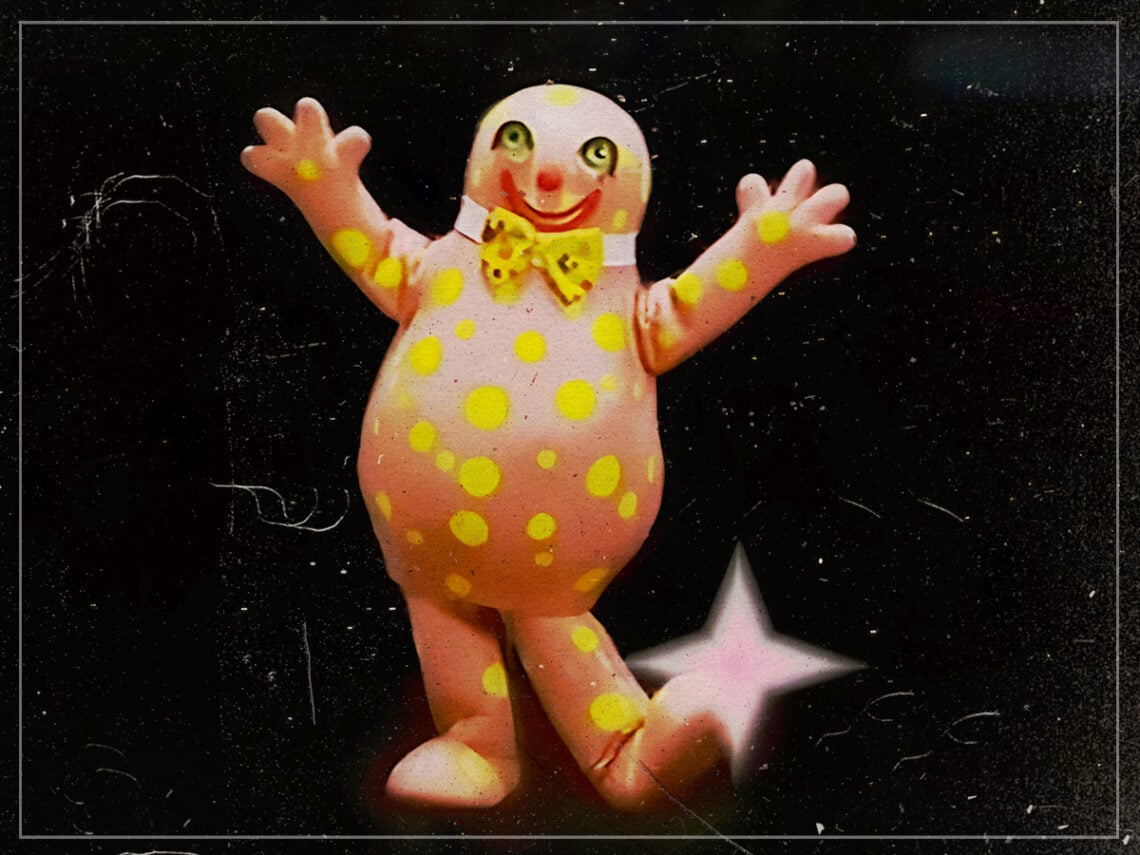
The blissful British nihilism of Mr Blobby

Describing Mr Blobby to someone who has never come across the pink inflatable Pazuzu before is a fruitless activity that will have you tripping over your words. The product of UK television in the 1990s, the character speaks to the pure chaos of British culture at the turn of the new millennium, where anything and everything was permitted as long as it vibrantly stimulated the retinas.
Essentially, Blobby is one massive in-joke that swelled to become an icon in and of himself. His first inflation would come in 1992 on the second series of Noel’s House Party, the kind of colourful, eccentric game show that would be quickly discarded in contemporary media, with Blobby appearing in the ‘Gotcha’ segment in which Noel Edmunds would interview celebrities and have them believe that the pink blob was a genuine beloved children’s icon.
Once they were under Edmunds’ spell, believing that Blobby was indeed a mere gap in their pop-culture knowledge, the inflated character would come into his own, using his peculiar electronic shrill to interrupt the guest and destroy the set using his novelty-sized body. To the uninitiated, it was unclear what you were supposed to do. Laugh at Blobby’s anarchy? Cry at the terrifying TV oddity? Why not gawp in sheer confusion? Is this what culture has come to?
With a jiggling pink body, speckled with yellow spots and green eyes that mocked your existence, Blobby was unlike anything popular culture had ever seen before and remains a design unique to Noel’s House Party and creator Charlie Adams. Yet, his brash, nihilistic depiction wasn’t all that dissimilar to the kind of content ‘90s audiences were being exposed to at a time of Big Brother slanging matches and mindless Jackass stunts.
In many ways, Blobby was an amalgamation of all that popular culture had become at the turn of the new millennium: a manic, slightly terrifying, indecipherable blob of ugly confusion that had gone mad with the technological promise of the future. What is left to do in a time of such seismic cultural change than to watch someone dressed as a nightmarish blushing creature demonically toss themselves from wall to wall?
Blobby was an enigma from top to bottom, with the lyrics of his remarkable number one single, “Mr Blobby, if only you could make us understand…Mr Blobby, when disaster strikes you never get depressed,” illustrating this with eerie accuracy. It’s almost as if the character’s desperate waving and electronic cries were distracting us from addressing the cultural and political crisis at the heart of Britain in the late 1990s and 2000s.
A ‘blissful’ distraction from the realities of the wider world, Blobby is nihilistic comic relief serving as a reminder to each and every citizen of Britain that life is indeed as meaningless and as out of control as you think it is. Despite going out of fashion in the early 2000s, a faceless TV mastermind will roll out the character every couple of years or so, whether he’s on the panel of Loose Women talking about the disastrous Brexit deal in 2019 or making a regular appearance on BBC Children in Need.
A reminder of nonsense in an ever more befuddling world that swells with anxiety, Blobby isn’t so dissimilar from the manic sketches of Monty Python, tapping into the innate humour of British society that shrugs in the face of distress. Yet, just like Blobbyland, the theme park dedicated to the character that closed in 1998 and now lies in a state of dystopian disrepair, perhaps our will to find positivity in despair is, too, slowly fading, for better or for worse.
