


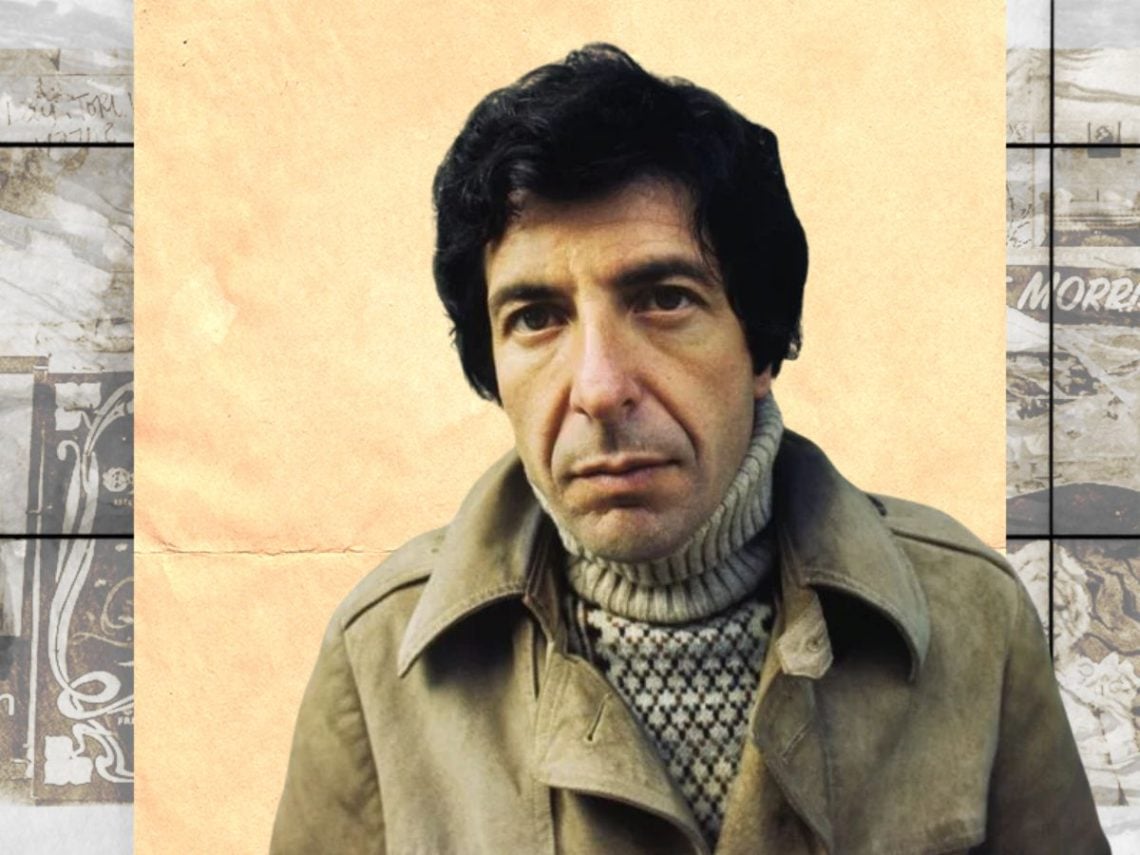
The biggest influence on Leonard Cohen’s music was an old jukebox

Leonard Cohen was more than just a musician. The singer-songwriter was a gifted poet and storyteller whose work has been admired for its honesty and enduring nature. Whether he was singing about love and sex, religion and politics, or isolation and death, Cohen tapped into something deep and profound, something that has resonated with listeners both young and old since the 1960s.
Bob Dylan worded this feeling well when he responded to Cohen’s 1984 album Various Positions. He said, “These are more than songs. These are prayers.” When Cohen died in 2016, tributes poured in from musicians of all decades – from Carole King to Peter Hook to Lily Allen. Australian musician Nick Cave declared Cohen to be “the greatest songwriter of them all”, and Beck thanked the singer “for translating the otherness we recognise but fail to express.”
Before Cohen released his debut album, Songs of Leonard Cohen, in 1967, the artist published collections of poetry and multiple novels. However, a lack of success led Cohen away from his native Canada to America in an attempt to become a folk singer. Cohen’s beautiful blend of music and poetry proved to be highly fruitful, and the musician is now recognised as one of the all-time greats.
But what inspired Cohen to become a musician as well as a poet? He revealed that it was the presence of jukeboxes that inspired him greatly. He once said, “I lived beside jukeboxes all through the fifties. There was ‘The Great Pretender,’ ‘Cross Over the Road’. I never knew who was singing. I never followed things that way. I still don’t. I wasn’t a student of music; I was a student of the restaurant I was in — and the waitresses. The music was a part of it. I knew what number the song was.”
In an interview with B.P Fallon, he also shared, “It was a great restaurant. I am sorry it disappeared. It was, it was a real funky restaurant, but it had white tablecloths; I don’t know why. (Laughs) And a really good jukebox. Well, it changed over the years. They had good country songs on it, … ‘Unchained Melody’ was a song that I used to listen to a lot on that.”
The Righteous Brothers’ ‘Unchained Melody’ appears on a compilation CD released by Chrome Dreams called Leonard Cohen’s Jukebox in 2010. The album contains 25 tracks that inspired the musician. Cuts include ‘Be My Baby’ by The Ronettes, ‘California’ by Joni Mitchell, ‘Get It While You Can’ by Janis Joplin and ‘ I Shall Be Released’ by Joan Baez.
The album also includes poetry by Allen Ginsberg, Federico Garcia Lorca and Jack Kerouac, demonstrating how intrinsic poetry was to Cohen’s music.
Check out the full playlist below:
