


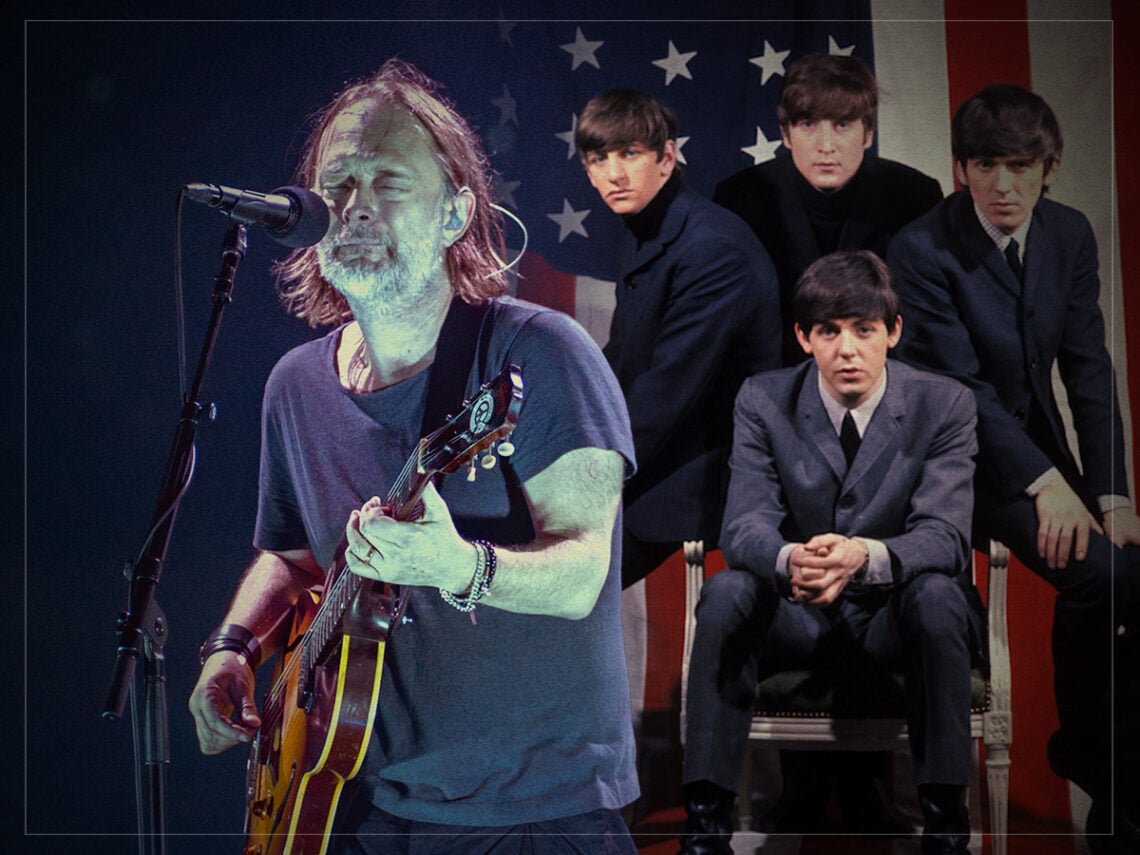
The best singer in The Beatles, according to Thom Yorke

The partisanship of The Beatles fandom is, to my mind, relatively pointless.
Being forced to choose between Paul McCartney and John Lennon is a reductive spin on one of history’s most nuanced bands, whose brilliance provokes a whole lot more than just a simple love for one member.
Because there are moments, during the sweeter days of life, when I feel like Paul McCartney is my appropriate right-hand man, guiding me through life with his optimistic innocence. But that doesn’t always sustain, and so I turn to Lennon for that more profound sense of existentialism that his songwriting and voice perfectly narrate.
Even that description in itself veers on the reductive, for there is so much more beneath the properties of those two voices. But in the case of the latter, that is what I find so compelling, especially when delivered in the songs that highlight the strain and emotion of Lennon’s voice.
Something about it felt perennially on a knife-edge, where the emotion felt like it was bursting out of every syllable, and the desperation of every lyric felt. Ironically, what seemed to provoke that style that I and so many others love was a subtle form of self-hatred that saw Lennon despising his own voice.
According to engineer Geoff Emerick, Lennon was always pleading with the production team to change his voice however they could and spare him the pain of listening to it in its rawest form. But ultimately, they didn’t, because that was therein the magic of Lennon as an artist.
It’s rather unsurprising that Thom Yorke, a musician who harbours something of a similar self-deprecation, identifies with Lennon’s voice to a point that he claims borders on obsession.
He said, “Lennon’s whole attitude to singing, I’m a little bit obsessed with, because, on the surface, he has this whole, raw, doesn’t give a f—k…just the way he sings is weirdly brutal.”
Yorke added, “I’d want to talk to him about how he was always so incredibly accurate, but always sounding on the edge of like, he’s gonna miss it, he’s gonna miss it.”
He continued to explain how his curiosity about the artist lies in his own disdain for his voice, and wondered how, as an artist, he grappled with his own expectations. He added, “And, specifically, all these ideas he had in his head about how his voice should be treated. I was like, ‘How do you see it?’ Because what they did with his voice, they had pretty simple tools, but they did really interesting things.”
Rather aptly, given Lennon’s own self-doubt, when Yorke was asked about turning the tables of history and performing a duet with Lennon, he quickly flipped into a state of self-criticism, “It would sound awful though, awful, ugh. It wouldn’t mix well at all.”
Both Yorke and Lennon might not know it, but it’s those human flaws that ultimately made their voices so beloved in music. They are the antithesis of clean-cut commercialism and instead, highlight the myriad complexities of day-to-day life in their perceived imperfections.

Never Miss A Beat
The Far Out Beatles Newsletter
All the latest stories about The Beatles from the independent voice of culture.
Straight to your inbox.