


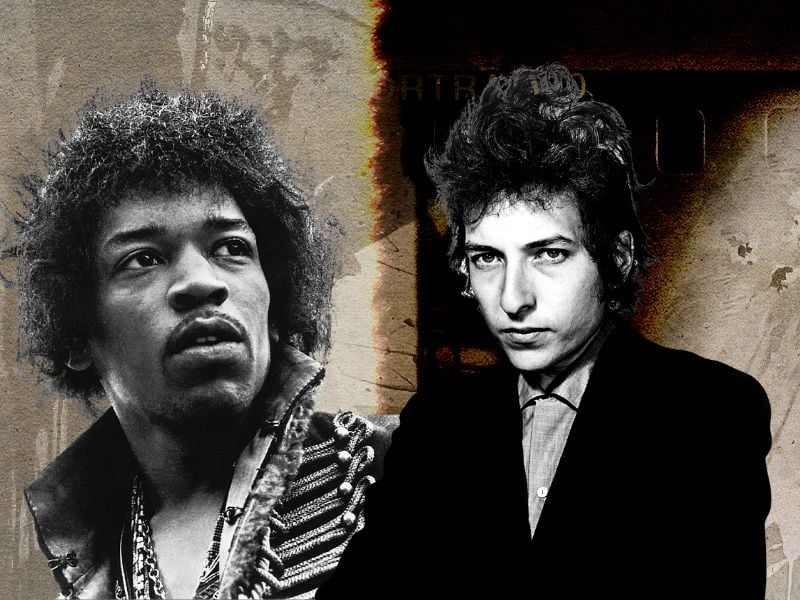
From Bob Dylan to Jimi Hendrix: Who sang ‘House of the Rising Sun’ the best?

John Lydon, a punk no less, once proclaimed: “The genuine roots of culture is folk music”. He’s probably right, too. The dogeared tradition of everyday folks and their timeless struggles are the reason we sing in the first place, and no bourgeois faux overshadow will ever change that. These dusty old tracks that have been dusted off and doled out since time immemorial hark back through eternities. The house may be a mystery these days, but aside from the specifics, the song is as relevant today as ever.
There was a time in Greenwich Village, at the dawn of the 1960s, when the song seemed brand new once again too. Authenticity was the buzzword when folk was cherished once more, and everybody was singing the oldest songs they could find. “I always kind of wrote my own songs,” Bob Dylan once recalled, “but I never really would play them. Nobody played their own songs, the only person I knew who really did it was Woody Guthrie.”
Thus, if you descended into a basement at the time, then you’d find a slew of people probably playing ‘House of the Rising Sun’ at one time or another. These folk singers eventually figured out that singing your own songs was patently more authentic, but it’s easy to see how the lure of ‘House of the Rising Sun’ persisted when the times started a-changing rather rapidly.
The song itself tells the world-weary tale of an ambitious life gone awry in the city of New Orleans. However, with its roots believed to be in traditional English folk music, the geographical placement of the tale likely comes from a later permutation. The fact that the song remains to this day of unknown authorship only adds to its timeless appeal. Thus, with no true owner to declare, we’re looking at some of the finest versions below.
Who sang ‘House of the Rising Sun’ the best?
Leadbelly
There isn’t a mention of ‘silence in the studio’ when Leadbelly was recording. The old bluesman welcomed the natural rabble of music’s rousing atmosphere when he was making a record. Back in 1944, he laid down his version of this old tune and imbued it with enough darkness to blow out a candle from a thousand paces.
This profound new atmosphere he painted upon the track helped to kickstart the notion of authenticity in blues and folk. He wasn’t reciting an old story like a campfire entertainer. He was churning through a timeless tale that was as visceral now as it was when it was first written, whenever that was.
Bob Dylan
Dylan has drawn so many plaudits that it almost seems silly to identify one factor for which he hasn’t received enough credit, but I’ll be damned if his sense of melody isn’t second to none. While a host of versions caught on to Leadbelly’s darkness in the intervening years, Dylan turned it into a tuneful affair that stretched beyond a drunken ramble.
Croaking in a voice beyond his years, he makes the misery of fall from grace seem singalong. Ultimately, Dylan only played the classic song live eight times and only twice in the ’60s. It is believed that this rare recording took place either on April 12th or April 18th, 1963, although the exact date is disputed. It sees Dylan lend it a fingerpicking style, and he imbues it with a befitting careworn atmosphere.
Dave Van Ronk
This is where we encounter a twist in the crooked tale of the authorless track. How do you steal something that belongs to nobody? Ask Dave Van Ronk. In the liner notes for his compilation album The Mayor of MacDougal Street, Van Ronk said of the song’s evolution under his guidance: “I had learned it [‘House of the Rising Sun’] sometime in the 1950s, from a recording by Hally Wood, the Texas singer and collector, who had got it from an Alan Lomax field recording by a Kentucky woman named Georgia Turner.”
“I put a different spin on it,” recalled Van Ronk. He changed the sound “by altering the chords and using a bass line that descended in half steps—a common enough progression in jazz, but unusual among folksingers. By the early 1960s, the song had become one of my signature pieces, and I could hardly get off the stage without doing it.” A young Dylan watched him play a great many times.
One night that same Dylan entered the bar and sheepishly sat with Van Ronk after a recording session with Columbia. “‘Hey, would it be okay for me to record your arrangement of ‘House of the Rising Sun?’” Dylan eventually asked his pal. “‘Jeez, Bobby, I’m going into the studio to do that myself in a few weeks. Can’t it wait until your next album?’ A long pause. ‘Uh-oh’. I did not like the sound of that.” It was a sound that said, ‘I’ve already done it’.
Odetta
Another influential cohort of the folk scene was the majestic Odetta. Her version is stunningly unique. With a voice that could conjure a storm on a cloudless day, Odetta focuses on the mournful side of this age-old tale. Haunting and mystic, there is a cinematic feel to her interpretation.
With this in mind, she unspools the tale in a visual sense. While some claim the House in question is a brothel, and others a sort of casino shack, the fact of the matter is that it is a mystery and, in that sense, an allegory. This is beautifully celebrated in the poetic way that Odetta portrays it. She weaves the world in which the song exists around you.
The Animals
When counterculture finally entered full swing, it seemed folk had done everything it could to this old, dilapidated track. The next step seemed obvious, and The Animals obliged with profound effect creating what has to be considered the definitive version—and the most influential at that.
“There was a connection that went on between the Animals and Bob, and our recording of ‘The Rising Sun,’” Animals frontman Eric Burdon says. “I’ve been told by lots of people who know, and were around at the time, that that’s what stimulated Bob into going electric, and becoming a rock star as opposed to a folk star.”
Burdon continues: “You might say we were all exposed — when I say ‘all of us,’ I mean the same age group on both sides of the Atlantic — we were exposed to the root of true black music at the same time, and realized that that was the road that we wanted to take.”
It is the opinion of the rafter-rattling frontman, based on what he has heard from others in the industry, that if Dylan thought the wise wherewithal of folk tales could be paired with the raucous cutting edge of rock ‘n’ roll as effectively as the Animals had coerced them then who cares about appeasing the so-called gatekeepers of genre standards. After all, doesn’t it seem fitting that a victim of such folly as told in the tale of the Rising Sun would want to cut loose with a growl?
Jimi Hendrix
Lord knows how many half-recorded bootlegs of ‘House of the Rising Sun’ are doing the rounds in dusty attics, but I doubt any are as appealing as Hendrix’s. Details are sparse on the recording, but it is believed to be a genuine take from a session with The Experience, eventually coming to light on a bootleg album of outtakes titled In the Beginning.
If The Animals tapped into the track’s adrenalised side, Hendrix sent it home in a hand basket. With a sort of skiffle rhythm, blistering guitar work waltzes around the instrumental arrangement with free rein. Perhaps things prove too rattling to work in the all-important vocal topline, but you can always paste them in yourself with a track as well-trodden as this old classic of old classics.

Never Miss A Tale
The Far Out Bob Dylan Newsletter
All the latest stories about Bob Dylan from the independent voice of culture.
Straight to your inbox.