


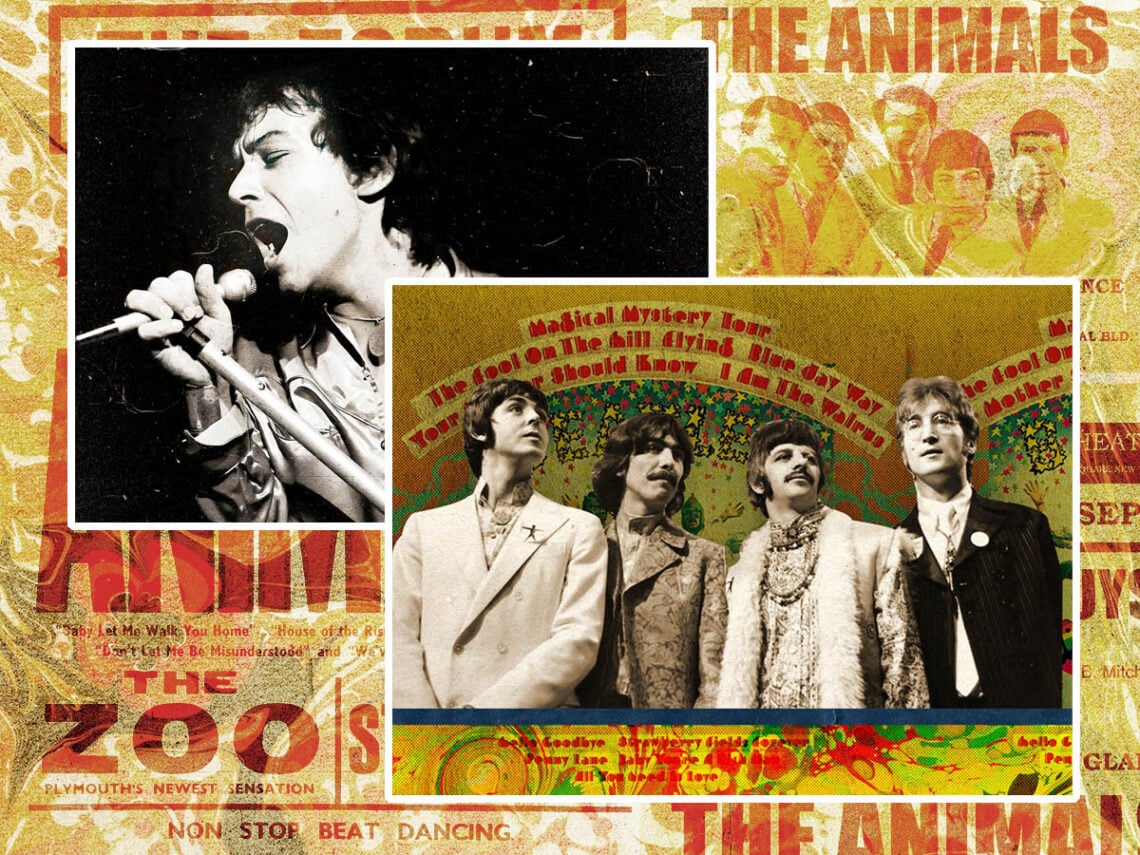
The Beatles song written in honour of The Animals’ Eric Burdon

Eric Burdon has always held a peculiar place in the history of pop culture. He was just a humble layabout from Newcastle whose voice suited the sound of a revolution. When he found fame almost inadvertently while fronting The Animals, he continued that casual air of taking life as it comes, but strangely, in doing so, he became an icon of sorts among his peers and pushed rock ‘n’ roll towards progressive new heights with his swaggering footloose style.
Typifying this is the fact that his band covered the dogeared old folk song ‘The House of the Rising Sun’ simply because he liked it. By rights a rock band had no business with the song but Burdon did what he wanted. That was revolutionary. “There was a connection that went on between the Animals and Bob [Dylan], and our recording of ‘The Rising Sun,’” Burdon says himself. “I’ve been told by lots of people who know, and were around at the time, that that’s what stimulated Bob into going electric, and becoming a rock star as opposed to a folk star.”
Burdon continues: “You might say we were all exposed — when I say ‘all of us,’ I mean the same age group on both sides of the Atlantic — we were exposed to the root of true black music at the same time, and realised that that was the road that we wanted to take.” It is the opinion of the rafter rattling frontman, that Dylan suddenly thought the wise wherewithal of folk tales could be paired with the raucous cutting edge of rock ‘n’ roll. So, he went electric and inspired The Beatles, in turn, to add some folk depth to their sound.
At the heart of all this was good old Burdon, and his impact was not lost on his contemporaries. However, what they regarded the most was his effortless way with women and even more effortless way with the bottle. “Eric Burdon,” Danny Sugerman recalled, ”Was the one person in town when Jim Morrison was out of control at the Whiskey a Go-Go, or The Troubadour, or some topless club, people would call Eric to calm Jim down”.
While “Jim respected Eric” enough to obey his calming commands, he was also often peeved and, frankly, bewildered that this young, drunken electrician’s son with a scraggy bowl cut would always pull women despite Morrison’s best Byronic efforts. This was also remarked upon by John Lennon. The Liverpudlian philosopher even studied his erotic ways and immortalised them in song. Eric Burdon is the ‘Eggman’, and the reasoning is rather unsavoury.
“I was the Eggman,” Burdon writes in his memoir, Don’t Let Me be Misunderstood, “Or, as some of my pals called me, ‘Eggs’. The nickname stuck after a wild experience I’d had at the time with a Jamaican girlfriend called Sylvia. I was up early one morning cooking breakfast, naked except for my socks, and she slid up beside me and slipped an amyl nitrate capsule under my nose. As the fumes set my brain alight and I slid to the kitchen floor, she reached to the counter and grabbed an egg, which she cracked into the pit of my belly. The white and yellow of the egg ran down my naked front and Sylvia slipped my egg-bathed cock into her mouth and began to show me one Jamaican trick after another.“
This old yoke may well have died with Eric, but he got a bit talkative one night around a house party at Lennon’s place. Burdon continues: “I shared the story with John at a party at a Mayfair flat one night with a handful of blondes and a little Asian girl. ‘Go on, go get it, Eggman,’ Lennon laughed over the little round glasses perched on the end of his hook-like nose as we tried the all-too-willing girls on for size.”
The name stuck, and in Lennon’s mind, it became mythologised as a sign of the revolutionary zeitgeist. In ‘I Am The Walrus’, the track that even the Grateful Dead called the most psychedelic thing ever heard, the strange presence of Burdon is woven in like a numen of carnal carnage, with a singular sex act preserved in history to honour a counterculture hero forevermore.

Never Miss A Beat
The Far Out Beatles Newsletter
All the latest stories about The Beatles from the independent voice of culture.
Straight to your inbox.