


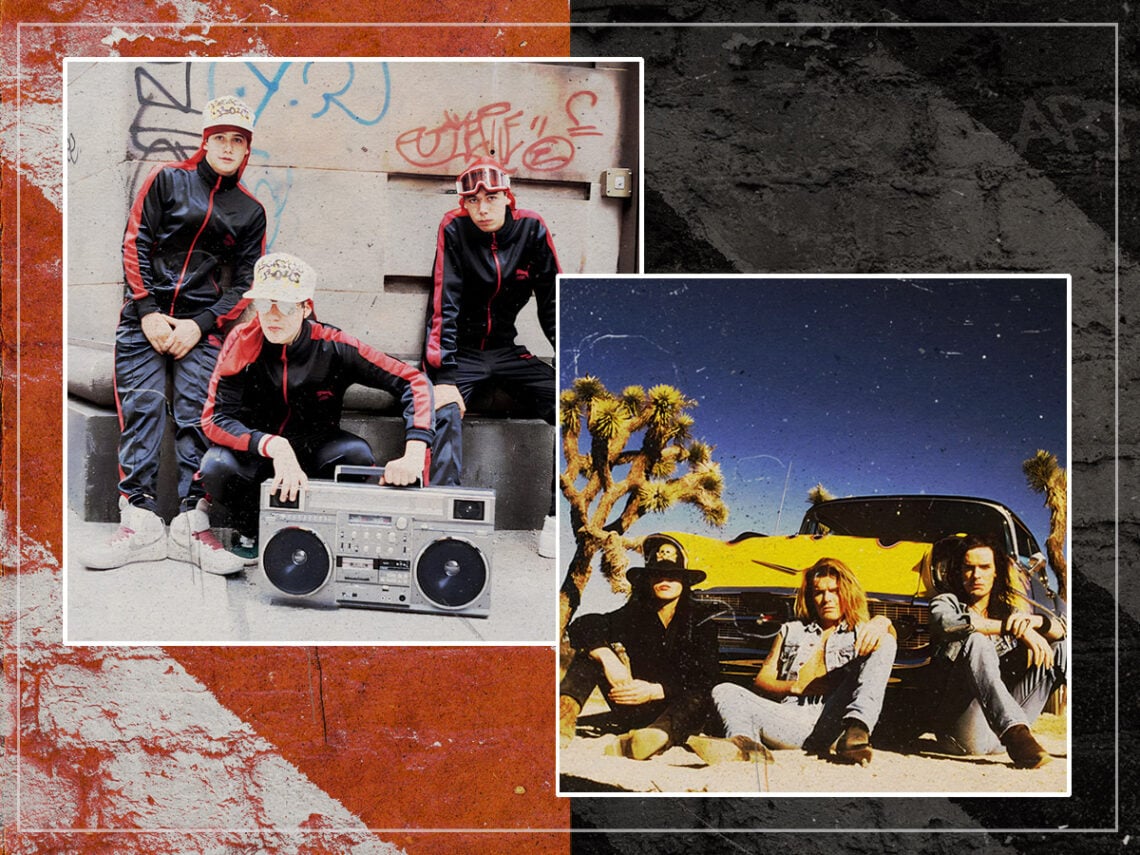
How The Beastie Boys shaped the career of The Cult

No artist exists in a vacuum. Even though it might be easy to make songs among friends from a handful of your favourite artists, there will always be some bands that change the game and make you rethink what music is supposed to be in the first place. Although The Cult may have been responsible for making a more straightforward take on rock and roll, one of their biggest inspirations came from hip-hop.
When the band started to form in the 1980s, though, they had already started working on a darker take on straight-ahead hard rock. While not necessarily metal, the tremendous force behind Ian Astbury’s voice indebted him to the rock crowd almost immediately, from his massive take on the song ‘Fire Woman’ to songs like ‘Love Removal Machine’.
As the band were starting to cut their first handful of tracks, they wanted to have something that would cut to the bone a lot quicker than the usual songs on the radio. Compared to the watered-down sounds of rock coming out at the time from glam-rock acts, Astbury was more interested in creating that would knock the listener over the head rather than beating around the bush.
While many would use records from the likes of AC/DC or Led Zeppelin as a reference point, Astbury was more interested in what was happening in the hip-hop community, becoming enamoured with the sounds of Beastie Boys. Although they may not have been linked to metal in any way, their way of co-opting metal licks across their debut Licensed to Ill struck a nerve with Astbury upon first listen.
Focusing on the raw sonics of the record, Astbury said that he needed to work with producer Rick Rubin after listening to Licensed to Ill, saying, “When I found out they were being produced by Rick Rubin, I thought, he’s got to produce us because that is the sound. Stripped back, rhythmically driven, direct. We had to get that sound. So, we went and pursued Rick Rubin”.
Liking what he heard, Rubin eventually convinced the band to have a stripped-back sound influenced by the likes of Blue Cheer. Across albums like Electric, the band would eventually make songs that hit the listener like a smack in the mouth from the moment they started, like the massive sounds of ‘She Sells Sanctuary’.
Rubin’s touch behind the production board would also blossom into a great relationship between Astbury and the New York natives. Although they might not have been the same genre, Astbury remembers attending a show and even hopping on stage with the band as well, explaining, “If you look at the MTV New Year’s party in 1986 going into ’87, you’ll see me on stage with them performing ‘No Sleep to Brooklyn’. I was part of the posse on stage. We really immersed ourselves in that world, the Def Jam world”.
While The Cult would ultimately have their feet planted firmly in the world of hard rock, their friendship with the Beastie Boys was a good indicator of how they approached their craft. Instead of the usual hard rock acts who wanted nothing to do with hip-hop, Astbury was looking to make any kind of music so long as it had a solid rhythmic foundation behind it.
