


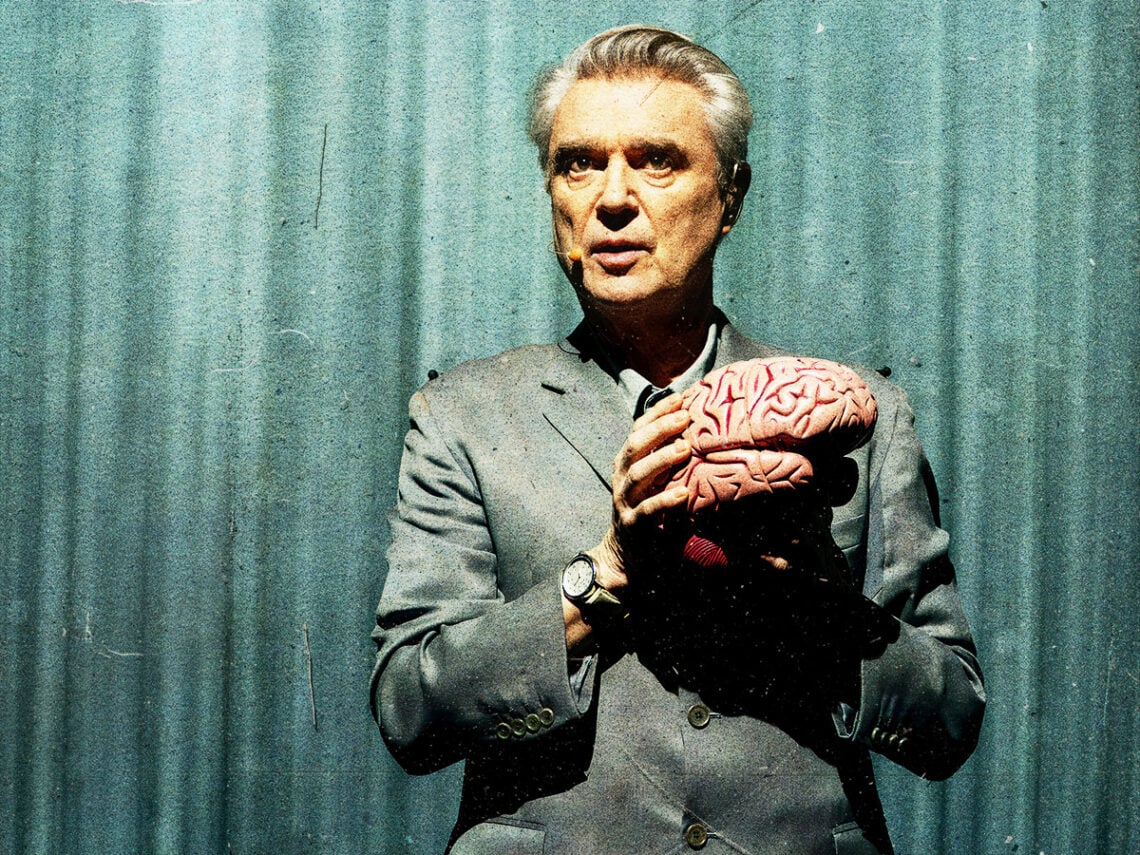
The artists David Byrne considers to be “unconventional geniuses”

To many, David Byrne has cemented his reputation as an unconventional genius. He is an absolute artist, infusing everything he creates with his own curiosity and quirks. From adopting an oversized suit as the frontman of post-punk pioneers Talking Heads to leading a parade of musicians around a Broadway theatre for American Utopia, Byrne has always carefully treaded the line between universality and unconventionality.
With Talking Heads, he infused nonsense lyrics and more off-kilter musical experimentation with pop sensibilities and an undeniable danceability. His singular directorial venture, True Stories, paired surrealism with suburbia, while Stop Making Sense elevated the idea of the concert film with memorable dance moves and a seemingly ever-increasing band.
From lyrics to staging, each of Byrne’s creative endeavours have delved further into himself and into humanity, always finding connection in the weird and the wonderful. Though his creative output speaks for itself, Byrne has often spoken out about his process, sharing his coveted understanding of art and culture freely.
As can often be seen within his discography, the Talking Heads frontman believes that the content and form of songwriting should be considered with equal importance. “A song might be about a divorce or a death or whatever, but the emotion is always expressed within the form. The two are of equal importance,” he once told The Guardian.
This belief can be seen in some of Talking Heads’ most successful hits – ‘Once in a Lifetime’ juxtaposes a life on autopilot with otherworldly synths, while ‘Psycho Killer’ punctuates the twisted thoughts of its namesake with French interludes and a killer bassline. But while Byrne might be married to this method of sonic and lyrical equality, he accepts that certain “beautiful exceptions” are exempt from it.
“They are the beautiful exceptions,” he says of otherworldly jazz eccentric Sun Ra and free jazz founder Ornette Coleman, “Unconventional geniuses.” Not bound by the equality of form and content, he suggests, “There is a great beauty in their music because they think differently about the form and the idea of composition. They are working so far beyond the things that we take for granted.”
“I mean, you could not point to a Sun Ra song and say, ‘Oh yeah, that’s the one about the divorce,’” Byrne concludes. You certainly couldn’t – those innovative exceptions were never constrained by the conventions or expectations of songwriting form. Rather, they forged their own form.
Despite their differences, Byrne, Sun Ra and Ornette Coleman are all unconventional geniuses in their own right, each of them making their own mark on music history. With his own penchant for innovation and experimentation, it’s no surprise that Byrne holds admiration for those exceptional artists.
