


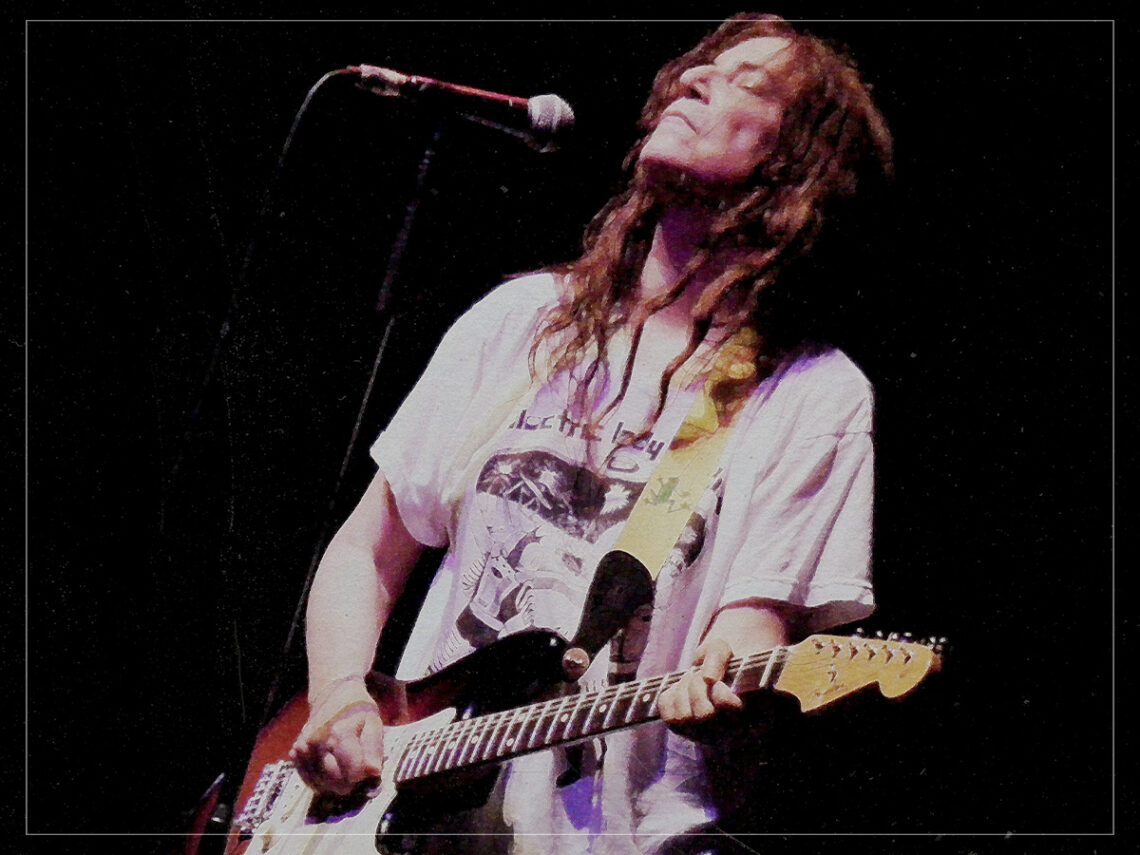
Patti Smith on why Lou Reed was the “friend of New York City”

Not every rock and roll star originates from the middle of nowhere. Although bands like The Beatles helped put their hometowns on the map the minute they got famous, it’s easy for someone to look to the major cities in England and the US for inspiration when they first start to put together their own riffs. There might be an allure behind Los Angeles or an unspoken danger about Detroit, but when Patti Smith first started to find herself as an artist, something called her to New York City.
Because, really, ‘The Big Apple’ was the kind of city that rock and roll was built for. The hustle and bustle of downtown Manhattan has always been about keeping things moving as fast as possible and keeping up with every trend happening at the time, but some of the greatest artists of that era know how to defy the trends around them and pave the way for something new.
Take The Strokes, for example. There wasn’t anyone at the turn of the 2000s in rock that wasn’t knee-deep in either nu-metal or pop-punk, but Julian Casablancas helped make rock and roll feel cool and dirty again by making a balls-to-the-wall rock record that felt like riding a dingy subway through the meaner streets of the city. But for all the glitz and glamour, Smith knew there was more than posturing going on.
When she first moved to the city, the Greenwich Village folk scene had already spit out some of the finest songwriters of her generation. The Tin Pan Alley model for songwriters had already become the mecca at the time, but when Bob Dylan got to New York, he had taken all the lessons from every great poet and folk singer before them and made both mediums work together.
So when Dylan finally went electric, it was only a matter of time before someone followed in his footsteps, and Lou Reed was next in line when putting the Velvet Underground together. While most people didn’t get them at the time, Reed captured the seedy side of New York in perfect detail across their albums, being as interested in quoting different forms of literature as he was in tales of drag queens and junkies feining for a kick of something on the street.
It may not have been the easiest music for the average music fan to stomach at the time, but Smith felt that Reed hit the nail on the head for what the city was all about, saying, “People like Donald Lyons or Lenny Kaye or Lisa Robinson, people in the Chelsea Hotel, they all spoke of the strength and the power and and how much the Velvet Underground so completely encapsulated the city. It was intellectually satisfying without being pretentious or standoffish. I think that what kept me very interested in them was Lou. His poetics were quite crystalline and simple. He had a way of taking mounds of knowledge that and paring it down to a few lines”.
And while it took Smith a few years to understand what the band were all about, she couldn’t deny that Reed was the purest version of what New York was about. Even when inducting him into the Rock and Roll Hall of Fame, Smith said that he meant something more to ‘The Big Apple’ than a simple songwriter when talking about the day he died, saying, “I had forgotten that he wasn’t just my friend; he was the friend of New York City”.
But Reed never defined New York by talking about going to the Statue of Liberty or going through Central Park. It was all in the delivery, and whenever someone turns on Reed’s music when going through the city streets or making their way through Times Square, they’re bound to catch a brief glimpse of that kind of perfect day that he sang about so many times before.
