


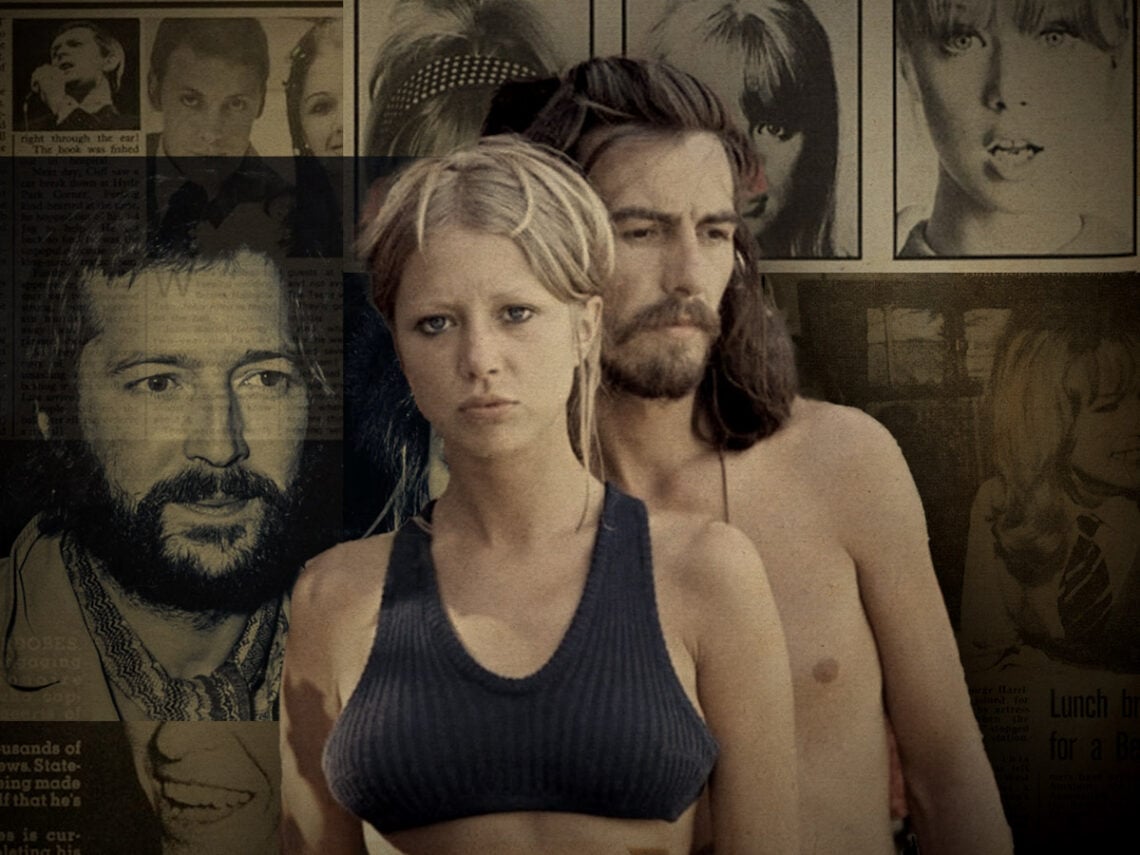
George Harrison, Pattie Boyd, and the album that helped him through their divorce

The divorce everyone spoke about in 1970 was that of The Beatles. History’s biggest band had stuck a lightning rod through culture and now pulled it back out, leaving the world broken, confused and nervous for the future.
The band, on the other hand, well, they were completely relieved. Their brotherhood had grown toxic, and truthfully, no longer were they dependent on one another’s companionship. They had all grown into their own lives with their own partners, be it Linda Eastman for Paul McCartney, Yoko Ono for John Lennon and Pattie Boyd for George Harrison.
Unlike the others, however, Boyd had always been there for Harrison. After meeting in the heady emergence of The Beatles in ‘64, she had been something of a constant in Harrison’s life, joining in when the band first experimented with LSD, waiting patiently at home while Harrison explored his spirituality in India, and even laying down backing vocals as part of the choir in ‘All You Need Is Love’.
For all intents and purposes, they were soulmates, and Boyd offered some safety in a world marred with fame-ridden uncertainty. But then, just as the band began to fall apart, so did their marriage. Harrison’s company began to change, namely in the returning presence of one Eric Clapton.
The pair forged a creative kinship, even with Clapton laying down some parts on late Beatles numbers at the invitation of Harrison and then crucially helping him forge his iconic debut solo record, All Things Must Pass. But all along, Clapton was harbouring an intense love for Boyd, who reciprocated the feelings and began a steamy affair with the guitar virtuoso.
From 1970 to ‘74, it became an entangled web of infidelity, fuelled by the egos of both musicians who even reportedly engaged in a guitar-playing duel at a house party, as they sought to unleash their frustration on one another. Eventually, it ended in ‘74, and Harrison retreated to the studio in a bid to heal himself through record-making.
That year, he released Dark Horse, a record that began to sound like a painful diary entry of a time when Harrison’s life as he knew it was crumbling. But despite the messy nature of his break-up, which not only saw Clapton enter the fray, but Ringo Starr’s wife Maureen Starkey too, with whom Harrison had an affair, the entire recording process remained humble and respectful, in a bid to honour music as a therapeutic process.
“He was very open; he let everyone try to figure out their own parts in a very relaxed manner,” drummer Andy Newmark remembered. “He was the opposite of dictatorial. Nothing about George reeked of stardom or fare. His marriage was ending, everyone knew that, but it was all friendly and polite and civilised – very English! Pattie and George were at the dinner table and it was all very civil. They were very adult about the way they handled it. They officially split up after we recorded. By September they had separated.”
Despite the dramatic mess of their break-up, the calmness Newmark remembered set the tone for the rest of their lives. Dark Horse may have offered a musical sense of calm, as Harrison understood the reality of his new life and realised that, like himself, Boyd was just a person trying to figure out the world. After ‘74, they never lost touch and continued to care for each other, knowing that despite it all, they had each other during the most turbulent of times.

Never Miss A Beat
The Far Out Beatles Newsletter
All the latest stories about The Beatles from the independent voice of culture.
Straight to your inbox.