


The album that began Jim Morrison’s tragic demise: “Beauty fades”

When my friend and I turned 27, every single one of us spent our birthday remarking, “I can’t believe X was 27 when they died”, to one another. Of course, X was a gap to be filled by any one of the sadly dubbed “27 Club” – a collection of artists who all died at the ripe age of 27.
Kurt Cobain, Brian Jones, Jim Morrison, Amy Winehouse, Janis Joplin and Jimi Hendrix, to name the most obvious.
As tedious as the repeated comment may have been, it was warranted, for turning that age was a sobering reminder of just how young each of these icons was when they passed away, and what they and their fans were equally robbed of. Or perhaps, in some cases, namely Cobain and Winehouse, just how much pressure their successful careers had forced on them, at what was now apparent an unfair age.
Because we have a habit in entertainment, of mythologising breakneck hedonism and passing it off as an expected byproduct of stardom, or worse necessary evil for their artistic and observational greatness, that ultimately allows us to live a life more informed.
Therein lies the essential darkness of understanding what the 27 Club means. Sure, firstly it’s just a sobering reminder of their youth but slowly creeping up behind is the realisation of what caused it and society’s complicity in the entire thing.
But in the case of most of these artists, the predisposed attitude of hedonistic chaos feels relatively identifiable through their art. Through their lyrics and wholehearted performative style, they felt as though they were walking through life on a highwire, with genius ready to catch them on one side, and mania on the other.
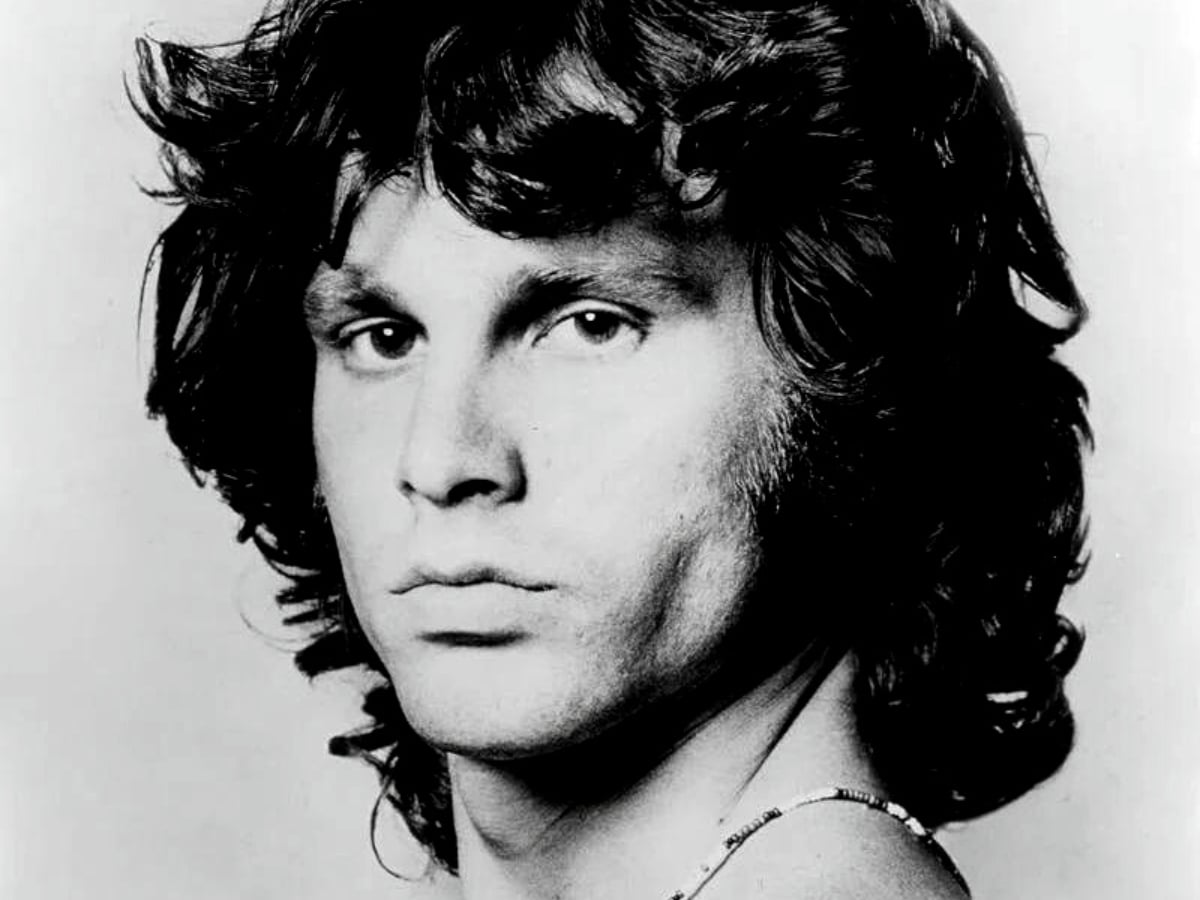
This was certainly obvious in Jim Morrison, who made his mercurial presence clear from the very first utterance of a lyric. His performance on The Doors’ self titled debut album is madness and charm in equal measures, making him the sort of mercurial jester of music at the time.
Artistically, it seemed as though he was always teetering on the edge, and sadly, it was an edge he found. The elusive sense of chaos that made his talent so appealing became ultimately frustrating in the real world environment of the studio. On the album Waiting For The Sun, it was apparent to his bandmates and the producer that he was losing a grip on his own sense of self.
The band’s guitarist Robby Krieger remembered, “Jim would come in too drunk to sing decently…I don’t mean a verse at a time, either. Sometimes it was a phrase at a time, from one breath phrase to another.”
As such, it drew out a level of exasperated vocal compositing from the record’s producer Paul Rothchild, who became an important external figurehead for the band, allowing them a lens through which they could see that Morrison’s behaviour was not only detrimental to himself, but the entire band.
Speaking of the album’s closing song ‘Five To One’, Krieger said, “If you close your eyes and listen closely, you can hear the tension,” adding, “You can hear an exasperated producer and three cringing bandmates.”
It proved to be the beginning of the end for Morrison, both musically and personally, with Krieger recalling the entire process with a cutting, yet saddening comparison. “As the talent fades, the producer has to become more active,” before resigning to the metaphor that gave him one of his last memories of Morrison, “It’s sort of like the ageing beauty queen. As the beauty fades, more make-up goes on.”
