


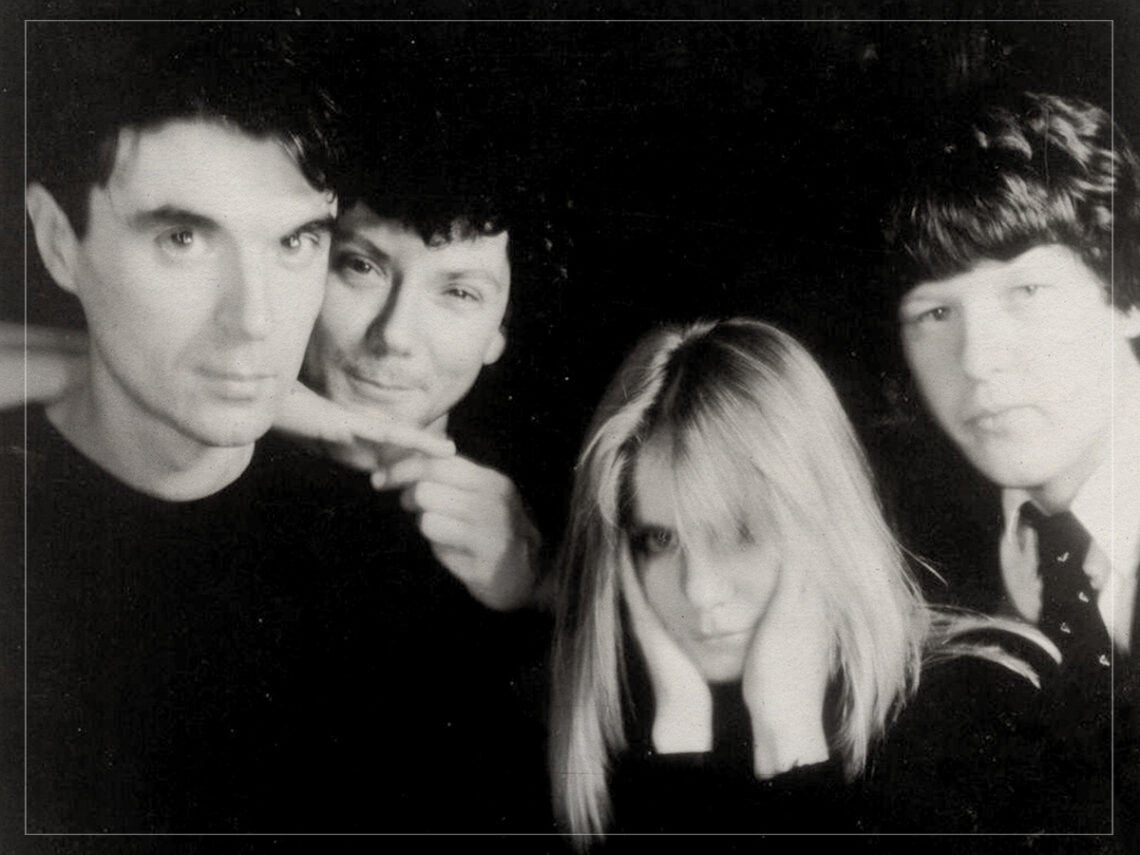
The 1983 Talking Heads album that became a classic “by accident”

For a band as beloved as they’ve come to be, it might come as a surprise to some people that Talking Heads rarely ever performed well in the charts, whether that’s in terms of the positions reached by singles or albums.
If you, for whatever reason, get yourself down to any indie-presenting disco in today’s age, you’ll almost certainly hear the likes of ‘Psycho Killer’ or ‘Once in a Lifetime’ ringing out over the sound system, with plenty of alcohol-lubricated voices chanting the choruses of either of these songs in unison. People evidently go crazy for a Talking Heads number in many situations, so the mind boggles as to why this is more prevalent today than it ever was at the time.
You’ve also got to look at just how influential they’ve become to future generations, and how many other acts look up to them as the mark of artistic brilliance that they want to be able to emulate in their own music. Any act that has a slightly off-kilter approach with jerky rhythms and dadaist lyrical approaches will almost certainly have been influenced by Talking Heads to some degree, and there doesn’t appear to be many people who actively appear to dislike their material.
However, all of this critical acclaim and cult fandom does not necessarily equal contemporary commercial success, and this couldn’t be more true for a band like Talking Heads, who, during the early part of their career, never seemed to be able to transition from this underground appreciation into being adored by a broader audience. The incredible reception of frontman David Byrne’s recent solo tour, where he performed a number of Talking Heads songs, would have you think that they were megastars, but there was only really one period in his career where he genuinely believed that he and his band had actually entered the mainstream.
Even this felt like an accident to him, though, and he told NPR in 2003 that their 1983 album, Speaking in Tongues, was a complete fluke, and that it should never really have stood a chance of becoming their most successful album. Despite this, the minute alterations to their approach led to it achieving a greater reception outside of their usual fanbase, and lifted them to new heights that they’d previously not seen.
“We felt it was possible to work within a kind of pop song format and kind of do what you wanted as long as you stayed within that format,” Byrne proclaimed. “Having a love of pop music, we felt that occasionally something we did kind of by accident would connect to a larger public and other things would not.”
‘Burning Down The House’, the lead single from the album, was their highest-charting hit in the US, seeing them reach the top ten for the first and only time, while ‘This Must Be The Place (Naive Melody)’ has taken on a life of its own in the years since, again perhaps in a more cultish fashion rather than as a result of it climbing up the charts.

However, for all of their art rock experimentation, they’d finally found a way to present their work in a manner that felt as though it was not only artistically rewarding, but tapping into the feel-good desires of what the public wanted to hear.
That’s not to mention that their live shows, immortalised in the release of their Stop Making Sense concert film the following year, were perhaps the greatest representation of a band at the top of their game, and while the rewards may not have come in an instantly gratifying way, they were bound to reap them at some point down the line, simply as a result of them being a different class.
