


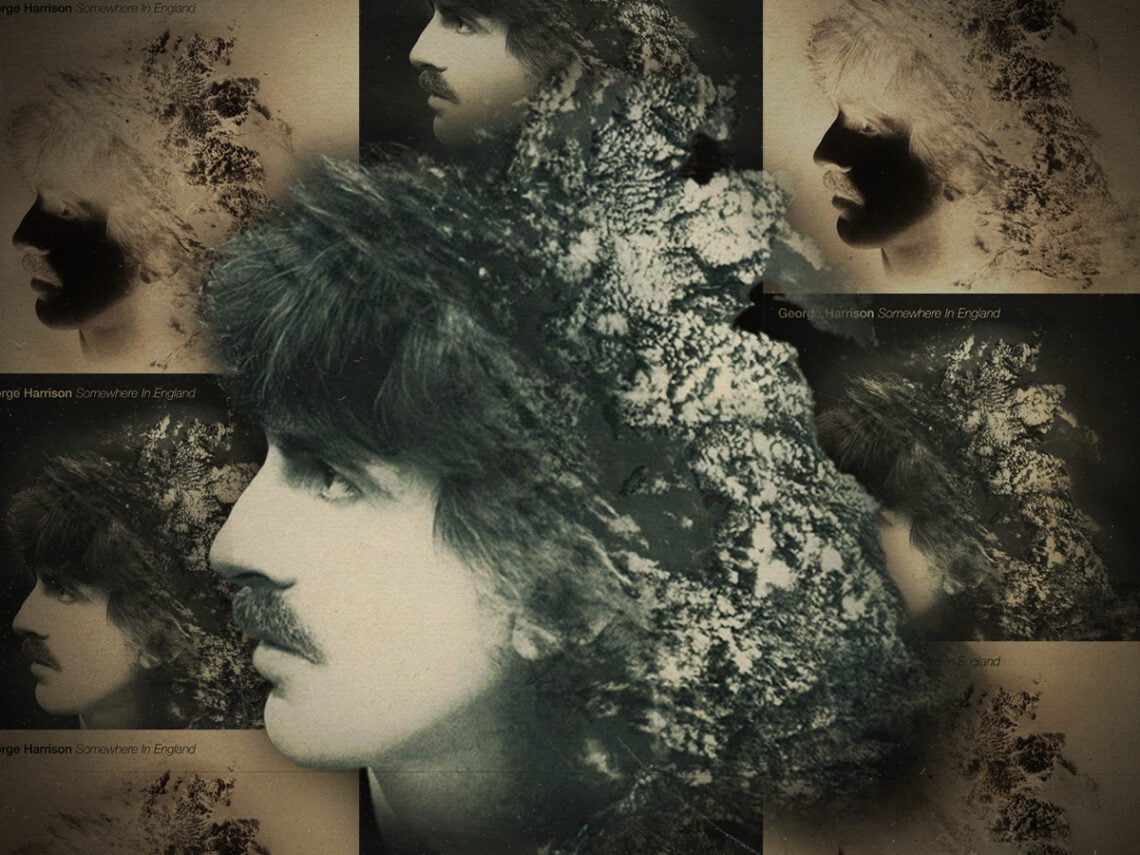
‘Teardrops’: The 1981 single that became the most disappointing of George Harrison’s career

After the breakup of The Beatles, demanding that the four members continue to adhere to a particular style that was in keeping with their previous output was always going to be a tough task, but the longer they spent apart, the further away they strayed from their origins.
Of course, The Beatles themselves went through something of a dramatic transformation in their short time together as a group, moving on from the skiffle and rock and roll origins that gave them a platform in the first place to experiment with psychedelic pop and a multitude of diversions into other genres. However, as much as their collective desire to push things in a variety of directions suggested that each of them was on board with these directions in particular, the respective solo catalogues of each member couldn’t have felt more disparate.
With Paul McCartney arguably staying the closest to being a bona fide rock star, John Lennon taking his experimental tendencies to even more obtuse extremes, and Ringo Starr seemingly wanting to rebrand as a country singer, three of them had established relatively clear identities in the first decade of their new chapters. George Harrison, however, is a lot harder to pin down, and the directions that his solo career began to take after the release of his 1970 album All Things Must Pass were somewhat peculiar to say the least.
1973’s Living in the Material World proved to be a decent follow-up to his megalithic triple LP, and the success of his Concert for Bangladesh collaborative effort was a marvel despite its one-off nature, but after the mid-point of the 1970s, Harrison appeared to experience something of an identity crisis, unsure of whether to push himself away or towards unabashed pop hit-making.
Existing in this artistic limbo where he wasn’t receiving much in the way of chart or critical success was a puzzling place for someone of Harrison’s stature to be, and upon entering the ‘80s, the guitarist and songwriter ended up putting together a confounding and chimerical album called Somewhere in England, which featured perhaps the most disappointing single of his entire career in ‘Teardrops’.
Warner, his label at the time, had been presented with the album in September 1980, and they were grossly underwhelmed with the lack of potential hits in it, arguing that four of the songs ought to be replaced with something that could be marketed towards a teenage and young adult audience. Evidently frustrated by this request, Harrison went back to the drawing board and produced a handful of songs to fit the brief, with ‘Teardrops’ having been penned while he was on holiday in Hawaii.
The thing is, asking a former Beatle to create something to a brief and not simply follow his instincts isn’t always likely to produce the greatest results, and consequently, ‘Teardrops’ ends up being a garish fusion of contemporary sounds that find themselves washing out all of Harrison’s greatest hallmarks as a songwriter. Rather than putting guitars front and centre, the song bursts into life with waves of synthesisers that feel so of their time that it’s no wonder it fails to stand up to the rest of his work, and Harrison’s trademark vocal delivery is absent to the point that it’s hard to even distinguish whether it’s him singing.


‘Teardrops’ isn’t exactly a bad song, but it’s one that is a victim of its own circumstance and plagued by creative decisions that were uncharacteristic of Harrison’s usual fare. Failing to chart everywhere around the world except the US, where it peaked at an embarrassingly low point outside the top 100, it was clear that Warner’s insistence that he provide them with hits backfired in the most catastrophic way, and that they and Harrison would probably have had more success had the album been accepted in its original form.
It also shouldn’t come as a surprise that after finishing the recording for his next album, 1982’s even bigger flop, Gone Troppo, Harrison decided to retreat from the music industry for a period and focus on extra-curricular activities such as film production. He’d hit a dead end creatively, seemingly unable to trust his own intuition, and was having his hand forced to write songs that were not only far below his best, but that were so drastically out of character that they don’t feel like his own creations.

Never Miss A Beat
The Far Out Beatles Newsletter
All the latest stories about The Beatles from the independent voice of culture.
Straight to your inbox.