


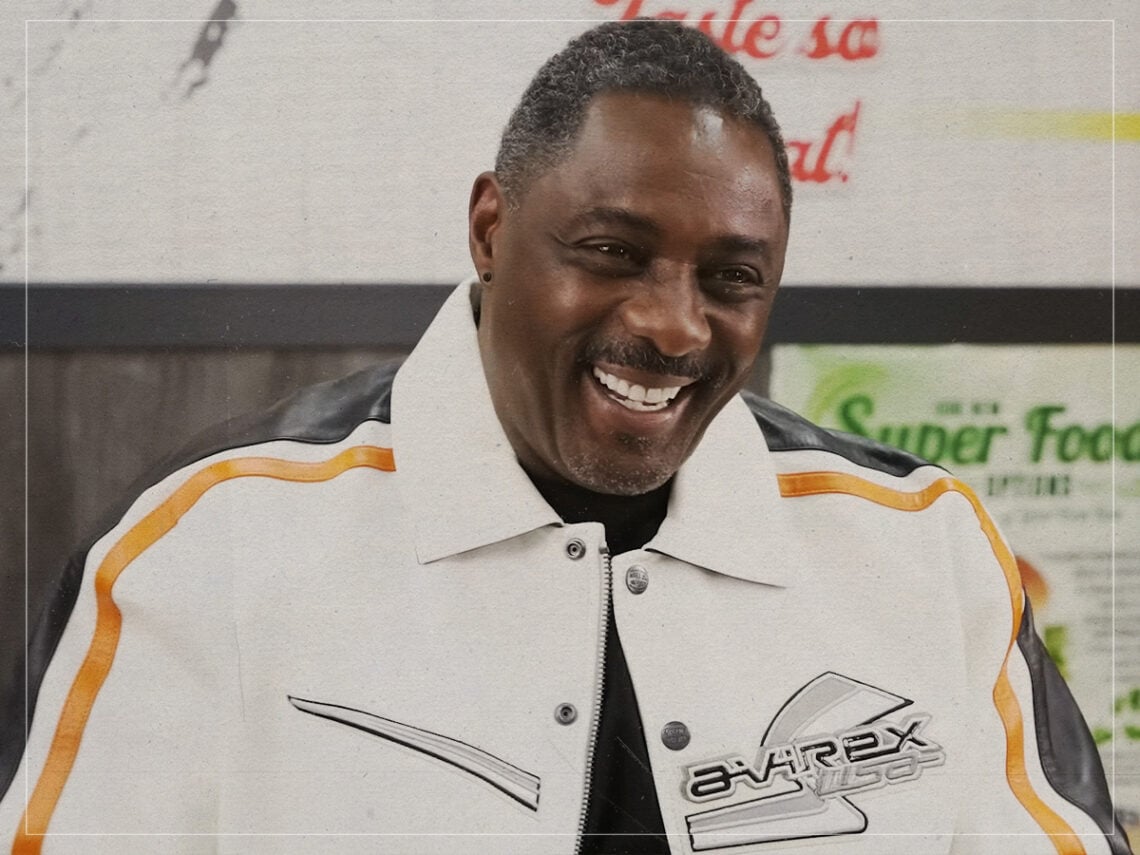
“I wanted to be in that film”: the 1980 movie that informed Idris Elba that he wanted a life in cinema

Maybe it’s because we’re British, but we sometimes don’t rank the best of our own actors quite up there with those proper famous Hollywood superstars. But that would be doing someone like Idris Elba a huge injustice, because it’s worth remembering just what an illustrious career the Londoner has had over the last 25 years.
I was reminded of this the other day, in fact, when I was watching Ridley Scott’s American Gangster from 2007, a somewhat overlooked but fantastically gritty mob tale in which Elba absolutely stands on par with Denzel Washington, one of the greatest of all time, in his role as the ‘Ooh, he’s awful, I hope he dies’ local big-shot Tango.
Denzel does dispatch him with a typically casual bullet to the head after plenty of provocation, but not before Elba has left his stamp on the movie in vicious style, and it was a timely refresher of the fact that the British actor has been mixing it with A-listers from over the pond for quite some time now. A cursory look at the highest-grossing actors in history will indeed see Elba sitting in the top 20, with a total box office gross of almost $10billion from his movies.
Of course, he made his mark in a reasonably similar role stateside in HBO’s masterpiece of TV, The Wire, starring as Russell ‘Stringer’ Bell in three seasons of the acclaimed series, which pushed him into the focus of casting directors on major movies like 28 Days Later and Scott’s epic 1970s tale about heroin being moved from Vietnam to the streets of New York City.
Then came probably his most famous role so far, as Luther in the detective series of the same name, which was a massive hit on the BBC starting in 2010 and then went around the world, earning him a stack of Emmy award nominations and then a Golden Globe win for ‘Best Actor in a TV Series’ in 2011.
He has gone on to swap the big and small screens to enormous success ever since, working with directors as feted as Aaron Sorkin on Molly’s Game and Cary Joji Fukunaga on 2015’s Beasts of No Nation, for which he won a Screen Actors Guild award and the third of his four Golden Globe nominations.
So what inspired him to want to appear in movies in the first place? Well, as a youngster growing up in the late 1970s and early ‘80s, perhaps it’s no surprise that it was the sci-fi franchise that dominated Hollywood and indeed the globe at that time, George Lucas’ space opera Star Wars. More specifically, in fact, it was the second instalment, The Empire Strikes Back, released in 1980, that really got to him, as he told Letterboxd, “I wanted the toys, I wanted to be in that film. That’s when I knew I really wanted to do cinema”.
Directed by Irvin Kershner after the stress of the first movie left Lucas in ill health, Empire struck a darker tone than the epic first Star Wars, a film that was shot through with moments of comedy and a swashbuckling spirit, and yet the sequel was a colossal hit, bringing in $550m at the box office worldwide and being nominated for three Academy Awards.
 The actor Antonio Banderas would do anything to work with again: “I will go to hell if it’s necessary”
 The drunken night out that cost Tom Hiddleston his first shot at stardom: “You’ve got to learn one way or the other”
 The “beautiful” 1980 movie Christopher Walken wants everyone to see: “Go and feast your eyes”
While reviews were somewhat mixed from critics and audiences at the time, it has since come to be known as probably the best of the nine main Star Wars movies, and one of the best of any genre. Elba, meanwhile, has had his own adventures in sci-fi, most notably in another Ridley Scott movie, 2012’s Alien spin-off Prometheus.
He’s currently filming some more Luther for Netflix, and has two big releases arriving in the next year; firstly, next month’s Masters of the Universe live action reboot in which he plays Man at Arms, and Sonic the Hedgehog 4 in 2027, which will see him voice Knuckles.
