


The 1907 song that became the first sell one million copies

No matter what day and age, selling one million copies of a single song is an accomplishment of the highest calibre. It’s a sureproof sign that the release has been an astronomical success if it reaches Platinum status with acclaimed acts to list it on their resumés, including The Beatles, who achieved the feat on multiple occasions.
However, the landmark was first achieved way before the emergence of the Fab Four, and it is one of the few records in musical history without their name engraved upon it.
Today, artists rarely sell a million copies of a single, and the way success is measured has shifted in the streaming era. The record books say Drake has 80 platinum-certified songs, but that status largely reflects their performance on streaming platforms rather than physical sales. The numbers show that Drake is hugely popular and that fans regularly turn to Spotify to hear his latest releases. However, that’s very different from one million people going out to a record store and spending their own money to buy a vinyl copy.
Long before Chuck Berry, Little Richard, and Elvis Presley made rock ‘n’ roll a widely understood concept, music was still a crucial part of everyday life. It has been part of human life for centuries, and for a considerable part of existence, opera reigned supreme, which spawned the first record to sell one million records.
So, who sold one million records first?
Right, let’s get into it. According to the Guinness Book of World Records, the award belongs to ‘Vesti La Giubba’, the title of which translates to ‘Put on the Costume’. While numerous versions of the composition have been released, it’s Leoncavallo’s I Pagliacci’s Pagliacci creation, featuring vocals by the Italian opera singer Enrico Caruso, that first passed the million mark.
The track’s original recording was in 1902, and Caruso went on to remake ‘Vesti La Giubba’ on two separate occasions for the Victor Talking Machine Company during the following five years. In recent times, it has featured in classic television programmes such as Seinfeld and The Simpsons, introducing the composition to a whole new generation.
Although opera had long been part of popular culture before the 20th century, it wasn’t accessible to most as the technology didn’t exist to allow people to listen to it in their homes. Therefore, the only way opera was accessible was to attend a theatre and hear it live, which was only available to the upper classes.
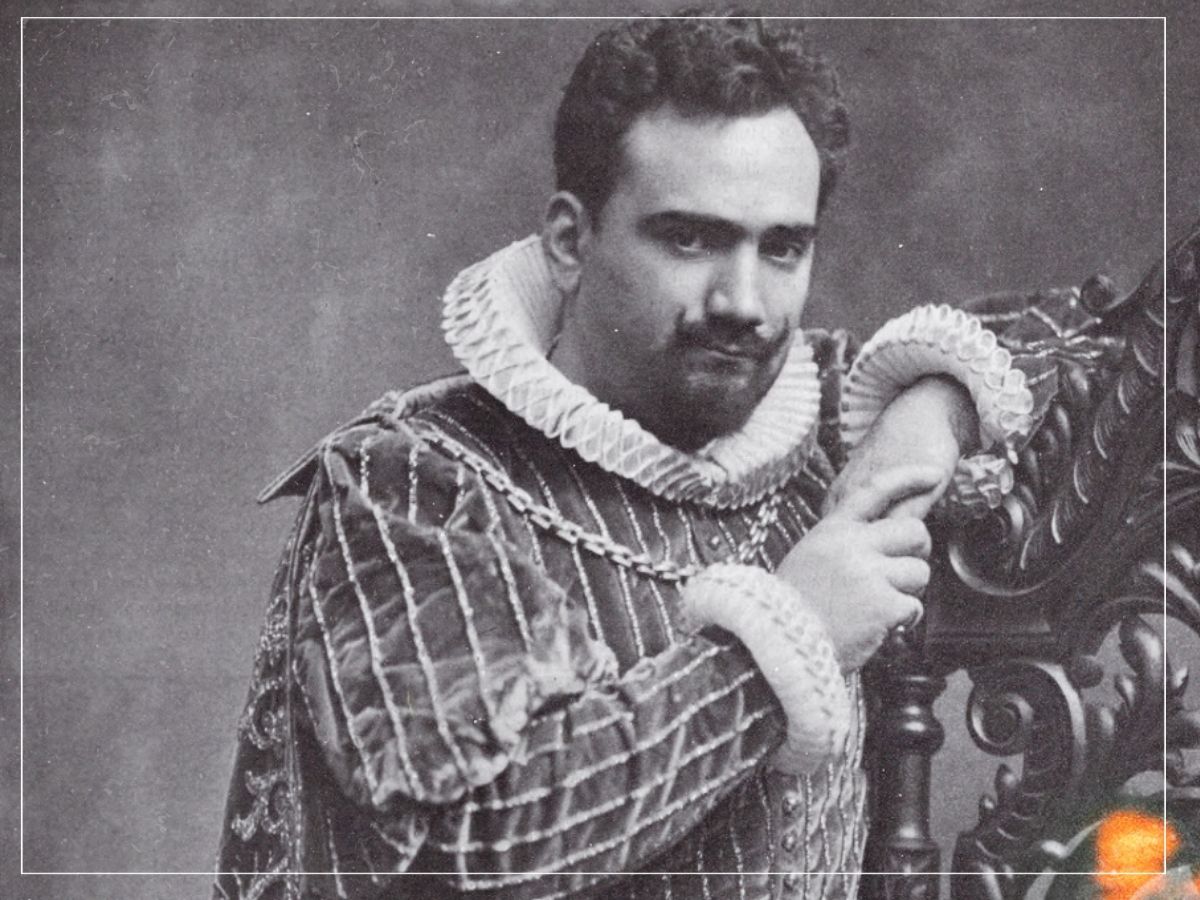

The birth of photographic records towards the end of the 19th century was revolutionary and allowed Pagliacci to find a wider audience for his compositions. He’d been performing across Europe since 1873, but the physical release of ‘Vesti La Giubba’ took his fame up another level.
At the time, recording technology was still a novelty rather than a global industry. Gramophones were expensive pieces of furniture that sat proudly in the parlours of wealthier households, and each record had to be produced and distributed with painstaking care. For a single performance to travel beyond the opera house and into homes across Europe and America was nothing short of extraordinary, and Caruso quickly became one of the first musicians whose fame existed both on stage and inside the living room.
Caruso was also a star in his own right. The Italian began as a performer in the historic city of Naples in 1895, and due to his talent, Caruso established himself as one of the leading voices in his country. Furthermore, in 1987, the National Academy of Recording Arts and Sciences celebrated his career by awarding Caruso a posthumous Grammy for their ‘Lifetime Achievement Award’.
The Italian Tribune’s description of the record-breaking ‘Vesti La Giubba’ reads: “The setting is simple. Leoncavallo places four main characters on the stage, a husband, Canio; his wife, Nedda and two men, Silvio and Tonio. Of course, there is the usual cast of villagers who complete the cast. The first act opens in Calabria, Italy. It is the story unfolding behind the scenes of the play to be staged where we find the real narrative of Pagliacci.”
It continues: “Tired of Canio’s jealousy, wife Nedda is drawn to Silvio and makes plans to elope with him. Eyewitness to the affair is Tonio, who informs Canio of their plans. The betrayed husband confronts his wife while observing a man disappearing in the distance. Refusing to name her lover, the broken-hearted Canio goes to his dressing room and sings ‘Vesti La Giubba’. The song paints a picture of the agony of love lost; Caruso captured not only its fundamental musical dynamics…but also its very soul! His performance convinced listeners that he was, for a few moments on stage…Canio.”
Although ‘Vesti La Giubba’ isn’t as widely known as records by Taylor Swift or The Beatles by most people on the street and isn’t embedded into common consciousness, it boasts a record which will always ensure its place in the history books.
In many ways, the success of ‘Vesti La Giubba’ helped establish the very idea of recorded music as something people would collect. Before artists like Caruso proved that a record could sell in vast quantities, the industry itself was still finding its feet. His success showed that audiences were willing to buy performances they had never witnessed in person, a notion that would eventually pave the way for the modern music business.
