


Unlucky For Some: The 13 most underrated love songs of all time

There are love songs, and then there’s everything else. There are lean times when you wonder why one single emotion has garnered so many samey singles, and then there are times when you wonder why anyone would write about anything other than the height of human existence. Yes, the world of sweet serenades and loving lullabies is a crowded one, but at its heart is what music is all about. Hell, I’ll be willing to wager that the first neanderthal to break into song did so with love in mind, the poor fool.
When Nick Cave was lecturing about the art of love songs, he dusted off the old Spanish term ‘Duende’. It was defined by poet and (perhaps) purely platonic love interest of Salvador Dali, Frederico Garcia Lorca, as exalted emotion unearthed from within, “a mysterious force that everyone feels and no philosopher has explained. The roots that cling to the mire from which comes the very substance of art.” This, Cave opined, is the essential ingredient to truly make a love song soar.
Music is full of modern-day Casanovas braving the universal cringe of public affection to bring a warm dose of duende to our days. Sometimes these tracks romp to the top of the charts, but other times they wallow in the backstreets of lover’s lane. In truth, these almost seem like the truest exhibits of outward exultation—more personal, private, and left untouched by the gaudy glow of commercialism.
These are the tunes that we have appraised below. With the harvest so munificent, even some of the ripest fruit has been left to the wayside. With our ‘Unlucky For Some’ feature, we set out to right that wrong by bringing you a playlist of the finest songs that the spotlight either missed or never lingered on long enough. These are the 13 most underrated tracks from the hefty songbook of love.
The 13 most underrated love songs of all time:
‘Bless The Telephone’ – Labi Siffre
“Strange how a phone call can change your day, take you away, away from the feeling of being alone,” Labi Siffre sings in this ditty from 1971, “Bless the telephone.” It’s a dainty track of filigreed humility. It’s also hushed for good reason. Siffre was singing of love for his partner, Peter Lloyd, in a period of staunch oppression. That aura of vulnerability and the defiance of romance combine to form an assegai of light that adds a lilting dose of ardour to your day, accurately conveying the catharsis of the phone call itself.
Plucked with intricate beauty, the sumptuous melody on display is a piece of pillow-propped perfection that yearns to be repeated when the 100 seconds are up. Short and sweet has never seemed so all-encompassing—there is an essence that the entire boon of companionship in the busy modern world is surmised in this spoonful serving of life with another.
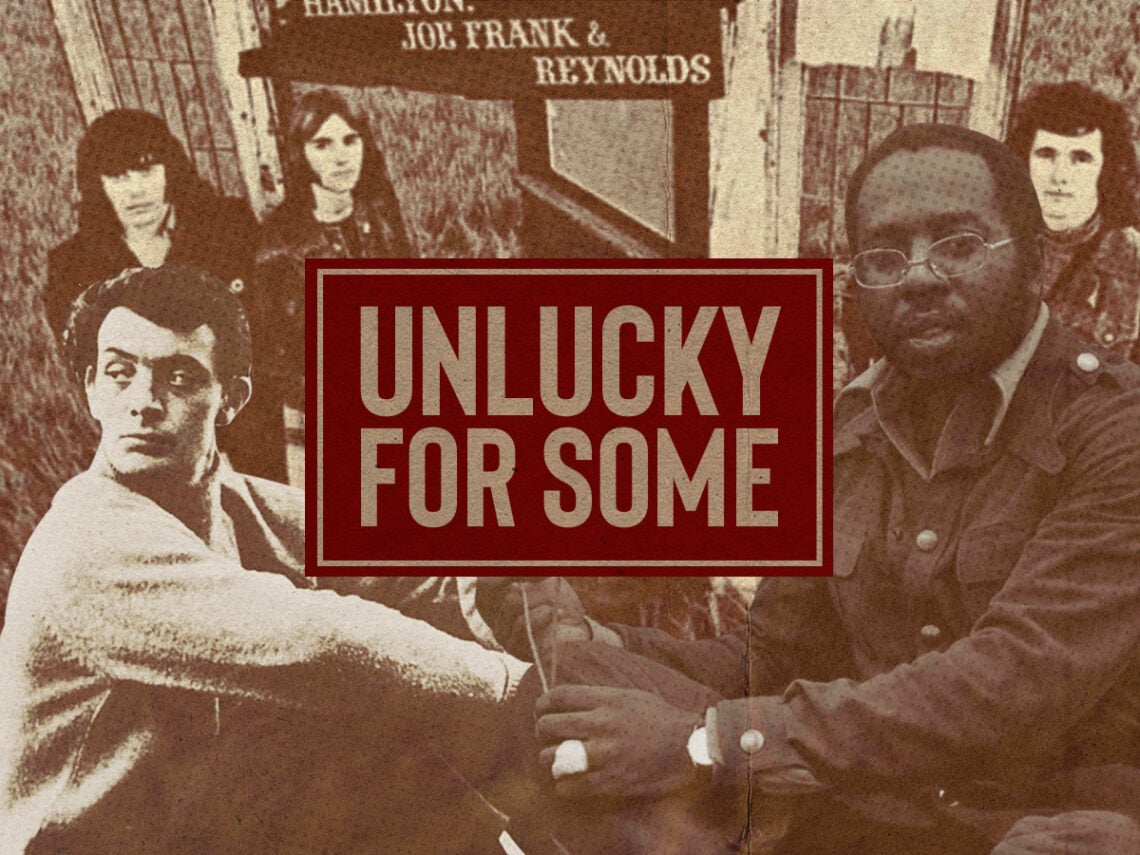
‘Fallin’ in Love’ – Hamilton, Joe Frank & Reynolds
In May 1975, a whole host of folks were puckering up in front of the mirror while getting ready for a date night with the smooth tones of Hamilton, Joe Frank & Reynolds spinning on their record players. The song still conjures that vignette to this day—you hit play, and there is suddenly a puff of perfume in the air and the smell of lacquer in a disco perm.
With harmonies to rival any from the era, Hamilton, Joe Frank & Reynolds offered up a Los Angeles brand of plastic soul that swayed with the same butter-cutting ease as the real thing. It’s a track so seamless that even the most ardent fan of Brazilian forro couldn’t begrudge its gorgeous, blanketed tones and sultry seduction.
‘Don’t Know What I’m Gonna Do’ – Harumi
There aren’t many mysteries in the music world in the day of the internet. If a fly farts in a live studio these days, then it will likely be logged down in the credits list of a record. However, I have sat for many tranquil hours listening to the psychedelic pop sounds of Harumi and his self-titled album, and I have neither hide nor hair of evidence that such a man ever even existed. Who the hell is Harumi? We’ll never know. He appeared from nowhere, made an album with world-renowned Bob Dylan producer Tom Wilson, and then disappeared once again when it was complete.
This backstory undoubtedly imbues Harumi’s inherent ethereal feel with an even deeper sense of spiritualism. Even without the mystery surrounding it, mystic and enigmatic are certainly adjectives that might pop up in any review. In fact, those adjectives waltz right out of the welter of the swirling ditty, ‘Don’t Know What I’m Gonna Do’.
‘Magnolia’ – J.J. Cale
‘Magnolia’ is one of the most romantic songs that there has ever been, Fleet Foxes even said as much. It is so softly beguiling that it almost seems unfit to have been pressed onto something as bulky as vinyl. Many musicians may have declared J.J. Cale as one of the most influential guitarists of all time, but that says nothing of the gorgeous songwriting skills that he dispenses to dance on top of his gentle plucking.
Upon release, ‘Magnolia’ was usurped by its B-side, ‘Crazy Mama’, in terms of chart success, but in retrospect, it is easy to see why listeners championed ‘Magnolia’ ahead of it. It would seem that the song is simply too tender and dreamy to survive the raucous punch-up of the radio. If the track was any more tranquil, you wouldn’t be allowed to operate heavy machinery while listening to it.
‘We Could Be Looking for the Same Thing’ – Silver Jews
Plucked from the masterpiece Lookout Mountain, Lookout Sea, this is one of many beauteous tracks on that stupendous record that is somehow simultaneously gruff and melodious like the sound of sandpaper on silk. The poetry that props it all up whisks you towards a sense of earthly wonder in the wink of an eye. From start to finish, Berman crafts perfectly realised boons that transfigure a reality perfectly realised with a windfall of lilting musical laments and love letters.
Perhaps as close to pop as they ever came, the last song Silver Jews offered is an accessible godsend of love’s often humble beginnings. The song’s message is elevated to no end by the fact that it is sung in duet form, proving that they always knew how to make the music match Berman’s poetry in an illuminating way. The music this time out is a thing of genuine prettiness, and I, for one, think that prettiness is an unassuming artistic virtue that has often been underrated through no fault of its own.
‘Amore Fermati’ – Fred Bongusto
‘Amore Fermati’ is the sort of song that translates itself, but for the sake of obvious clarity, try these lyrics out for size: “Among the clouds, an orchestra will play your song, my love, kiss me.” It’s a dizzy dance documenting the bewildering throes of romance in full swing. And I’ll be damned if Bongusto doesn’t just about define the whole thing in the line: “Maybe the music is to blame, because I’ve never loved you so much.”
That sense of intoxicating tessellation with a glass-slipper soundtrack is a soaring balm that separates the single from a thousand other orchestral, jazzy anthems. The song simply has that certain something that every actor has to search for: charm and charisma. From the feel alone, even a mono-lingual Englishman can see the night unfurl around Bongusto in his best Roman Holiday suit.
‘Hot Burrito #1’ – The Flying Burrito Brothers
Gram Parsons doesn’t just sing ‘Hot Burrito #1’, he performs it in the truest sense. Brimming with amorous drama, the lovelorn frontman gets all self-pitying as he lays out his entreaty for romance to return. It’s a bristling jab that no doubt had listeners swooning and holding out for a “toy” as wistful as the impassioned Parsons.
This anthemic effort from 1969 captures all that was great about the era. The song remains ineffably cool and broodingly confident to this day. It’s been copied a thousand times over and has clearly been a seminal influence for many modern bands, but above all that, it’s just a rip-roaring gem, more than capable of pulling off sunglasses indoors.
‘Lah-Di-Dah’ – Jake Thackray
If you lament that you don’t get a lot of honesty in love songs, then the Yorkshire chansonnier, Jake Thackray, is the humourist for you. A relationship isn’t just nights of wining and dining under stars that shine like a chandelier in the firmament; it’s often much more akin to beans and a lukewarm brew under a damp patch on the ceiling. It’s also bills, christenings you could do without, tea around the in-laws while friends parade freely in a pub in town, and so many chores that the end is listless.
However, Thackray serves up a sentiment that seems too nuanced for the greeting cards to grasp: he’s willing to grin and bear all those hardships for someone who is worth it. It might not sound Shakespearean, and you’d do well to utter it to a significant other without some initial backlash, but it’s honest, true and, in its own way, very beautiful. Love is not a competition, but if you can find someone who makes the La-Di-Dah worthwhile, then you’re winning.
‘Smouldering Fire’ – Ural Thomas and the Pain
In The Great Gatsby, F. Scott Fitzgerald writes: “He waited for a moment longer to the tuning fork that had been struck upon a star. Then he kissed her. At his lips’ touch, she blossomed for him like a flower, and the incarnation was complete.” Ural Thomas and the Pain’s exultant soul serenade of ‘Smouldering Fire’ is the musical equivalent of this romantic zenith.
Backed with a scintillating sound, Thomas puts his well-worn vocals to simply brilliant use and champions the most dizzying moments of love. The instrumentation is perfect, with the production offering the song a timeless feel that plays out like a waltz in a wondrous place.
‘Baby’ – Donnie & Joe Emerson
The music industry is an area fraught with so many circumstantial pitfalls that some tracks, no matter how brilliant they may be, never stand a chance. Donnie and Joe Emerson grew up in Fruitland, Washington, a place with a population of 751. You could just about fit the entire town on the same flight. Thus, when it comes to gathering up the necessary organic hype to make a wider impact, the brothers were heavily handicapped from the get-go. When ‘Baby’ was released and didn’t gather up much traction, the boys simply had to jump back on the tractor and get back to work.
The song plays off this notion of small-town pop escapism perfectly. It couldn’t possibly be further away from the idea of a tireless working day. Certain songs act as the perfect sunshine accompaniment, but others pipe summer directly into your ears. ‘Baby’ schmoozes up to you in a sultry fashion, doles out a dose of Vitamin D, whisks up a sweet breeze and pops an ice-cold beer in your palm.
It is the sort of Valium-laden track that could subdue a riot and turn it into an orgy of spaced-out harmony, beautiful and brilliantly opulent. And quite simply, it is as sexy as music gets without coming off corny. This song was the perfect way to herald in the ‘80s, and it was sadly failed by fate until now.
‘Le Tourbillon’ – Jeanne Moreau
There is a typically French procession of pause in the 1962 François Truffaut film Jules et Jim, and for my money, it is the most beautiful musical segue in movie history. Jeanne Moreau simply sits down next to a finger-plucked guitar and produces a symphonic melody of honeyed belle without ever breaking above a silken croon.
As an English speaker, part of you listens along, wanting to know what her whirlwind of words means, and part of you hopes that they remain a mystery so that the lustrous allure is never tarnished. All I know for certain is that rarely does anything so delicate seem so boundless. It’s like a puddle reflecting the stars that you could drop a ten-tonne bomb into and never hear it hit the bottom. Humble yet somehow exonerated from anything earthly, far too pretty to be part of our mire and paradoxically wholly human. In essence, a track that adds credence to Nick Cave’s opine that people are “hardwired for transcendence.”
‘The Makings of You’ – Curtis Mayfield
There is an imperfection to the top-line melody of Mayfield’s masterful 1970 serenade ‘The Makings of You’ that seems almost like a fitting piece of postmodernism. The verses flow in their own staggered and verbose way that makes it seem like Mayfield is just extolling his love as it comes to him, out on the wing of exultancy, dishing out his own unplanned exhale of Duende.
Shimmering strings and harp effects create a dreamy world for the track to exist in. It joyfully skips straight through the saccharine realm and slips into a sugary trance. Sexy enough to warrant an X-rated warning, it’s got enough groove to sharpen the sweetness into a musical swirl that never gets sickly. All the while, Mayfield’s soft croon is a force to behold. Love doesn’t get much cooler than this.
‘To Feel in Love’ – Lucio Battisti
By rights, pleasant should be a platitude amid the superlatives we use to describe music at its finest, but pretence gets in the way of striving for something so simple and daft side-steps of dissonance, and drab middle eights often enter the mix. Battisti’s beauteous ode to the summery balm of being smitten is a victory for note-perfect joy that flows with the same unimpeached exuberance as a beer garden IPA. Far from offering atonal flourishes for avant-garde’s sake, this song unravels in such a seamless way that it barely seems written at all. It’s merely the transcribed sound of exultation that Buddhists have mused over for millennia, exploding out like a broken vow of silence from a higher plain.
The musical contours of the track are secretly complex, but just as the science of bedsprings is lost on the sleeper, the dreaminess of this Italian anthem from 1977 sails as smoothly as a high-end yacht skipping through the azure blue waters of the Amalfi Coast. The wind that would flow through the locks of Bruce Willis, and Genghis Khan could be calmed to acquiesce from pillaging and, instead, plunder the forever freebies of the sweeter side of life if only this song was blasted from the clouds as the theme-tune for another sanguine morning in the loving utopia of this green and blue wreck we call home. “The feel in love is life and living, you meet someone, and you start breathing.”
