


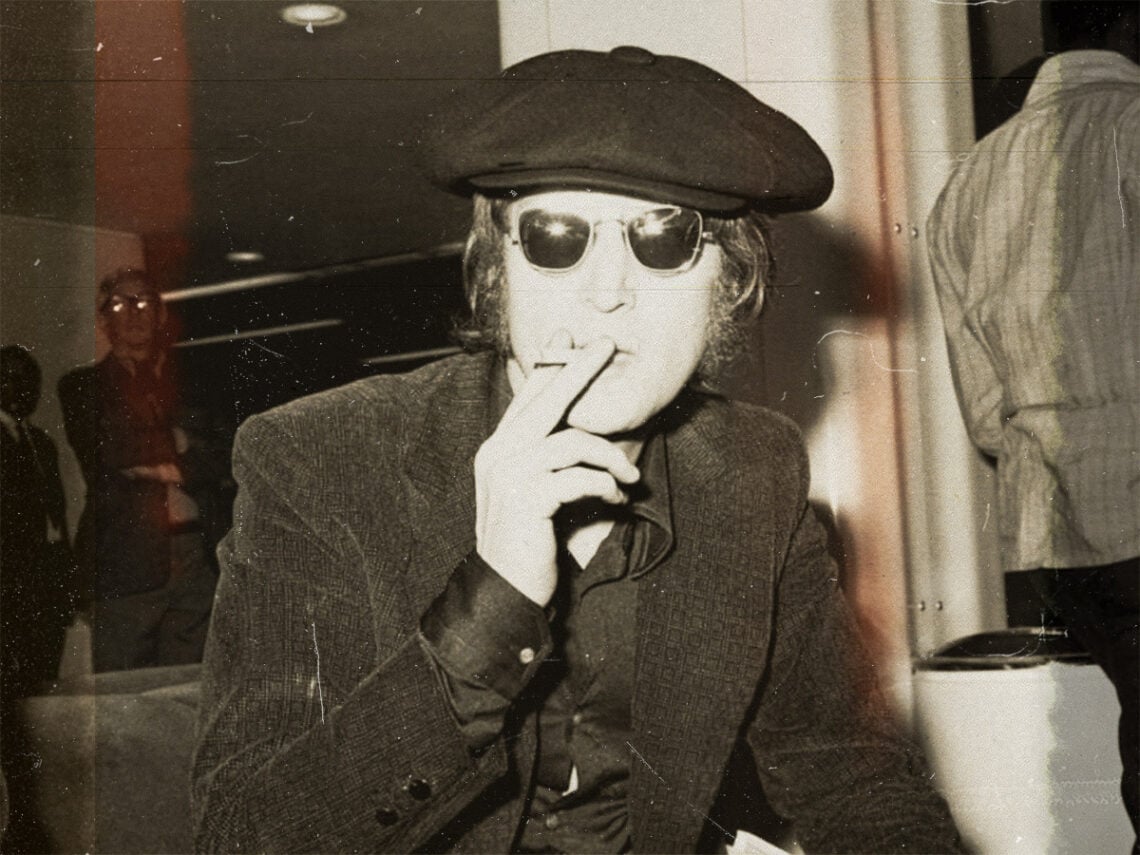
The 10 worst songs by John Lennon

The rock world was never the same once The Beatles announced the breakup. The Fab Four remained musical titans, and their decision to split cast a dark shroud around the rest of the decade, as fans had to find a reason to move on with their lives. However, that didn’t mean that each member walked away from music, and John Lennon went on a tour de force of artful expression.
Both with and without his wife, Yoko Ono, Lennon used each album to examine his state of mind, either splitting himself open on Plastic Ono Band or rallying against political corruption on Some Time in New York City. Despite being one of the biggest voices of his generation, there were still a handful of cuts that didn’t deserve to be played more than once.
Compared to his high quality control with The Beatles, Lennon’s solo career allowed him to go on long tangents about nothing and craft songs that seemed directionless long before they were finished. While some critics might point to Ono’s influence on him for why the tracks tanked, much of it comes down to Lennon’s poor judgement, thinking that the song could go one way and then getting completed sidetracked when recording.
Even with these minor blemishes in his catalogue, Lennon remained one of the best wordsmiths of his generation and would continue to pen songs that reflected the world around him. No artist is perfect, though, and none of these tracks will give ‘Imagine’ a run for its money any day of the week.
The 10 worst John Lennon songs:
‘Forgive Me My Little Flower Princess’
Throughout his solo career, Lennon made it clear that he wasn’t a figure who wanted admiration. He had a checkered past like most other rock stars, and his solo catalogue contained many songs about how ashamed he was about his mistreatment of women. There’s a fine line between being sorry and being tedious, though, and ‘Flower Princess’ is toeing right up to that line.
As Lennon entered the next phase of his musical career, Double Fantasy and most of Milk and Honey were written as a tribute to his union with Ono, as he praised her for all the joy she had brought him. Outside of brilliant tracks like ‘Woman’, this number feels like it belongs in a strange children’s show, where Lennon plays the adorable love-struck puppy beside Ono. While there’s no doubting his devotion to his wife, fans might find themselves thinking, ‘We get it, you’re sorry, can we get to the point?’ more than a few times while listening.
Granted, this is a technicality since fans never got to hear the final version of the tune. After being gunned down in 1980, most of Milk and Honey was made from the demos that Lennon had been working with that never saw the light of day. Perhaps the tune could have sounded phenomenal if things were different, but the raw acoustic version still needs some bugs to work out.
‘Old Dirt Road’
At the start of the album Walls and Bridges, Lennon admitted feeling lost. After being separated from Ono for the first time since the 1960s, it’s easy to hear him struggling with not having the most important person in his life beside him, even echoing his old Beatles tune ‘Help!’ on ‘Going Down on Love’. Though he might have had some friends to work with him on his next album, ‘Old Dirt Road’ feels like Lennon treading water for the first time.
Granted, it’s not like the tune lacks decent qualities. Written with Harry Nilsson, most of the tune fits more with the soft rock crooner’s style, as Lennon tries his hand at a borderline yacht rock pastiche. Outside of the atypical jazzy chords that pop up now and again, though, Lennon feels out of his element, trying to sell the wistful wanderer aesthetic despite sounding like he’s falling apart after not being home.
Some of the bile towards this song also comes from where it’s placed on the album. Coming from the pure joy of ‘Whatever Gets You Thru The Night’, this is the sad comedown from everything where Lennon starts to take account of all the problems in his life and looks at the long road to redemption. Points for trying to document both extremes of his psyche, but this is the kind of Plastic Ono Band intimacy with none of the raw emotion.
‘I Don’t Want to Be a Soldier Mama’
Lennon was never a stranger to a protest song. From The Beatles’ ‘Revolution’ to his political album Some Time In New York City, it didn’t take long for him to channel what was in his brain onto the lyric sheet. Though Lennon held anti-war sentiments close to his heart, that attitude didn’t deserve to be drawn out on ‘I Don’t Want To Be a Soldier Mama’.
Throughout most of Imagine, Lennon is still working on his internal struggles, aiming at the phoneys he sees in the world and his inability to relate to anyone on songs like ‘How?’. Although ‘I Don’t Want to Be a Soldier’ fits well with those themes, Lennon’s choice to stretch the song out to six minutes makes it feel more flabby than it is. Since most of the song is blues, Lennon doesn’t offer much lyric-wise besides the song’s title, practising minimalism and letting the rest of the band do the heavy lifting.
Despite Lennon phoning it in, the backing musicians save the track, as Klaus Voorman flies up and down the scales on his bass and creates a disorienting atmosphere that feels like being in the middle of a battlefield. Lennon may have been new to the political medium of songwriting, but if something as powerful as ‘Gimme Some Truth’ comes on the next track, there’s no excuse to have a political track this toothless on the same album.
‘One Day at a Time’
Around 1973, Lennon was finally taking inventory of what worked and what didn’t in his career. For the first time, he started to question whether the political angle of his tracks got in the way of what he was always great at, making music. Deciding to put his beliefs on the shelf, Mind Games was a back-to-basics record for Lennon, albeit with a few bumps in the road.
After starting his separation from Yoko Ono, ‘One Day at a Time’ is a plaintive song, as Lennon tells himself to keep a level head and take things as they come. Although it might have been the best life advice he could muster then, the song is constantly at odds with itself, never deciding which tone it’s going for.
Despite starting with a gentle acoustic guitar, the falsetto that Lennon goes for throughout the song tends to veer into annoying territory fairly quickly. While it might have been meant as Lennon singing from a sort-of dream state, the result sounds more smug than anything else, as Lennon tells himself that everything will be okay before eventually fleeing to Los Angeles a few months later. Lennon has been known to hold nothing back in his songs, but the sound of ‘One Day At a Time’ feels like he’s intentionally kneecapping himself before he says anything profound.
‘Do You Want to Dance’
Much has been made about Lennon’s supposed lost weekend in Los Angeles. After going through a separation from Ono, Lennon spent most of his time partying in California, becoming a member of the Hollywood Vampires drinking club and making songs that would eventually turn up on the album Rock n Roll. Though returning to old-school rock and roll might have been fun, ‘Do You Want to Dance’ is the first time it starts sounding dated.
While Lennon’s voice shines on covers from his heroes like Little Richard and Chuck Berry, his take on the ballad ‘Do You Want to Dance’ sounds more strange than endearing, adopting a smooth reggae feel throughout the song. Since the song was meant to be a slow ‘50s romp that teenagers could sway to at a school dance, the accompanying reggae rhythm almost feels like Lennon is mocking the lyrics instead of paying tribute to the classic.
Although Lennon confessed to having a blast when he was in Los Angeles, this is where his ‘lost weekend’ is finally starting to catch up with him. This might be one of the more innocent tunes to come out of early rock and roll, but underneath those reggae guitars is a depressed man ready to return home to his one true love.
‘I’m Losing You’
After his fling in California, Lennon returned home to Ono in much better spirits. After finally welcoming their son Sean into the world, Lennon took a sabbatical from music, not touching his guitar for years until a trip to Bermuda got his creative drive back on course. Though Double Fantasy was meant as a musical dialogue between Lennon and Ono, the one sore spot comes midway through the record.
While most of Double Fantasy shows Lennon embracing his middle age and raising children, ‘I’m Losing You’ feels much more scummy when the backstory is described. Since Lennon had been unfaithful to Ono in the past, his sob story about wanting her back reads slightly shallow, especially when Ono counteracts him with her track ‘I’m Moving On’. Instead of letting Lennon stir in his melancholy, Ono takes Lennon to task for what’s going on, telling him how childish he’s being and only wanting to return once he sorts himself out.
Much of Ono’s material on the record is on par with Lennon’s, seeing her embracing genres like disco and growing as a songwriter. Lennon may have regretted all the pain that he had caused Ono in the past, but Ono’s retort makes him sound more pitiful than sympathetic.
‘John Sinclair’
The idea of John Lennon making a straight-ahead political album is phenomenal on paper. He had already proved his ability to write scathing tracks like ‘Power to the People’, so why not blend his artistic and political sides on Some Time In New York City? The previous albums had Lennon confined to politics for one song, and ‘John Sinclair’ is the result of what happens when he has too much control.
Spreading out between Lennon and Ono’s songs, ‘John Sinclair’ is Lennon’s song about the titular character, who was arrested for trying to sell marijuana cigarettes to undercover cops. The message of calling for his release is commendable, but some of the production tricks feel odd for no reason, like him constantly hammering away at the phrase “you gotta” enough times for people to think their turntable was skipping.
And while bringing in the New York outfit Elephant’s Memory was a good idea, it’s pretty clear that they’re still getting acquainted with the style, including a few off notes here and there and moments where it feels like they’re about to fall apart. If this tune had been released just a few months before, it could have been a smash, but Lennon’s gift for melody takes a backseat to his lyrics on this one.
‘I Don’t Wanna Face It’
After a dreadful experience at sea, John Lennon felt like an entirely new man. Getting acquainted with his artistic self again, Lennon was re-energised, wanting to play Ono songs over the phone while he was in Bermuda because of how quickly they were coming. While most of the good stuff came out on Double Fantasy, Milk and Honey has many strong ideas rather than fleshed-out songs.
Since much of the material was written as part of the song dialogue with Ono, ‘I Don’t Wanna Face It’ feels shallow compared to his mature songs like ‘Watching the Wheels’. As opposed to making songs about growing into his house-husband role, Lennon sounds shrill on this song, especially when he goes for a fairly weak falsetto towards the end of the track. Compared to the intimate expression between two lovers, Lennon sounds like a child in this song, practically whining that he doesn’t want to face the hard times that come in a relationship.
Much of this song’s qualities might have to do with where it’s placed in the context of the album. As only a handful of Lennon cuts were used for Double Fantasy, this might have been the vision for a longer piece he had in mind that got shortened into a single album of his and Ono’s songs. Then again, if it wasn’t good enough for the late-career comeback, why is it suddenly good enough to be one of the centrepieces of the posthumous album?
‘Au’
In the aftermath of Some Time In New York City, John Lennon started questioning his intentions for making music. After writing songs aimed at the establishment and unjust practices amongst politicians, he was starting to lose his reasoning for making music in the first place. Though the studio version of the album was far from a classic, the live portion of the LP was the straw that broke the camel’s back.
Taken from two separate gigs, ‘Au’ comes from an experimental gig that Lennon and Ono played with Frank Zappa and The Mothers of Invention. Though Zappa had had issues with The Beatles’ music, this experimental effort is some of the worst material to come across a Lennon album, featuring eight minutes of Ono singing in her screaming register amongst a cacophony of noise.
Despite decent tunes on this side of the record like ‘Cold Turkey’ and ‘Scumbag’, this kind of collaboration feels like oil and water, with both genres standing awkwardly next to each other and trying to make it work somehow. Lennon might have been a fan of the avant-garde style of songwriting, but fans expecting a live set from a former Beatle was in for an unpleasant surprise when they saw this back in the day.
Everything on Two Virgins
Most people think that Plastic Ono Band marked John Lennon’s first solo album. Finally free from the shadow of The Beatles, Lennon could finally open up about his feelings and talk about some of his fractured emotions after undergoing primal therapy. In reality, saying Plastic Ono Band is Lennon’s first album is a lie ‘Fab’ fans tell themselves so they can sleep at night.
Before his solo debut, Lennon made three albums with Yoko Ono: Two Virgins, Life With the Lions, and Wedding Album. While each of these recordings feels nowhere close to Lennon’s standards, Two Virgins is one the most perplexing albums ever released by a mainstream artist. Since Ono was known as one of the key figures in the avant-garde movement, most of the album is a non-stop barrage of random sounds strung out for nearly an hour, as Lennon wails incessantly to match Ono’s screech.
The cover art should also clue listeners into what they’re going to be hearing, featuring the stark image of Lennon and Ono naked, staring right into the camera. Lennon might have been a master of melody with Paul McCartney by his side, but no song on this album is not recommended to anyone with functional eardrums.
