


From Martin Scorsese to Steven Spielberg: The 10 most overrated classic movies

Cinema has, and always will be, a matter of taste, with some people loving the horrors of John Carpenter and David Cronenberg and others preferring the sweeter flavours of Steven Spielberg and Richard Curtis. As the age-old saying goes: ‘You can please some of the people all of the time, you can please all of the people some of the time, but you can’t please all of the people all of the time’.
Such has made cinema a very divisive medium, particularly in recent years, where the mass opinion of social media seems to decide the fate of any given new release. No longer is it acceptable for a film to be middling and average, it must fall on either being ‘the best movie of the 21st century’ to ‘potentially the worst film of all time’.
Well prepared to ruffle some feathers, we’ve put together a list of ten films we don’t think deserve the buckets of praise they showered with. None of the following ten films are ‘bad’ in any way, but they do indeed fail to live up to the highly inflated ratings that overly-excited fans and critics dish out.
Including such filmmakers as Martin Scorsese, Christopher Nolan and Orson Welles, take a look at our controversial list below.
The 10 most overrated classic movies:
10. Mean Streets (Martin Scorsese, 1973)
The third feature film from master filmmaker Martin Scorsese is by no means unsuccessful in its ambitions, it’s more that the film isn’t really that ambitious at all. Released very early in the director’s filmography, you can’t blame Scorsese for not yet having a proper hold over his style and form, with his 1973 release following a small-time hood who tries to keep the peace between his friends.
Very much Scorsese-lite, the film features many of his hallmarks, but it’s a stiff old picture that contains little of the director’s trademark flourish.
9. E.T. the Extra-Terrestrial (Steven Spielberg, 1982)
Often lauded as being one of the best stories ever told about aliens and the coming-of-age transition of young life, in reality, Steven Spielberg’s 1982 family flick E.T. the Extra-Terrestrial is just a little too schmaltzy. Feeling a bit like a low-budget daytime movie with a muddy alien thrown in, Spielberg’s film is far from his very best, despite so many believing it to be his magnum opus.
It’s fun enough, with some decent moments of special effects, but Spielberg’s ‘classic’ should never be considered a great in the pantheon of sci-fi.
8. Forrest Gump (Robert Zemeckis, 1994)
Unlike some of the other films on this list, Robert Zemeckis’ Forrest Gump really isn’t that great, with its legacy being inflated through its undeniably shallow version of patriotic American history. Telling a story of young love that plays off like a pop melodrama, the film is a maudlin near-three-hour affair that forces the performance of Tom Hanks in the title role to be its saving grace.
There’s a reason why it has been parodied countless times since its release. Forrest Gump just isn’t that great.
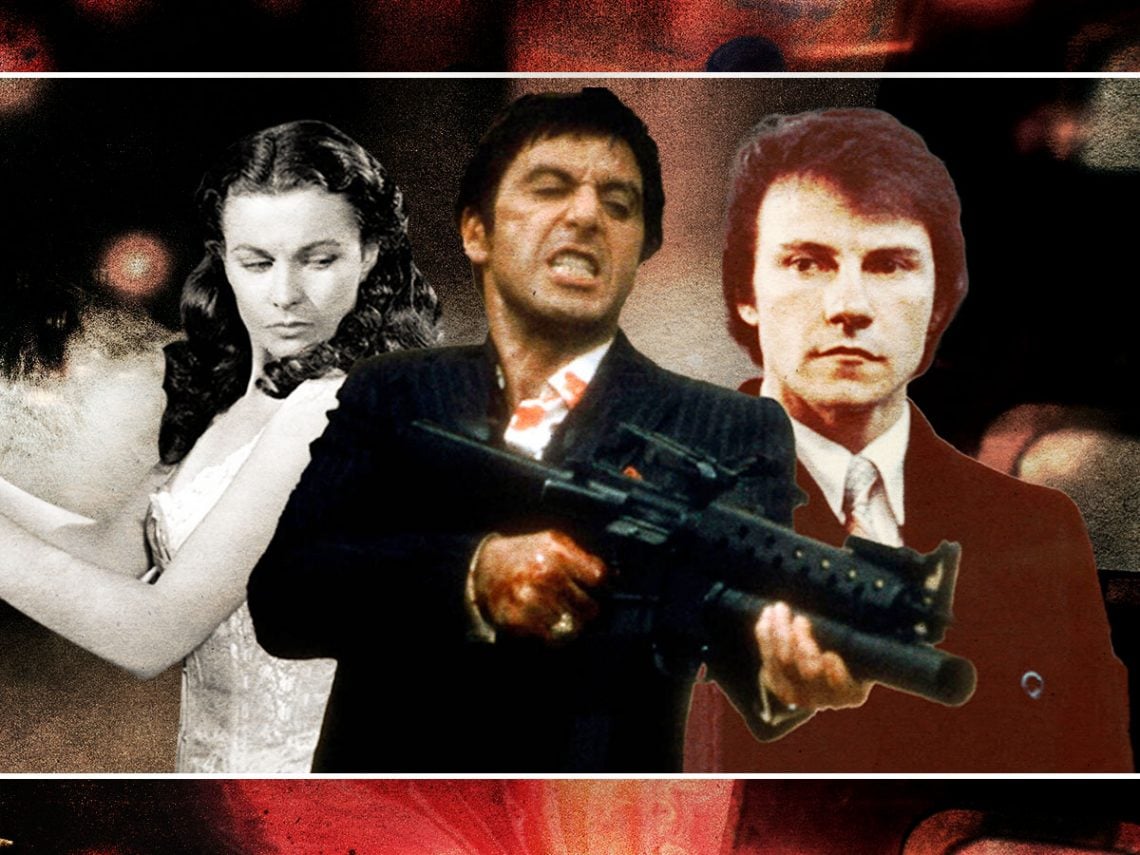
7. Scarface (Brian De Palma, 1983)
There is no role that better defines the career of Al Pacino, even if we think such shouldn’t be the case. With multiple roles where Pacino shines far brighter, the adoration for Scarface is quite confusing, particularly on a repeat viewing, when you discover that the film is really just a middling crime drama. With a sensationalised story, questionable performances and dated special effects, the film isn’t worthy of its overwhelming praise.
Without all the furore, the film is a rousing, cheesy 1980s crime drama, nothing more, nothing less.
6. The Breakfast Club (John Hughes, 1985)
With no real driving plot, bar the adolescent’s interactions with each other, Hughes’ film, following a group of seemingly unconnected individuals who begin to realise that actually, they’re not so different after all, is a struggle to get through. Whilst the aforementioned sentiment is pertinent, Hughes’s journey to make such a message is extremely problematic, particularly in the light of contemporary attitudes.
With misogyny and sexual harassment, Hughes’ film is simply a fantasy, a picturesque idea of how society wants to remember the past rather than how it should look back on it.
5. Gone With the Wind (Victor Fleming, 1939)
There are many reasons why Gone With the Wind, still the highest-grossing film of all time when adjusted for inflation, fails to last the test of time, with its racist attitudes towards black people and ethnic minorities being just one of them. Victor Fleming’s drama, starring Clark Gable and Vivien Leigh, tells the story of a manipulative daughter of a Georgia plantation owner who has a turbulent relationship with a roguish profiteer.
Clocking in at just under four hours long, the eight-time Oscar winner is an undeniable bore, with much of what made it such a classic back in the day feeling very outdated now.
4. It’s a Wonderful Life (Frank Capra, 1946)
On the crowded TV schedule of the festive season, there are far better films to sit down and watch than Frank Capra’s Christmas ‘classic’ It’s a Wonderful Life. By no means a ‘bad’ movie, Capra’s film takes some pretty self-evident liberties from Charles Dickens’s Christmas Carol and does little else to add anything particularly new or fresh. Sure, it’s an inspiring tale, but also one we feel like viewers have seen a hundred times.
James Stewart is charming in the lead role but plays the role up as if he is the leading man on stage, culminating in a soup of saccharine sentimentality.
3. The Dark Knight (Christopher Nolan, 2008)
There is no doubt that some scenes of Christopher Nolan’s Dark Knight would forever change the makeup of superhero cinema, with the performance of Heath Ledger as the Joker sticking out as a particular highlight. But, as a whole, The Dark Knight isn’t that special, failing to live up to its staggering modern reputation upon repeated viewing. Dull and self-serious, Nolan isn’t sure how to have fun with the caped crusader and his city of Gotham.
It’s certainly one of the best superhero films ever made, but this doesn’t mean that it should be considered one of the best movies of all time.
2. Citizen Kane (Orson Welles, 1941)
Being marked as ‘the greatest American film of all time’ by the AFI, bearing the burden of such a title is never easy, and whilst Citizen Kane is an undoubted classic, it is also a victim of its own success. Directed and starring Orson Welles, the story follows the death of a publishing tycoon and the meaning of his final words. It’s an enjoyable watch that stands the test of time but digs deeper, and you’ll find that Kane’s story is really quite simplistic.
There’s not a mad amount to unpack about Welles’ story, and whilst it contains some great performances and neat cinematography, it isn’t the greatest movie of all time for our money.
1. The Shawshank Redemption (Frank Darabont, 1994)
Speaking to Deadline on the film’s 25th anniversary, acclaimed director Steven Spielberg reported that the film was “a chewing-gum movie—if you step on it, it sticks to your shoe,” in a bizarre statement that also speaks to the film’s truly annoying nature.
Starring Tim Robbins as a softly-spoken convict, Andy Dufresne, who forms a close bond with fellow inmate Ellis Boyd’ Red’ Redding (Morgan Freeman), the film follows the two men dealing with their imprisoned reality whilst trying to live a life of redemption. Though, the inmates of the jail seem pretty enlightened already, with the prison resembling more of an ornate, cushy public library than a harsh, oppressive jail.
As a piece of movie magic, it barely works. As a piece of hard-hitting drama, it falls flat. Why, oh why, does it still hold the number one position on the list of the top 250 films ever made on IMDB?
