


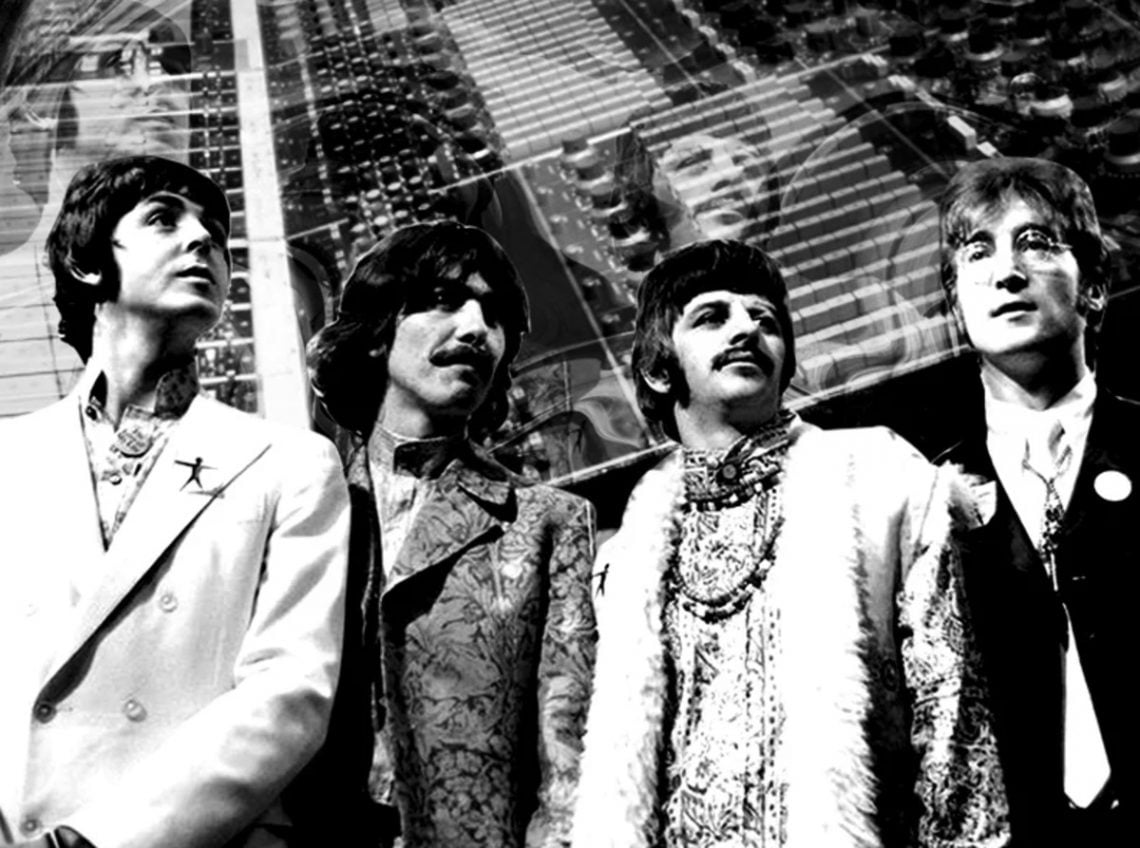
The 10 most important people to The Beatles

There were many ‘Fifth Beatles’, both contemporary and revisionist, in the history of The Beatles. The various figures who were around the Fab Four were as eclectic as the group themselves. External influence came from record executives, artists, yogis, swindlers, fellow musicians, poets, and great minds of their time. The Beatles ranked among the cultural elite in Britain throughout the 1960s, with everyone from Queen Elizabeth II to Eric Clapton filtering in.
But there were also the people who worked around The Beatles every day: the producers, the engineers, the roadies and personal assistants. The Beatles weren’t just a band: they were a brand all their own, with an entire company all their own to show for it. Apple Corps was the band’s original attempt to diversify their portfolios, but in recent years, it’s been primarily concerned with keeping the legacy of the Fab Four alive and well.
As they so often did, The Beatles took in influences, bits of info, and even whole song inspirations from their everyday lives. That meant that whoever was around could possibly revise lyrics, inspire a story, or even play an instrument on the final mix. The band worked remarkably quickly, so if you were around them when the tape was rolling, you might find yourself on the record, either tangibly or not.
There were an innumerable number of people who interacted with The Beatles during their decade together as a band. Some people were just more influential than others. Here are the ten most important figures to The Beatles.
The 10 most important people to The Beatles:
10. Stuart Sutcliffe
Stuart Sutcliffe is unique in that he’s the only person on this list who was actually in The Beatles. One of John Lennon’s art school buddies, Sutcliffe was convinced to take up the bass guitar despite his limited musical ability. Although his tenure was essentially a pre-fame version of The Beatles, Sutcliffe nonetheless helped the band navigate their evolution in Hamburg, Germany.
It was there that Sutcliffe would meet Astrid Kirchherr. Encouraged by her, Sutcliffe decided to stay in Germany to focus on his art. Less than a year later, he died from a brain haemorrhage at the age of 21, devastating Lennon and putting a definitive end to the band’s first incarnation.

9. Norman Smith/Geoff Emerick/Ken Scott/Glyn Johns
The engineers that worked with The Beatles were often the ones directly responsible for the music that appeared on record. Whether it was microphone placement, mixing, or even the occasional instrumental contribution, the engineers that worked in Abbey Road and Apple HQ bought The Beatles’ music to life with stunning clarity.
Scott and Johns were only briefly employed by the band for The White Album and Get Back (later Let It Be), respectively. Smith and Emerick were the major engineers, with Smith working on all of the band’s albums before Revolver and Emerick contributing to all of the band’s records after 1965. The engineers were more than just assistants: they were innovators in their own right.

8. Maharishi Mahesh Yogi
1967 was an eventful year for The Beatles. The band released their landmark LP Sgt. Pepper’s Lonely Hearts Club Band and lost their manager Brian Epstein within a matter of months. Even though they weren’t touring, the Fab Four were as popular as ever. At the urging of George Harrison, the four Beatles agreed to go on a retreat with the Maharishi Mahesh Yogi, a familiar Transcendental Meditation advocate whom the members first met in August of that year.
Sometimes the band used their time at the Ashram to study meditation. Often, they used the time to write songs. The explosion of material that came out of India would be jumbled up into The White Album, one of the most ferociously chaotic albums ever made. The Maharishi inspired quite a few songs from the record: some in a positive way (‘Mother Nature’s Son’) and others more negatively (‘Sexy Sadie’).

7. Billy Preston
You already know why Billy Preston was important to The Beatles. After having first met the Fab Four in Hamburg during the early 1960s, Preston stayed in touch and was welcomed by the group when he arrived in London in January of 1969. Almost immediately, Preston was cajoled into hopping on the electric piano to jam with the band.
Preston’s contributions to Let It Be were essential: the honking solo on ‘Get Back’, the emotional keyboard lines on ‘Don’t Let Me Down’, and his organ bridge in ‘Let It Be’ were all massively important. Preston even stuck around to add some additional keyboards to Abbey Road songs ‘Something’ and ‘I Want You (She’s So Heavy)’ before working closely with George Harrison in his solo career.

6. Patti Boyd/Jane Asher/Maureen Starkey/Cynthia Lennon/Linda McCartney/Yoko Ono
The various wives and girlfriends of The Beatles had a fairly obvious influence on the band’s music. Lennon infamously claimed that none of his early love songs was based on his own life, but ties can be made to the others. Jane Asher inspired songs like ‘For No One’ and ‘I’m Looking Through You’, while Patti Boyd was the muse for ‘I Need You’ and ‘Something’.
Linda McCartney and Yoko Ono would be more impactful to their respective partners once The Beatles split, but Ono has the edge by directly contributing to songs like ‘Revolution 9’ and ‘The Continuing Story of Bungalow Bill’. Both would be frequent presences at the Get Back sessions, as would Starkey (Boyd was only occasionally there). Whether they were direct influences or not, it’s impossible to argue that the women in The Beatles’ lives weren’t important.

5. Mal Evans
The 6-foot-6 Mal Evans first saw The Beatles perform at the Cavern Club in 1962 and became an ardent fan. Befriending the band, Evans got a job as the club’s bouncer, even though his demeanour was peaceful and gentle. Since he wasn’t equipped to handle drunk clubgoers, Evans found employment with the band as a roadie, helping set up equipment all throughout the band’s touring years.
Once The Beatles retired from the road, Evans became the band’s main assistant, running out to grab anything from guitars to sandwiches. Evans had a direct hand in a few Beatles songs, most notably ‘Sgt. Pepper’s Lonely Hearts Club Band’, ‘You Won’t See Me’, and ‘Yellow Submarine’, but his duties allowed The Beatles machine to function at the highest possible level.

4. Derek Taylor
When George Harrison took the stage at The Beatles’ Rock and Roll Hall of Fame induction, he surprised quite a few people when he named the two people who he believed were the only ones who could truly be considered ‘Fifth Beatles’. One of them was Derek Taylor, a particularly obscure figure to non-Beatlemanics. How could this person be more impactful than Billy Preston or Yoko Ono?
Simply put: Derek Taylor created Beatlemania. Just as The Beatles were set to embrace America, Taylor came under the employment of Brian Epstein as a publicist after writing favourably about the band as a journalist. Thanks to Taylor’s marketing ideas, America was ready to pounce on The Beatles when they eventually made it over in 1964. Taylor eventually joined Apple Corps and continued to work with the band members in their solo careers.

3. Neil Aspinall
The other person that George Harrison credited with being a ‘Fifth Beatle’ during the band’s Rock and Roll Hall of Fame induction was Neil Aspinall. Aspinall had the unique job of being both Mal Evans and Derek Taylor at the same time. Originally a school friend of McCartney and Harrison, Aspinall was a roadie for the band during their touring years and even managed to contribute musically to songs like ‘Being for the Benefit of Mr. Kite!’ and ‘Within You Without You’.
Once Brian Epstein died, Aspinall became the band’s manager in everything but name. He headed up the band’s company, Apple Corps, and stayed on well after The Beatles themselves broke up. Aspinall was a major player in the Anthology series and helped remaster the band’s catalogue, perhaps doing more than anyone else to keep The Beatles’ legacy alive after the band was no more.

2. Brian Epstein
If it wasn’t for Brian Epstein, there would be no Beatles. In 1961, Epstein entered the Cavern Club in Liverpool to see a group of leather-clad rockers blasting out R&B covers. At that moment, Epstein saw something in The Beatles that no one had up to that point. Epstein signed on as their manager, got them into proper suits, and leveraged his retail connections to get them a record contract.
For their first decade of recording music, The Beatles essentially worked for Epstein. “We had complete faith in him when he was running us,” John Lennon would later claim. “To us, he was the expert.” Epstein’s death in 1967 was the first nail in the coffin that would eventually cause the band to break up in 1970.

1. George Martin
The top spot couldn’t have gone to anyone else. Throughout their entire career, one man shaped The Beatles’ sound, attitude, and approach to music more than any other: producer George Martin. As the man who approved their signing to EMI, Martin took responsibility for the band by producing their very first single, ‘Love Me Do’. A full decade later, when all four Beatles were spending their final moments in the studio together, Martin was still there to help them along.
Listing all of Martin’s contributions would be impossible, so here are just a few of his greatest hits: the string quartet from ‘Yesterday’; the sped-up piano solo from ‘In My Life’; the orchestral swells in ‘A Day in the Life’; rearranging ‘Please Please Me’ into a pop masterpiece; transcribing the piccolo trumpet solo in ‘Penny Lane’; slicing up two different takes to make the final mix of ‘Strawberry Fields Forever’. The list goes on and on. No one outside of the band was more influential and important than George Martin.


Never Miss A Beat
The Far Out Beatles Newsletter
All the latest stories about The Beatles from the independent voice of culture.
Straight to your inbox.