


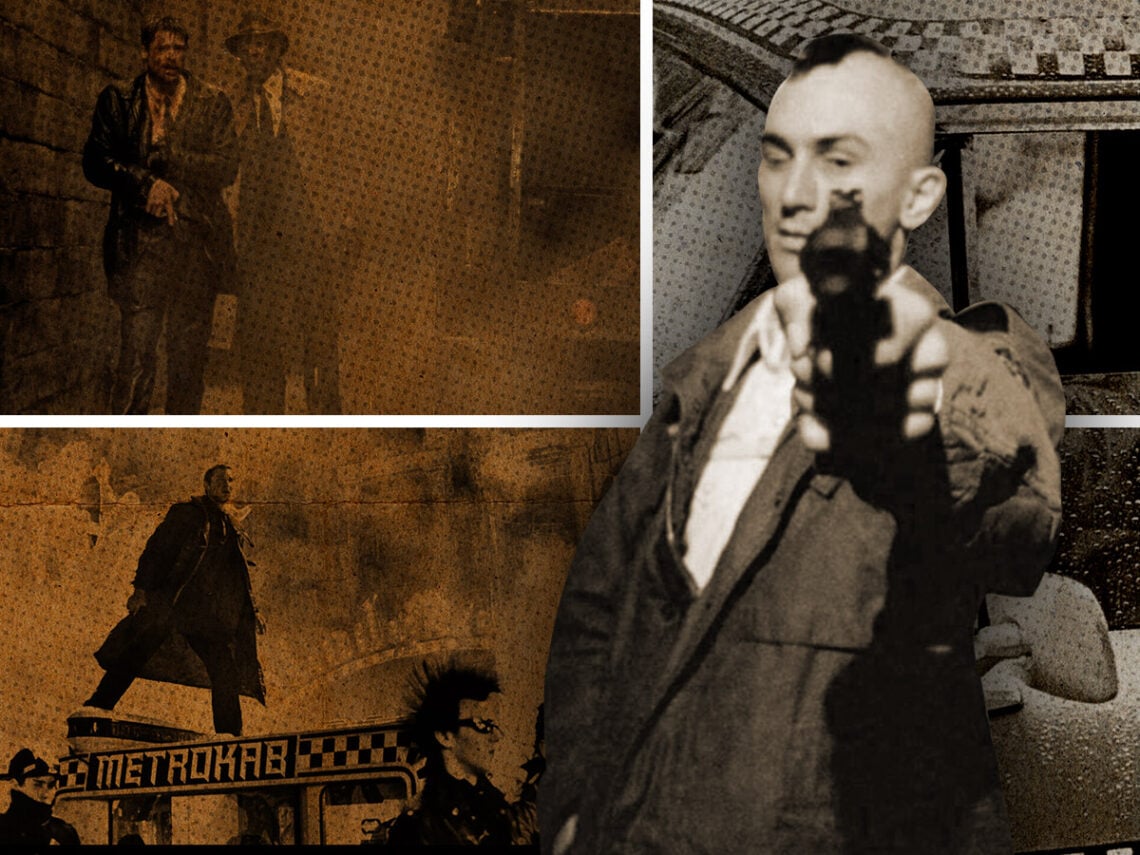
The 10 darkest depictions of city life in movies

Since the dawn of civilisation, there has been vocal opposition to city life. From the squalor to the noise, many factors put people off moving from the peripheries and into the core. In art, life in cities has been explored in various ways, with Edward Hopper’s painting Nighthawks and James Joyce’s Dublin romp Ulysses two impressive demonstrations of this. However, it is in cinema that the experience of living in a major conurbation has been delved into most intensely and delivered the most profound outcomes.
For the high points of city life in movies, fans only have to look to the comedies of Judd Apatow. Often, they display life in Los Angeles as a chilled-out, idiosyncratic haven where anything is possible and happiness is boundless. Elsewhere, Paul Thomas Anderson’s ode to his San Fernando Valley childhood in Licorice Pizza and Richard Curtis’s London-based rom-coms such as Love Actually and Notting Hill make city life seem like a breeze.
However, as many people know from first-hand experience, often city life is a stark departure from what it’s cracked up to be. Whether it be the lack of manners of the denizens to the extensive CCTV, there’s a long list of criticisms sent in the direction of cities which have permeated cinema at different points.
Unsurprisingly, the exploration of city life has reached various areas in cinema, with some remarkably dark depictions of urban life on offer. From fantasy movies set in make-believe locations to hard-hitting titles set in actual municipalities, some of the most significant auteurs have analysed city life with a fine-tooth comb. These ominous commentaries, set amid a confluence of high risers, bright lights and background noise, remain some of the most important out there.
Find our list of the ten darkest depictions of city life in film below.
The 10 darkest movie depictions of city life:
10. Children of Men (Alfonso Cuarón, 2006)
There was no better place to open up the list than with Alfonso Cuarón’s Children of Men, a thought-provoking modern classic adapted from P. D. James’ 1992 novel The Children of Men. The movie is set in 2027, a time when 18 years of infertility have left human society on the verge of collapse. The United Kingdom is one of the few remaining governed societies, meaning asylum seekers flock there. However, this causes it to slip into a police state, with imprisonments and executions common.
Clive Owen plays the civil servant Theo, who lives in London and must help the refugee Kee to escape the violence. Arguably the most important depiction of city life on the list due to the fact it is set only four years away in 2027, the version of the capital delivered is not dissimilar from the one felt at the peak of the first Covid-19 lockdown. On its knees but febrile, this is an eerie depiction of the type of urban living that the future might bring.
9. Brazil (Terry Gilliam, 1985)
Perhaps Terry Gilliam’s masterpiece Brazil is something of a surrealist successor to George Orwell’s classic work of dystopian literature, 1984. Starring Jonathan Pryce, Robert De Niro, Kim Greist, Bob Hoskins, Michael Palin and Ian Holm, the movie is a satire of topics such as technocracy, bureaucracy, hyper-surveillance, corporate statism, and state capitalism.
Pryce plays Sam Lowry, a lowly bureaucrat who attempts to find a woman who appears in his dreams. City life in the film is a repetitive hell, with everyone a slave to work and the hyper-consumerist system they have helped impose on themselves. One of the most profound comments on modern life and urban existence on the list, it is a must-watch.
8. V for Vendetta (James McTeigue, 2005)
With the subject material from the great Alan Moore, the screenplay by The Matrix creators – the Wachowskis, and a stellar cast, V for Vendetta was destined to be a classic. Set in a future where a fascist regime has subjugated the United Kingdom, it follows anarchist freedom fighter V, who attempts to free the British people through various acts of terrorism.
Primarily set in London, the ruling Norsefire political party has instilled mass CCTV, with the streets of the city quietened by their oppressive agents who imprison people they deem undesirable, including immigrants, homosexuals, and those of alternative religions. Powerfully, the sad London we see here is always a possibility in the modern era, given the contemporary prominence of autocrats. It is a permanent reminder of what might happen should we let the democratic system continue to be dismantled.
7. Escape from New York (John Carpenter, 1981)
The version of New York City featured in John Carpenter’s 1981 masterpiece is so horrific that the need to escape from it is even included in the title. Set in the future of 1997, the United States is now a crime-ridden hell, with Manhattan Island converted into the country’s singular maximum-security prison. In return for a pardon, ex-soldier and current prisoner Snake Plissken is tasked with rescuing the President of the US after Air Force One is highjacked and his escape pod crashes into the borough.
A film not dissimilar from Blade Runner in that it is a wildly oppressive vision of the future; there’s ample violence and murder here. John Carpenter’s brilliant score helps to increase the intensity by a couple of notches.
6. Watchmen (Zack Snyder, 2009)
Loosely based on Alan Moore’s revered graphic novels of the same name, Zack Snyder’s Watchmen produced a fictional take on 1985’s New York at the height of the Cold War. A dark and dystopian deconstruction of the superhero genre, it is set in an alternate reality where the eponymous group of heroes attempt to uncover a wide-reaching and deadly conspiracy.
The New York on exhibit is seedy, dingy and threatening, with street gangs, murders and unhappiness common. A typical Generation X take on reality and city life during the Cold War, this is a city so dreadful that it even saps the effervescence of the titular superheroes.
5. The Warriors (Walter Hill, 1979)
The Warriors is one of the definitive cult films, and it’s not hard to understand why. Based on the 1965 novel of the same name by Sol Yurick, it tells the story of the fictional New York City street gang, The Warriors, who are forced to travel 30 miles from the north end of The Bronx to their home in Coney Island. Framed for the murder of a popular gang leader, the movie’s tension is palpable, akin to the New York of the time.
Dark, intense and atmospheric, with the film’s style not dissimilar from Martin Scorsese’s Taxi Driver and Alan J. Pakula’s Klute, the inherent violence of New York City is conveyed clearly. For example, note the unsettling aura of the empty subway station, with the footsteps echoing in suspense before The Warriors disembark the graffiti-ridden train and run from the NYPD.
4. Se7en (David Fincher, 1995)
The first time watching David Fincher’s Se7en leaves a mark. A crime thriller starring Brad Pitt, Morgan Freeman, Gwyneth Paltrow, and, dare I say it, Kevin Spacey, the film is one of the most horrifying murder mysteries out there. Although the plot, which follows two detectives hot on the case of a serial killer using the seven deadly sins, is iconic, the overall environment and atmosphere of the movie really send a shiver down the spine.
In a masterstroke from Fincher and screenwriter Andrew Kevin Walker, Se7en is set in an unnamed, crime-ridden city with an extremely intense atmosphere. Augmenting the idea that the city could be anywhere on earth, the grey aesthetic creates a chilling depiction of modern urban living, where background noise is permanent and sleep is only a distant memory.
3. Blade Runner (Ridley Scott, 1982)
It would have been something akin to criminal for Ridley Scott’s Blade Runner not to be included on the list. One of the ultimate dystopian films, primarily thanks to it being based on Philip K. Dick’s sci-fi novel Do Androids Dream of Electric Sheep?, the 2019 Los Angeles on display here is seared into the collective memory.
Blending neo-noir with cyberpunk, the vision of humanity’s future in Blade Runner alarmed many viewers when the movie was first released. The replicants and Tyrell Corporation are perfect indicators of our increased reliance on technology and consumerism. The Los Angeles Ridley Scott brings to life is wholly shady, with flames burning from the top of high risers and flying cars all the rage. It’s rainy, dingy and sinister, and for these reasons, it will always be a vital case study in the cinematic evaluation of city life.
2. Dark City (Alex Proyas, 1998)
A cult neo-noir science fiction thriller, Dark City deserves its place on the list, and not just for its apt title. Directed by Alex Proyas, it stars Rufus Sewell, Jennifer Connelly, Kiefer Sutherland and William Hurt. Long thought to have had a great impact on The Matrix, which came out the following year, the depiction of city life here is unbelievably creepy.
Sewell plays John Murdoch, an amnesiac man who finds himself the number one suspect in a gruesome ritual killing of a young woman. Wandering the streets of the unnamed anachronistic city, Murdoch attempts to evade the police and the mysterious group “The Strangers” and seeks to discover his identity. Whilst the characters and overall themes are pertinent, the fact that this eerie city is perpetually suspended in nighttime is a powerful comment on modern urban living.
1. Taxi Driver (Martin Scorsese, 1976)
Whilst there were many contenders for the top spot, no cinematic depiction of city life is as unnerving or as shockingly authentic as Martin Scorsese’s 1976 psychological thriller, Taxi Driver. The film is set in a decaying and morally bankrupt New York City following the Vietnam war – which mirrors the composition of the actual city at the time. It follows Travis Bickle, a veteran who now plies his trade as a taxi driver, with his mental state gradually deteriorating.
An almost dream-like exploration of life in the rotten ‘Big Apple’, Scorsese delves head first into the seedy underbelly of the city’s nightlife, with porn, prostitution, and paedophilia all touched on. Bickle longs to wipe “the scum off the streets”, and this personal quest sees him enter some terrifying real and make-believe environments. The ultimate depiction of the nightmare that New York City found itself in in the 1970s, there is no cinematic take on city life darker than this.
