


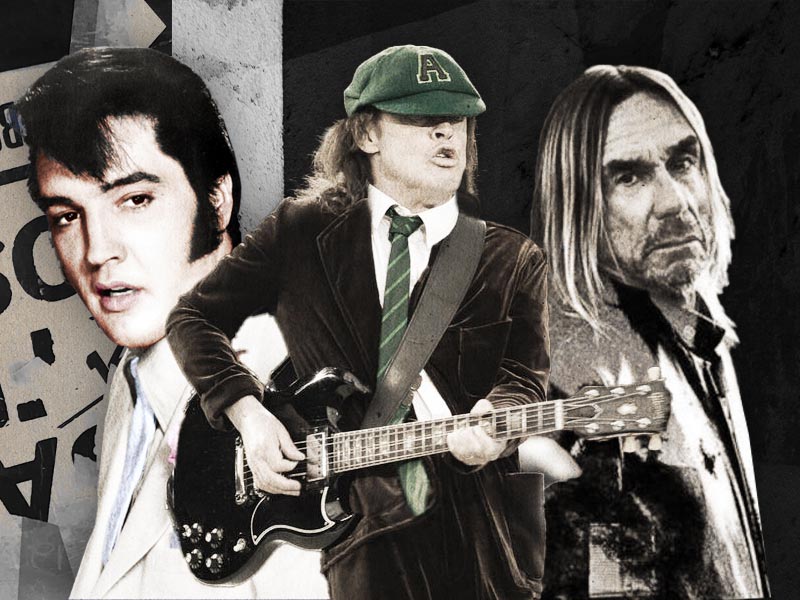
From Paul McCartney to Elvis: The 10 best redemption stories in music

We’ve all seen the music biopics. It’s a cliché beyond clichés to talk about the “rise and fall” of musicians and rock stars. It’s all the same: young upstart with amazing talent makes a name for themselves, only to be corrupted by the temptations that success brings them. After spiralling and hitting rock bottom, the only place to go is up. Yadda yadda yadda, roll credits.
The thing is, life doesn’t actually happen as it does in the movies. Most people don’t get the chance to redeem themselves and their sins, and there’s a long list of rock star casualties across almost 80 years of popular music to prove it. In fact, beyond the tragic finality of death, most bands don’t get redemption because they simply peter out and go belly up without much fanfare.
But there are stories of redemption and resolution that are real. Not only are they true, but they’re impactful, even inspiring, to legions of fans and followers who can see the resilience involved in survival. Rock music doesn’t actually have to be as dramatic as a movie all the time, but sometimes, the truth actually transcends fiction.
If you’re looking for some of the most inspiring stories of redemption in the world of rock and roll, then look no further. From overcoming professional struggles to beating drug addictions to rising above the sombre cloud of death, these are some of the most inspiring redemption tales in the history of popular music.
The 10 best redemption stories in music:
10. Paul McCartney
It’s hard to imagine feeling particularly bad for Paul McCartney in the early 1970s. The man was happily married and still one of the most popular musicians in the world, even after the breakup of The Beatles. He even managed to snag a number one hit in America, ‘Uncle Albert / Admiral Halsey’.
But McCartney’s reception among critics was abysmal, especially compared to his bandmates. Albums like McCartney, RAM, Wild Life, and Red Rose Speedway were all reviled by music journals, and McCartney’s troubles with obtaining a visa (thanks to his drug arrests) made it impossible for him to tour outside of Europe. For most of the early 1970s, McCartney was as down and out as he ever would be.
Band on the Run would right the ship, followed by the triumphant ‘Wings Over the World Tour’ a few years later, leading to McCartney becoming one of the most reliably popular artists in the history of music. Nowadays, there’s nobody more legendary than McCartney, but even legends have their fallow periods.
9. Red Hot Chili Peppers
Drugs have killed some of the most promising careers in the history of popular music. We’ll see an instance or two of that on this list, but the first one comes from the Red Hot Chili Peppers. The band’s first major loss came from guitarist Hillel Slovak, whose death from a heroin overdose in 1988 closed the book on the band’s first incarnation. The fact that the Chili Peppers were able to rebound from that is a pretty insane redemption story all its own, but drugs weren’t quite done with the Chili Peppers yet.
John Frusciante fell down the same heroin spiral that Slovak did, eventually leaving the group at the height of their fame in 1992 and descending into years of addiction. Anthony Kiedis fought off his own addictions and relapses with opioids throughout the 1990s, and when Dave Navarro quit the band in 1998, it seemed as though the Chili Peppers were kaput.
Then, a major turn brought the band back together. Kiedis and Frusciante kicked their respective habits and renewed their friendship, causing the Chili Peppers to come back together for their 1999 LP Californication. That album’s success would have been a nice bow on the Chili Peppers’ story, but Frusciante has made yet another comeback with the band, proving that there are no ends to the redemption cycles in the Red Hot Chili Peppers.
8. Elvis Presley
The term “rock star” was practically invented for Elvis Presley. Throughout the 1950s, no artist had a stranglehold on pop culture the way The King did. He was so insanely popular that he could still land number one hits even when he was completing two years of service in the United States Army. During that time, Presley became possibly the most influential figure in the history of pop music.
And then came the slide. Not the major one that would comprise the final chapter of his life, but rather the seven-year break he took from touring in order to focus on making feature films. Presley’s reputation as a rock and roll pioneer took a major hit as toothless fluff films like Girl Happy and Paradise, Hawaiian Style became his M.O. Few people we as uncool as Elvis was in 1968.
That’s why a comeback special was necessary. But Presley had more in mind than just a reminder of his status as The King: for the first time, he was ready to make a prominent political statement. The ‘68 Comeback Special ended with Presley’s impassioned performance of ‘If I Can Dream’, and while Presley would slide back into malaise shortly after, his dedication to ‘If I Can Dream’ gave Presley a new high in his career.
7. Johnny Cash
The archetypal “rise and fall and rise again” story in music history, Johnny Cash now has his redemption tale well-publicised thanks to the Oscar-winning film Walk the Line. But just because that film dramatises Cash’s life, it doesn’t mean that Cash’s life was any less dramatic.
It’s hard to know quite when Cash’s lowest moment was: the death of his brother Jack, the depths of his drug addiction that very nearly took away his career or the freak ostrich attack that kickstarted his relapse. Perhaps it was when he was diagnosed with Shy–Drager syndrome, a disease that slowly robbed him of his mental and physical capabilities. One of the lowest lows was almost assuredly the loss of his wife, June Carter, just four months before his own death.
But Johnny Cash was a fighter. Every time he got knocked down, something would pull him back up. Sometimes it was June, sometimes, it was his music, and sometimes it was his own will. Perhaps Cash’s greatest comeback moment came when he began working with Rick Rubin on the American Recordings series, solidifying Cash’s place as one of the most important figures in the history of country music.
6. Britney Spears
This one will be a bit tricky, considering how we are smack dab in the middle of a redemption arc being written in real time. Some assumptions will have to be made for the sake of argument and placement, but if I were a betting man, I would say that Britney Spears’ rise and fall more than earns its spot on this list.
The highs and lows of Britney Spears’ life and career have been uniquely documented, not least because of the rise of the internet that coincided with the ebbs and flows of her career. Number one songs, mammoth concert tours, and unmatched fame as the world’s biggest pop star soon gave way to addictions, mental breakdowns, and controlling conservatorship that forced Spears to fight against her own family in order to take both her music career and her everyday life back.
But now we’re living the post #FreeBritney era, with a new marriage and a fresh start for Spears. Her legions of fans and supporters haven’t forgotten her either: her first single after the termination of her conservatorship, ‘Hold Me Closer’, was a top ten hit in both the US and the UK. What Spears does from this point on is anyone’s guess, but she’s earned all of the renewed success and public congratulations that she’s had in the past few months.
5. Iggy Pop
Most rock stars with drug addictions bottom out somewhere down the line. Many of them don’t overcome their addictions, and those who do often get their tales spun into the traditional music story of rehabilitation and redemption. But Iggy Pop is no average rock star, and his addictions were no average addictions. Here’s how you know: what other rock star do you know of that landed themselves in a literal mental institution?
For the better 20 years, James Osterberg hit every conceivable low that a decrepit drug addict could hit. He also just happened to be a boundary-pushing musician with his life in the public eye. The biggest low of Pop’s career was probably checking into a mental institution right after the second demise of The Stooges, but in truth, his drug problems persisted for roughly another decade.
During that time, he got a well-publicised comeback thanks to his friendship with David Bowie and the modest commercial success of his albums The Idiot and Lust for Life. But Pop’s real redemption came in the ‘90s. Now drug-free, Pop scored his one and only US top 40 hit with ‘Candy’ and became instantly iconic thanks to the use of ‘Lust for Life’ in the opening sequence for the film Trainspotting. That was around the time that Pop (and The Stooges) began to get more recognition for their influence, and Pop has been a living legend ever since.
4. Brian Wilson
The idea of the mad musical genius begins with Brian Wilson. As the composer, musical leader, and primary creative force behind the first decade of The Beach Boys’ career, Brian Wilson shepherded his family band of surf rock singers into a new realm of psychedelic pop nirvana. As it was happening, Wilson began to ascend to a god-like status among fans and followers. The Beatles were the only band competing with him. Brian Wilson was on top of the world.
What the public didn’t realise was that Wilson had been struggling for years. A 1964 panic attack caused him to quit touring, and his mental health was beginning to deteriorate rapidly as his drug use increased throughout the end of the 1960s. The breaking point came during the production of The Beach Boys’ follow-up to Pet Sounds, the doomed studio project Smile. After failing to finish the LP, Wilson descended into years of physical decline and abuse at the hands of handlers, specifically his controversial relationship with Eugene Landy.
It took decades for Wilson to ultimately return to the major albatross of his career, Smile. But when he did, Wilson was met with universal praise and acclaim. For someone who had long been considered a lost cause, Wilson returned to both the stage and the studio with clarity and concise musical maturity. Wilson’s status as a genius wasn’t just presumptive fiction: it was now accepted as historical fact.
3. Tina Turner
Quite a few entries on this list happen to surround individuals who were the authors of their own misfortune. But not Tina Turner, the legendary singer who was the victim of one of the most pervasive crimes in the world, domestic violence. Turner was married to Ike Turner, the nefarious rock and roll pioneer with whom she recorded a number of major hits in the late 1960s and early 1970s. As Ike’s cocaine addiction worsened, so too did his abuse of Turner.
As the Ike and Tina Turner Revue pulled into Dallas on July 1st, 1976, Tina and Ike got into one final altercation. With just 36 cents in her pocket, Tina Turner fled from Ike’s abuse and began the slow process of picking up her personal life and professional career. For the rest of the decade, Turner endured small club shows and thankless television appearances to pay for the cancelled contracts and appearances that she missed with Ike.
It wasn’t until Turner was nearly 45 years old that her singing career made an astounding comeback. Propelled by the success of her 1984 album Private Dancer and the hit single ‘What’s Love Got to Do with It?’, Turner ascended back to the top of the pop charts. After years of suffering at the hands of her ex-husband, promotors, and music executives, Tina Turner proved that resilience is possible in any situation.
2. AC/DC
Death lurks all around the history of rock and roll. Sometimes it’s mythical, like Robert Johnson selling his soul to the devil at a crossroad in Mississippi. Sometimes it’s prescient, like Jerry Garcia intoning ‘Death Don’t Have No Mercy’ as he appears ghostly white onstage with the Grateful Dead. Other times it’s sudden and shocking, like the deaths of Buddy Holly, Ritchie Valens, and Jiles ‘The Big Bopper’ Richardson.
AC/DC had to suffer one of the more unexpected tragedies in rock history when lead singer and insatiable personality Bon Scott died in early 1980. Scott was a voracious drinker but had normally been able to keep control of his habits. After a night out and a particularly cold night in a car during the middle of February, Scott left his bandmates in one of the most difficult areas a group could ever be put in: the loss of a lead singer.
AC/DC had just scored their biggest international release with Highway to Hell, with brothers Angus and Malcolm Young already working on material for the follow-up. Nobody expected AC/DC to be able to replace the monster personality of Scott, but they did in Brian Johnson, a Geordie singer with a vocal range that could match Scott’s piercing wails. The band’s return on Back to Black is probably the most successful reinvention of a band ever, with a cool 25 million times platinum certification in the United States alone.
1. New Order
Just like AC/DC, New Order were a band that rose from the ashes of their previous incarnation. Unlike AC/DC, they couldn’t simply find a new singer and give it another go. Originally formed as Warsaw, Peter Hook and Bernard Sumner started what became Joy Division with singer Ian Curtis in 1977. Soon, the band recruited drummer Stephen Morris and formed, arguably, the first post-punk band in the world.
Trouble followed Curtis, who struggled with physical ailments like epilepsy and mental issues like depression. A faltering marriage in the face of an affair and his uncertainty about the band’s future after the recording of their second album, Closer, caused Curtis to enter into a dark frame of mind. In the hours before Joy Division were set to embark on their first American tour, Curtis had one final meeting with his wife Deborah before taking his own life at the age of 23.
After taking the time to process Curtis’ death, the remaining members opted to continue. Not only did they change the band’s name to New Order, but they also embraced the burgeoning dance scene that was filtering into Manchester clubs. Despite the complete change in name and style, New Order became one of the most important British bands of the 1980s, escaping the long shadow Curtis’ death made while honouring him by carrying on as a unit.
