


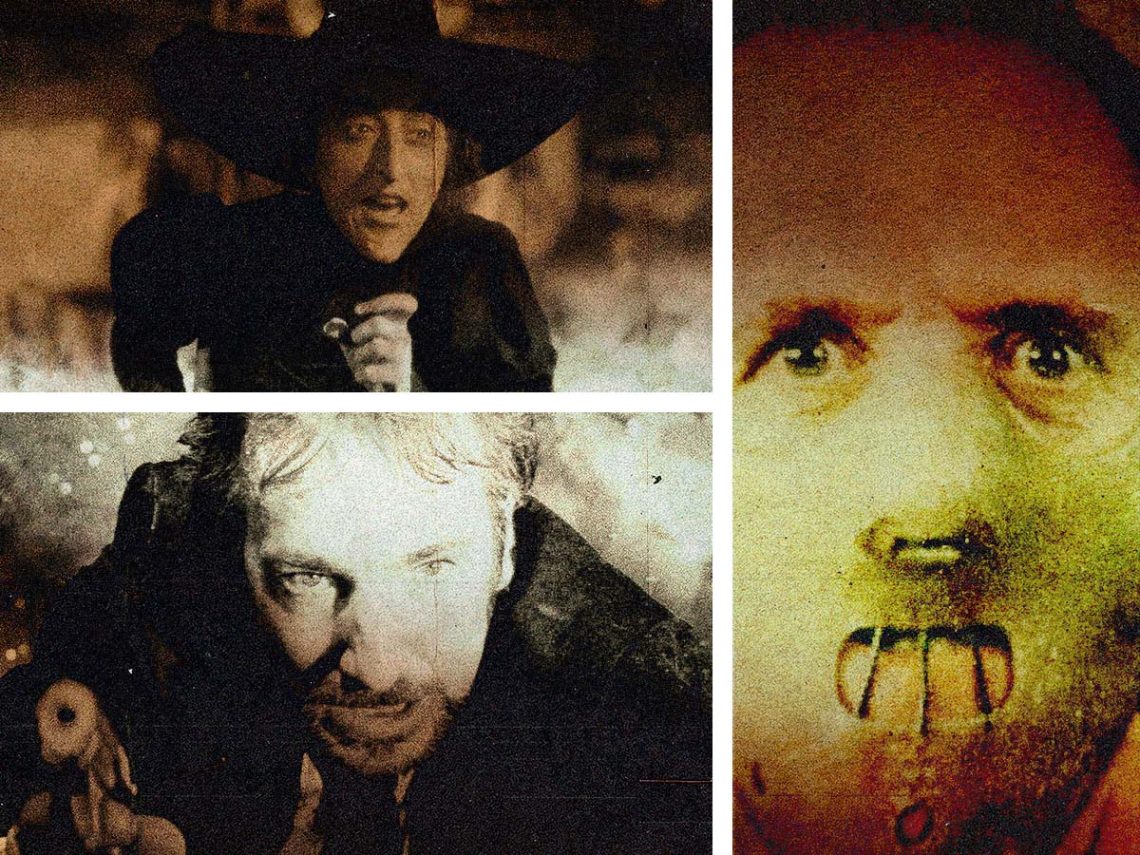
The 10 best non-sci-fi villains of all time

In contemporary film culture, the standard go-to genres that spiral out of every studio and into the audience’s attention tend to be either the latest superhero blockbuster in a franchise or a high-budget science-fiction flick. These genres come with cliched and tightly written plot and character tropes, most notably a villain who provides the obstacle for our heroes to overcome.
Superhero movie villains, such as those from the Marvel franchise, must submit to a persistent manifesto concerning personality, design and objective. These supervillains are sinister, dominant, donned in a cape and armour, and dedicated to either world and universe domination or destruction. Sci-fi villains can go along a similar pattern. However, they also tend to be animalistic aliens that pose an extra-terrestrial threat to astronauts or scientists.
These character types are the norm in today’s filmmaking and visual stories of good vs evil. However, who can audiences watch when they require a break from superhero or sci-fi blockbusters? Villainous characters in films other than these two genres fulfil a more psychological or layered role; instead of threatening superheroes with world domination, these villains keep their goals more enclosed and realistic.
Non-superhero or sci-fi villains range from serial killers to mob leaders, representing a humanised evil that those areas of cinema usually forget. There are the occasional fantasy villains who blend imagination and illusion with their wicked ways. Here are ten of the most authentic villains in cinema history.
The 10 best non-sci-fi villains of all time:
Michael Myers (Halloween franchise, John Carpenter, 1978-2022)
John Carpenter’s influential horror classic Halloween gave horror fans one of the genre’s most terrifying killers, Michael Myers. On Halloween night in 1963, a six-year-old Myers killed his older sister while dressed as a clown. After spending 15 years in a psychiatric ward, he escapes on Halloween night to rack up an even bigger body count.
Michael Myers also cited as the Boogeyman, is a sinister and horrifying villain because he resides in the grey area between human and monster, exemplified in his pale blank mask. Myers cannot be stopped or reasoned with and will stop at nothing to fulfil his need to kill.
Nurse Ratched (One Flew Over The Cuckoo Nest, Miloš Forman, 1975)
Based on Ken Kersey’s 1962 novel of the same name, One Flew Over the Cuckoo’s Nest follows a new patient at a mental institution who comes under the care of a harsh and unfeeling nurse.
Nurse Ratched, played by Louise Fletcher, is the last person you would want to treat you. She is cruel, heartless and cold in her methods of ‘care’, standing as a metaphor for corrupt power and influence. Ratched revokes privileges and necessities from her patient when she deems it appropriate, humiliating them as a twisted treatment exercise.
Anton Chigurh (No Country for Old Men, The Coen Brothers, 2007)
Joel and Ethan Coen’s 2007 neo-Western thriller follows a Vietnam veteran, a hitman and a local sheriff in a story about ate and circumstance. The three are caught up in a violent display of chaos following a drug deal gone wrong.
No Country for Old Men presents a legendary yet chilling antagonist in Javier Bardem’s Anton Chigurh, who is hired to retrieve $2.4 million from a failed drug deal. Void of remorse, and sympathy with an unnerving persona, Chigurh is cited as one of cinema’s most realistic psychopaths. The Journal of Forensic Science writes: “In particular, Chigurh reminds him of two real-life professional hitmen whom he interviewed. ‘They were like this: cold, smart, no guilt, no anxiety, no depression.'”
Hans Landa (Inglourious Basterds, Quentin Tarantino, 2009)
Quentin Tarantino’s historical drama focuses on a group of Jewish soldiers orchestrating an undercover mission to take down the Nazi government. An additional plotline follows a quest for vengeance following a loved one’s murder.
Historical context already makes every antagonising figure in this film detestable and irredeemable, especially Hans Landa, an SS officer from Austria skilled at locating and subsequently killing Jewish people. Landa presents ego and ambition in a corrupted and immoral manner, exerting a twisted sense of pride in what he does that generates the utmost hatred. He may be polite and charming on the outside but what lurks beneath is an extension of some of humanity’s most evil acts.
Hannibal Lecter (Silence of the Lambs, Jonathon Demme, 1991)
Sir Anthony Hopkins cemented himself in the horror and thriller genres with Silence of the Lambs, adapted from Thomas Harris’s novel. The film introduces us to FBI trainee Clarice Starling as she is tasked with interviewing cannibalistic serial killer Hannibal Lecter to track down another killer.
Formerly a forensic psychiatrist, Lecter has been imprisoned for murdering and eating the remains of several victims. This disturbing backstory is then contrasted with a seemingly calm and charming personality, exhibiting a dangerous method of attraction. However, the mask soon slips, and we see the outrageous violence Lecter exerts on his victims, letting out an animalistic threat that shakes audiences to the core.
The Fairy Godmother (Shrek 2, Andrew Adamson, Conrad Vernon and Kelly Asbury, 2004)
Shrek and Fiona are married and living happily ever after. That is until they are called to meet Fiona’s parents, the king and queen of Far Far Away. If unimpressed in-laws were not enough, Shrek also has to fight off bitter princes and their relentless fairy mothers.
The Fairy Godmother, played by the brilliant Jennifer Saunders, is introduced as every princess’s dream, committed to helping them find their one true love. However, Fiona’s dreams have to abide by her fairy godmother’s rules, as the Godmother is furious to learn Fiona has chosen a life with an ogre over her son. The Fairy Godmother is an entertaining and unforgettable antagonist, providing humour and music in her villainous ways.
Hans Gruber (Die Hard,John McTiernan, 1988)
This iconic action film stars Bruce Willis as a detective who gets entangled in a terrorist takeover while visiting his wife. Alan Rickman plays Hans Gruber, the terrorist’s ruthless and sinister leader.
Gruber is presented as a cunning and intelligent thief from Germany, hoping to obtain $640 million from holding a plaza hostage. The character shows he will stop at nothing to achieve his goal, posing a massive threat to Willis’s John McCane. Gruber is one of the action genre’s greatest antagonists, referenced in several following media pieces.
The Armitage Family (Get Out, Jordan Peele, 2017)
Jordan Peele’s Get Out is one of the best horrors and directorial debuts of the 21st century. Daniel Kaluuya plays a photographer called Chris, who is travelling to meet his girlfriend Rose’s parents. The initial overbearing of the couple’s interracial status poses a frustrating factor for Chris. However, he soon learns the family are holding a darker and more disturbing vision for him.
Get Out provides some compelling and insightful perspectives on the concept of white American Liberalism, with the Armitage family being employed as a testimony to this. The family appear as over-accommodating figures eager to prove how progressive they are to Chris, a black man. We then learn this approach’s true intentions as the family secretly plots to inhabit Chris’s body out of believing that Black people are superior in genetic design. It is a disturbing commentary on culture vultures and covert racism.
Claude Frollo (The Hunchback of Notre Dame, Gary Trousdale and Kirk Wise, 1996)
Quasimodo, a deformed bell-ringer in Notre Dame, breaks free from his bell tower to explore the city of Paris, where he falls for a Romani woman called Esmerelda. However, his captor, posing as a guardian, will stop at nothing to keep both under his thumb.
Claude Frollo is one of Disney’s most evil and chilling villains because he is realistic. The character is plagued by antiziganism and other bigotry in his sadistic quest to cleanse the city to achieve his subjective utopian ideal. Frollo also has a disturbing obsession with Esmeralda, and blends racial hatred with patriarchal lust. With overt religious context and bigoted ideological undertones, Frollo reads as a complicated but naturalistic antagonist.
The Wicked Witch of the West (The Wizard of Oz, Victor Fleming, 1939)
This American treasure tells the charming and colourful story of Dorothy Gale’s adventures in Oz. Accompanied by a scarecrow, a tin man, a lion and her dog Toto, Dorothy seeks the help of the great and powerful wizard to get home, fighting off an evil witch at the same time.
The Wicked Witch of the West is one of cinema’s first powerful and timeless villains, characterised by an evil cackle, bright green skin and iconic quotes. Actor Margret Hamilton embodied the role with an unforgettable energy that has led the character to be known as one of the best movie villains of all time, scaring audiences of all ages and infiltrating the film’s charm with a darker edge.
