


The 10 best horror movies of the 1990s

The 1990s are assessed as a complex time for the horror genre, as some enthusiasts cite the decade as somewhat of a monotonous drop, whereas others argue it rejuvenated horror and progressed to new heights. Considering some of the best horror films of all time, there is the chance that any effort released during the ’90s won’t come to the forefront, despite some strong contributions.
This decade possessed an unrelenting desire to shoehorn slashers into their movies, whereas its predecessor loved over-the-top monster designs and body mutations. However, horror films during this time mirrored real-life serial killers who were gaining mainstream attention through widespread coverage. In addition to this, the human psyche was explored by filmmakers as part of psychological thrillers. These involved characters suffering from mental breakdowns or character studies of psychopaths, something a little more serious than ’80s horror.
With that, exterior and cultural attitudes also influenced fictional horror stories. Postmodernism had become a widespread ideology, and in turn, scepticism was a popular element in horror films, as there always had to be one or two characters who scoffed at the idea of a masked killer lurking in the shadows.
Style-wise, these elements were conveyed through a palette of gritty realism. This echoed culture swapping the ’80s flashy hair and glam metal for Seattle’s down-to-earth grunge scene. Thus, horror films took a break from the excessive campness of the ’80s in gore and toned a lot of things down. Final girls ran from killers in denim jackets and converse after attending a party where Nirvana-style bands played in the background.
Below is the full list of the best horror films from the 1990s.
The 10 best horror movies of the 1990s:
1990 – Jacob’s Ladder (Adrian Lyne)
Jacob Singer struggles to maintain his sanity after returning home from the Vietnam War. In a world filled with hallucinations and flashbacks, Singer rapidly falls apart as the world, and the people around him morph and twist into unsettling images.
Jacob’s Ladder established some of the decade’s later selected styles by existing as a melting pot of confusion, sadness and painful despair. Its subject matter is executed by using ambiguity and visual terrors. Its plot and special effects became a source of influence for various other works, such as the Silent Hill video game series.
1991 – The Silence of the Lambs (Jonathon Demme)
Clarice Starling is a top student at the FBI’s training academy. Dr Hannibal Lecter is a brilliant psychiatrist and violent psychopath incarcerated for murder and cannibalism. Jack Crawford wants Clarice to interview him as he believes Lecter may have insight into the serial killer Buffalo Bill case, and Starling is just the bait to attract him.
Considered to be one of the greatest and most influential films of all time, The Silence of the Lambs broke a lot of horror barriers with its chilling content and suspense. It made history by being the only horror film to win the Academy Award for Best Picture and has one of the film’s most terrifying villains-Hannibal Lecter.
1992 – Braindead (Peter Jackson)
An overbearing mother’s interference with her son’s love life during a trip to the zoo results in an undead plague sweeping through a quiet town. Her son, Lionel, is forced to maintain order and civilisation by keeping the infected hidden away in his house.
Some say that the ’90s didn’t start until 1995, and Peter Jackson’s 1992 Braindead holds truth to that in holding onto many ’80s horrors. It’s excessive in gore, being one of the goriest films ever made, and is bizarrely entertaining in its scare factor. Its most infamous scenes include a zombie love scene and the hero taking down a herd of the undead using a lawn mower.
1993 – Evil Dead III: Army of Darkness (Sam Raimi)
Following the nightmarish ordeals of the first two Evil Dead films, Ash Williams is trapped in the Middle Ages and battles the undead in his quest to return to the present.
This horror comedy is utter madness, with non-stop moments of hysteria and absurdity. It’s a fitting ending to one of the most interesting film trilogies, with an epic conclusive battle between iconic hero Ash and the terrifyingly twisted demons.
1994 – In the Mouth of Madness (John Carpenter)
An investigation into a successful horror novel’s disappearance leads an insurance inspector to question his sanity as the lines between reality and fiction are blurred.
John Carpenter maintained his status as one of horror’s masters in this love letter to H.P Lovecraft. The film is the third instalment in Carpenter’s “Apocalypse Trilogy”, following 1982’s The Thing and 1987’s Prince of Darkness. It received mixed reviews upon release, but its quality in special effects, acting, and directing have landed it as a cult classic.
1995 – Se7en (David Fincher)
A detective who is about to retire and another who is new in town hunt down a sadistic serial killer who organises his murders according to the seven deadly sins.
David Fincher trademarked the seven deadly sins as a story concept through this spine-chilling and stomach-churning thriller. The serial killer is always one step ahead, and the story world feels so bleak and hopeless. It holds one of horror’s most terrifying endings, next to The Vanishing, and represents the ’90s gritty style.
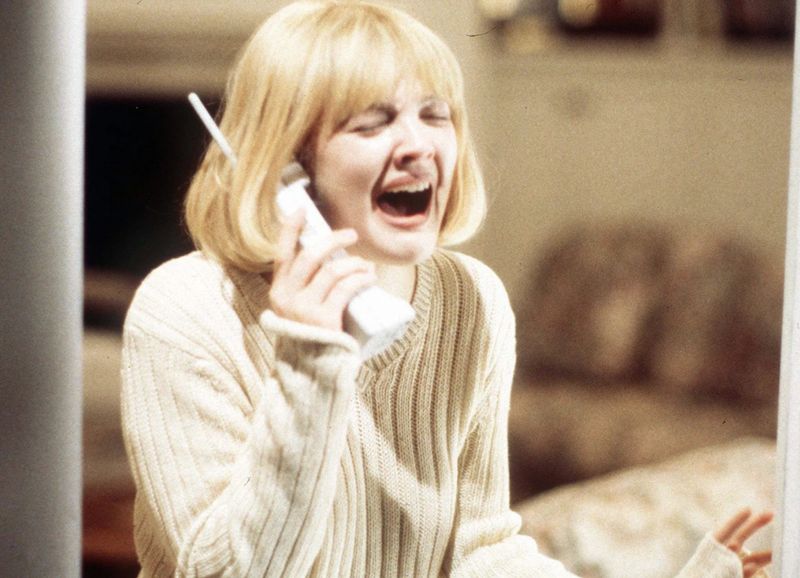
1996 – Scream (Wes Craven)
A masked killer, cited as Ghostface, butchers a small town’s teen population. Sidney Prescott, who is dreading the anniversary of her own mother’s murder, is on his life and starts to question who she can trust.
Wes Craven proved why he is another one of horror cinema’s masters in this revolutionary take on the genre’s tropes. Scream is more than a well-executed slasher; it’s a cleverly written, self-aware piece of metafiction that turns horror codes on their heads. It has one of horror’s most iconic (twist) opening scenes and serial killers. It also peaks ’90s style-both grunge and chic- evident in the costumes and soundtrack.
1997 – パーフェクトブルー/Perfect Blue (Satoshi Kon)
A singer quits her band to become an actress and sheds her “good girl” image to further her career. Instead of flourishing under her new lifestyle, she is plagued by spiteful images of murder as her psyche breaks down.
Perfect Blue shows why animation should be taken more seriously. It explores psychological aspects through some attentive stylistic choices that film students just eat up in analysis. It can now be re-assessed as progressive in its commentary of celebrity worshipping culture and obsessive fans, in addition to ideas of the human psyche breaking under pressure.
1998 – リング/Ringu (Hideo Nakata)
A woman and her ex-husband investigate a series of teen deaths. Instead of a mysterious person, they have reason to believe the culprit is a cursed videotape haunted by a ghost child. Their investigation takes an ugly turn when their own son becomes a victim.
Ringu represents societal and cultural shifts due to technological advancements during the late ’90s. Its supernatural curse in the form of a videotape became a trendsetter as 2010s horror became interested in technology as an evil threat. It also kickstarted a long series of Western rehashes of J-horror since Japan knew how to scare audiences. Also, the image of Sadako crawling out of the TV set is forever burned in our brains out of pure fear.
1999 – Blair Witch Project (Daniel Myrick and Eduardo Sanchez)
Three students decide to go into the Maryland backwoods to cover the mystery behind the Blair Witch incidents. However, they lose their map, and things turn unexpectedly when they begin to question if the killer witch is just an urban legend.
The Blair Witch Project was a fitting close to the decade’s horror. Its use of found footage style was revolutionary at the time, later becoming a game changer as found footage gained more popularity in the 2000s. With a call back to the ’70s in focusing more on suspense and atmosphere rather than visual jumpscares and exercising the ’90s gritty realism, the film is a great slow burner with a heartstopping payoff. Who can forget how people thought the events were real due to a brilliant marketing technique of missing person posters?
