


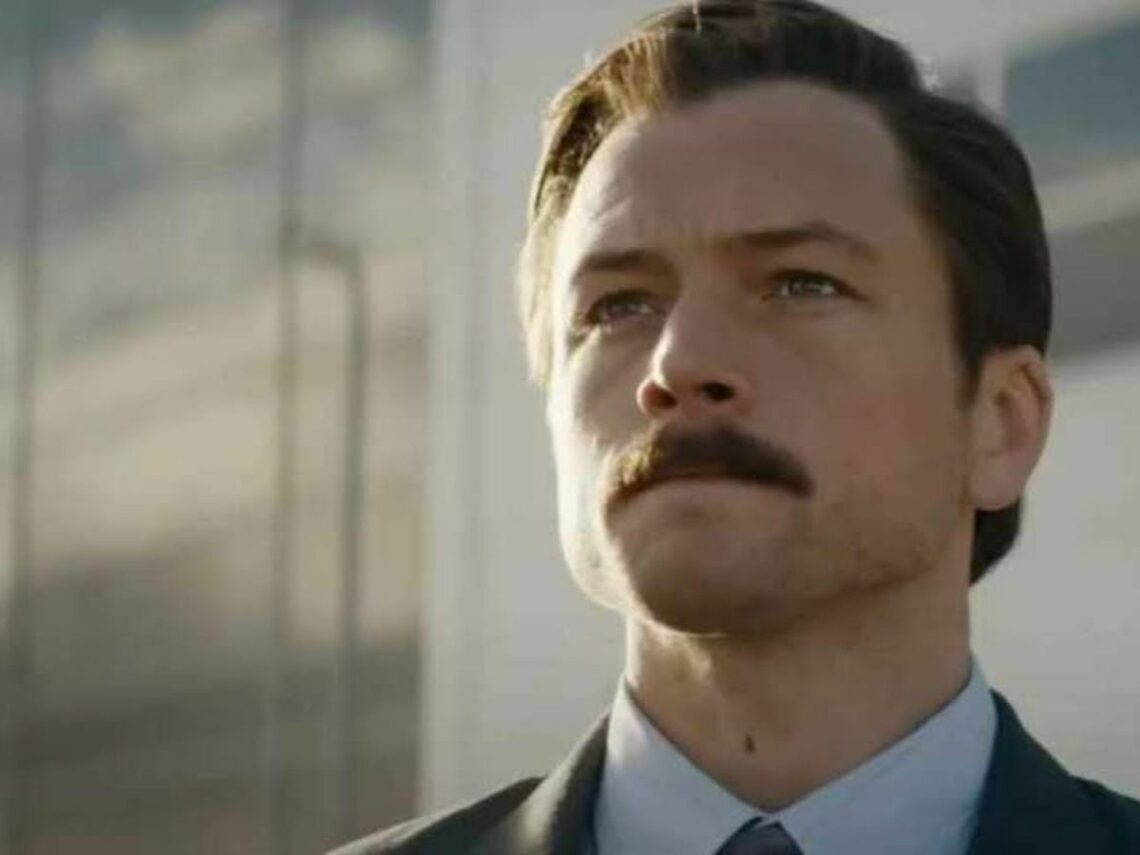
‘Tetris’ review: Jon S. Baird’s video game origins film makes all the wrong choices

Jon S. Baird’s new Apple TV+ film Tetris tells of the global battle to secure the intellectual property rights to the famous titular puzzle video game. It stars Taron Egerton and Toby Jones as Henk Rogers and Robert Stein, two video game entrepreneurs desperate to secure the rights and distribute the game worldwide, and Roger Allam as a maniacal Robert Maxwell, the infamous owner of the Mirror Group media empire, also highly keen to cash in on the unique entertainment Tetris provides.
Invented by computer engineer Alexey Pajitnov, Tetris quickly made its way around the offices of the Soviet Union. The film plays out during the beginning of the end of the Soviet Union in the late 1980s, with Rogers, Stein and Maxwell’s bids to secure the IP rights told alongside the country’s first adventures into the riches that a Capitalist outlook can provide.
Of course, these dealings are taking place away from the suspecting eye of the Union, although even leader Mikhail Gorbachev is keen to get in on the action. So, on the one hand, Tetris is an undoubted spy drama with the tension ramped right up throughout. However, telling the story of the final throes of the Soviet Union through a cutesy comedy with 8-bit graphic cuts and a 1980s pop soundtrack distracts from the actual importance and necessity of the film, especially in light of recent developments in Russia.
Egerton is energetic to the point of irritation, although perhaps this may provide a refreshing counterbalance to the drab filter of the Soviet Union governmental buildings. “This is no time for American emotion,” Pajitnov tells Rogers at one point, highlighting the fact that while Rogers is ultimately keen to capitalise on his excellent game, Pajitnov and pretty much all other Soviet citizens have to contend with a threat of existential importance.
One thing that the film does well, though, is to show the ugly, bloated Capitalists that the Soviet Union had envied and would undoubtedly become in the devious Robert Maxwell and his spoilt son Kevin (played by Anthony Boyle). We also see the importance of Tetris, the video game, although this merely provides the backdrop to the real story of the film, where two men (Rogers and Pajitnov) are desperate to provide better lives for their families, albeit for starkly different reasons and levels of necessity.
Tetris is an admittedly entertaining film. It’s bright, moves quickly and doesn’t bog one down with the deeper legal ramifications of contracts. However, there is a fundamental historical importance to the film that is utterly overshadowed by the choice it makes in telling the story as a fast, light-hearted, family-orientated romp.
The video game itself is clearly a key artefact in the last throes of Soviet history, showing how Russia’s once-patriotic Communists had grown self-interested and first toyed with the notions of Capitalist gain, and it ought to be given the attention it deserves. Unfortunately, Tetris the film distracts one from really diving into that history with too much focus on providing entertainment over pertinent meaning.
