


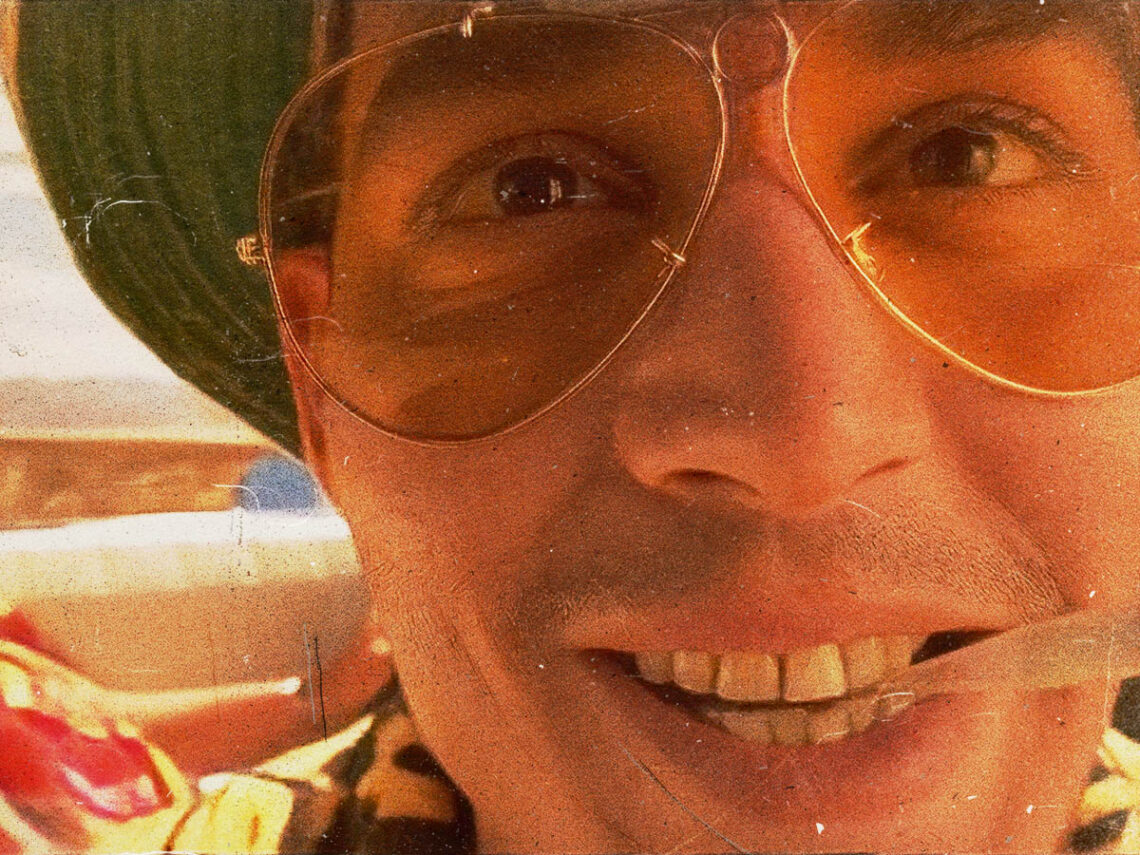
“Most important”: Terry Gilliam’s favourite scene from ‘Fear and Loathing in Las Vegas’

After decades of living in production hell, under the presumption that it was simply too difficult to adapt the voice and hallucinogenic style of Hunter S Thompson to any other medium, a film adaptation of Fear and Loathing in Las Vegas was finally made in the late 1990s. After being attempted by a plethora of directors including Martin Scorsese and Oliver Stone, it was eventually captured in the appropriately surreal style of Terry Gilliam.
Gilliam was brought on board after the previous director, Alex Cox, had been kicked off the production due to problems with his script. Cox had apparently cut whole sections of the book from the script and suggested animating the iconic ‘Great Wave’ speech, which Hunter was unequivocally not a fan of. So on came Gilliam, who had to re-write the entire script in ten days. The result is a zany, gritty and surreal adaptation that stays true to the source material in ways that seemed impossible.
There is much of the craziness to admire, including plenty of practical effects that allow the whole film to feel like one long drug trip, but it’s a much simpler, more subtle scene that Gilliam remains most proud of. The scene in question takes place at the North Star Cafe, where Ellen Barkin plays an overworked waitress. Raoul Duke – a thinly veiled cover for Hunter S Thompson – is attempting to eat and write his article when his unhinged associate, Dr Gonzo, ends up threatening the waitress with a knife.
While it might be one of the quieter scenes, in many ways, it acts as the moral centre of the film. Up until this point, Duke and Gonzo are essentially just two rebellious children mocking the system. But upon Gonzo’s threatening, Duke is forced to confront their beastliness. As Gilliam explains it, “Hunter is forced to make a moral choice after Gonzo crosses the line with the phone and the knife. Despite all the outrageous things they had been doing up to that point, they had never been that threatening.”
Without this scene, the film could be accused of glamorising the behaviour of the characters and their sheer lack of regard for others. It would be a completely gratuitous romp. And yet, if Gilliam hadn’t rewritten the script, it might have been completely left out of the film. “In all the versions of all the scripts I had been sent over the years, which I always said no to, they never kept that scene from the book,” he commented. “It is one of the most important.”
Gilliam seemed resentful of the tendency for the action of the film to be glamorised in general, “I also realised there were moral choices to be made in this story. You can’t just have two guys rampaging about Vegas with no shame. And then the trailer came along and presented: ‘two wild guys having a wacky drug weekend’. I thought; ‘you fucking fuckers!’” So, for the filmmaker, the North Star Cafe scene is still the most important because it acts as a counterbalance to the unhinged exploits in the rest of the film.
He also believes it was this scene that allowed Johnny Depp’s handle of the character to come to the fore, “Through that scene came the value of Johnny knowing Hunter so well. Why nobody wanted to do that is odd because it’s an important moment.”
The idiosyncrasies of the character are so deftly handled that the audience can understand Hunter’s choice to set his plate ever so quietly back on the counter with a swift apologetic look before leaving, which is his way of apologising to the waitress. It allows the audience to understand the differences between the two main characters despite the messiness of their drug-filled antics.
