


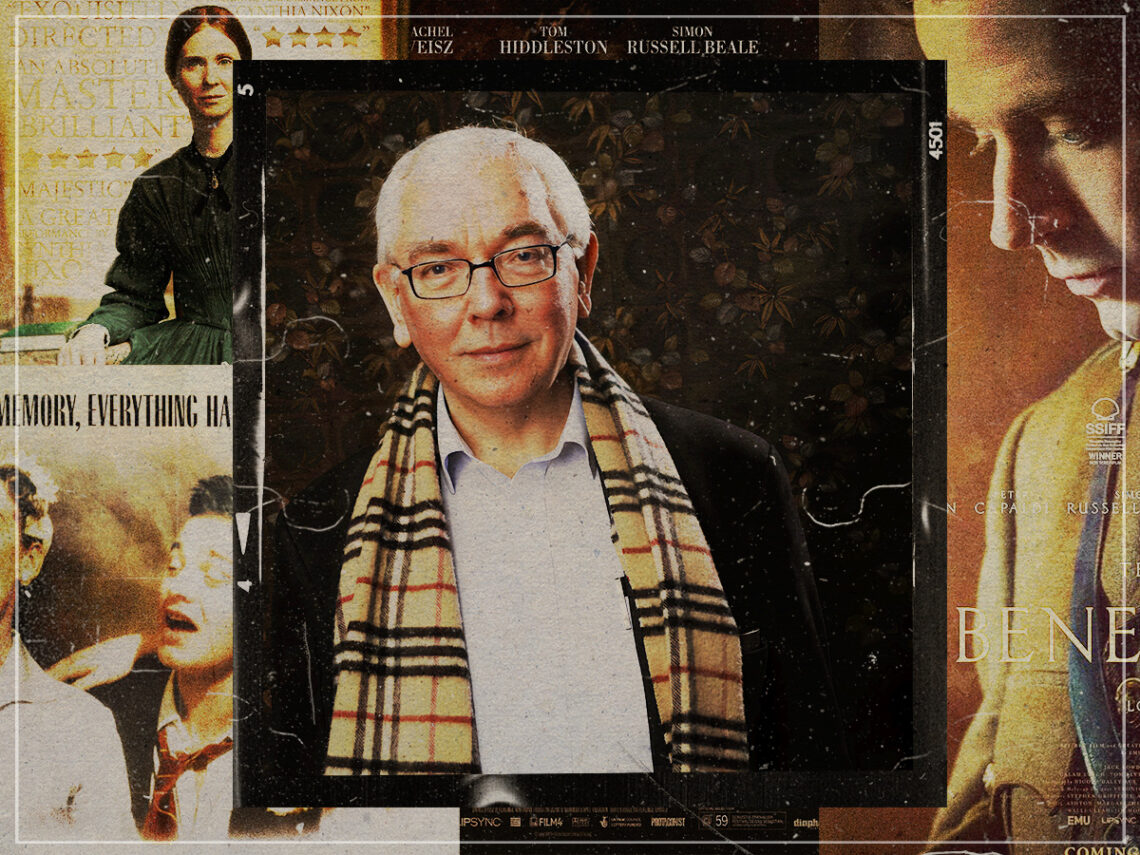
Celebrating Terence Davies: The dreaming man of British film

The loss of film director Terence Davies on Saturday, October 7th, manifests as an abyss in British cinema, pulling a legacy of films that have played between the dichotomies of visceral realism and poetic melancholia. Davies’ lens, often veering into the introspective landscapes of his own life, rendered on screens a world where personal histories intertwine with broader socio-cultural narratives, eliciting a timeless resonance that transcends beyond the immediacy of the scenes depicted.
Born in Liverpool in 1945, Davies, the youngest of ten children, lived through the post-war tapestry of Britain, an era that eventually seeped poignantly into his works. His films, while narrating stories of families, love, loss, and identity, also subtly craft a portrait of a nation navigating the rubbles of war, modernity, and socio-cultural shifts.
From his initial semi-autobiographical trilogy, Children, Madonna and Child, and Death and Transfiguration, to the evocative fragments in The Long Day Closes, Davies moulded celluloid to speak the language of nostalgic pain and joy, of memories that linger amidst the evolving architectures of cities and societies.
Navigating through his oeuvre, one is gently pulled into worlds where each frame is meticulously crafted to mirror the immediate story being told and reflect an emotional and cultural era that no longer exists. In other words, Davies’ films act as emotional time machines, providing his audience with a lens to glance into the rooms of working-class families, their struggles, celebrations, sorrows, and the underlying resilience that often threads through tales of ordinary lives amidst extraordinary historical moments.
A deeply personal filmmaker
The 2000s revealed a director unaffected by the changing millennium or shifting cultural attitudes; his focus would always be on a bygone world. In 2011’s The Deep Blue Sea, Davies brought to life a story set once again amidst the backdrop of 1950s Britain, this time weaving through its story the complexities of forbidden love, societal expectations, and a woman’s quest through her emotional and existential mazes. Like his work from the previous century, it delved into its characters’ psychological and emotional corridors, juxtaposing their internal tumults against the broader social narratives of the era they inhabit.
While masterfully crafting films that spoke universally, Davies never swayed away from his personal narratives and the emotional and social landscapes he journeyed through. His works are drenched in the melancholia and beauty of his own experiences, whether through the intimate portrayal of family life and societal shift in post-war Britain or through explorations of themes close to his heart, like love, loss, and identity. His courageous investigations into his personal life provided viewers with a myriad of ways through which to navigate their own experiences, regardless of geography, while simultaneously being softly guided through a specific history.
His ventures into literary adaptations and historical narratives, such as The House of Mirth in 2000, 2015’s Sunset Song, and A Quiet Passion released the following year, demonstrated his capability to delicately weave through varied thematic landscapes. In this trio, he blended his poetic and singular style into stories that were not originally his own – yet, under his direction, they blossomed into films that echoed the timeless and universal resonance that so beautifully defined his earlier and more personal work.
Davies’ films invited viewers to traverse emotional terrains both profoundly private and universally human. The love, pain, struggles, and moments of fleeting joy experienced by his characters find echoes across global audiences, showcasing a shared humanity that persists amidst diverse socio-cultural and historical contexts. Whether through the memories of his youth or the struggles with his own identity and faith, Davies had an uncanny ability to lay bare the human soul amidst the changing tapestries of time, to mirror in his stories the resilient and fragile aspects of our shared humanity.
Redefining British cinema
Whilst Davies sailed the same seas as other definitive British filmmakers like Ken Loach and Mike Leigh, painting searing portraits of either working-class communities or artistic families, he painted with a more abstract brush, offering audiences a unique cinematic experience that embraced the surreal, the dreamlike, the hazy and the fragmented. Forging a style that would in many ways be inherited and expanded upon by Lynne Ramsay and then re-appropriated and built upon once again by recent BAFTA-winning director Charlotte Wells with Aftersun, he showed that British filmmakers could delve into more abstract and nostalgic territory.
The poetic melancholy of Davies will perennially linger through the corridors of cinematic history long after his passing – whispering tales of humans navigating through the serenity and tumult of their existence, leaving behind an eternal echo that will continue to tell stories of the beautiful, painful, and dreamlike journey of being human.
