


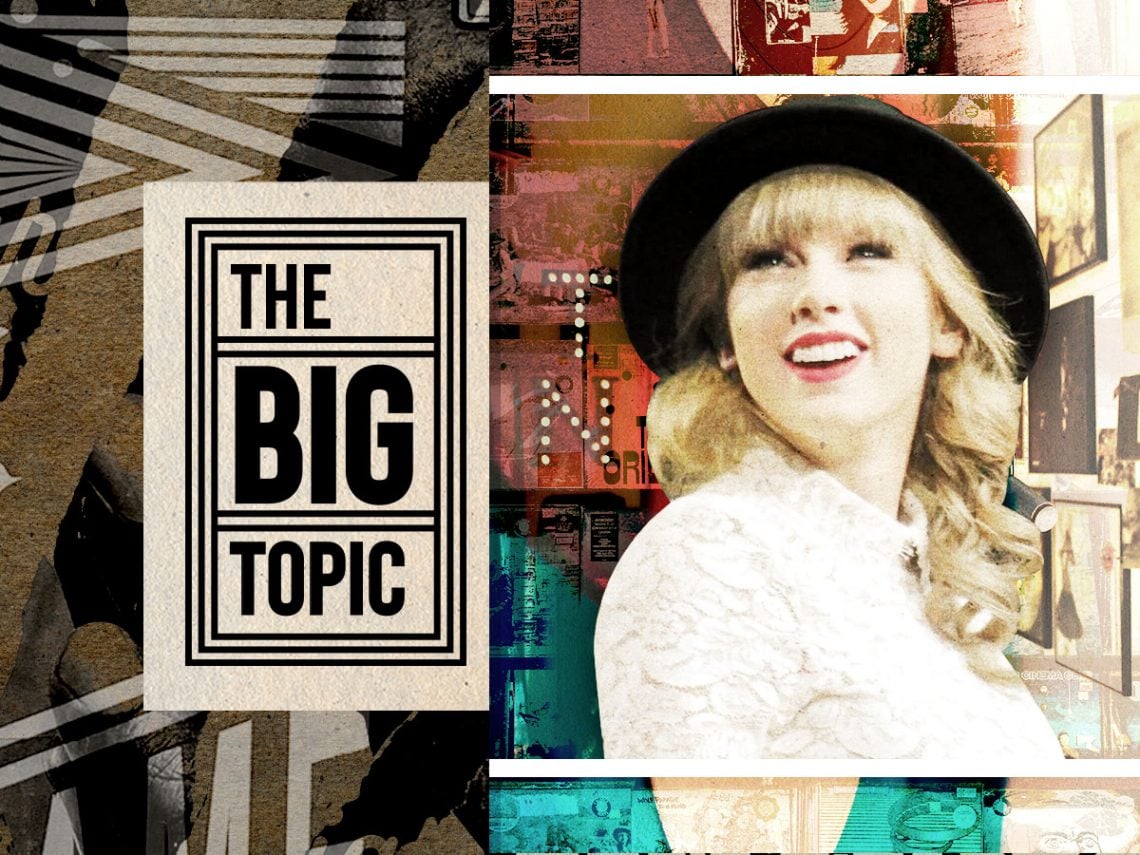
The Big Topic: What Taylor Swift’s chart dominance says about the modern music industry

On October 21st, Taylor Swift launched her new album, Midnights, and has been on a one-woman crusade of the charts in the United States. On Monday, she tweeted, “10 out of 10 of the Hot 100??? On my 10th album??? I AM IN SHAMBLES”. While this is an unprecedented and incredible achievement, it raises broader questions about the music industry.
Swift isn’t the only artist in recent times who has released an album and dominated the chart. In fact, the Official Charts in the United Kingdom changed how they calculate the singles chart following Ed Sheeran’s ÷ in 2017. The album featured 17 tracks, and 16 of the songs managed to finish in the top 20, which was unfair to other artists and led to the Official Charts introducing a new rule that meant only the top three most streamed tracks were eligible for the chart.
There’s no doubt Taylor Swift is currently the most popular artist on the planet, and her recent achievements have cemented her position at the top of the ladder. According to Billboard, she’s now tied with Barbra Streisand for the most number-one albums by a female artist, and Swift is still only 32 years old.
Midnights also holds the record for the highest first week of sales of any album this year. Remarkably, she almost doubled the sales of Harry Styles’ third album, Harry’s House. She also scored first-week streams of 72.5million, which is nearly 20m higher than Styles.
Swift’s dominance of the Billboard 100 is historic for many reasons. Most notably, it marks the first week in history there’s no male artist in the top ten, which shows the power of the Swifties, and the masterful talent of their master. While taking nothing away from the power of Swift and the pull of Midnights, how is any new artist capable of competing? If Taylor was breaking through now and up against an artist of her current stature, Ed Sheeran or Adele, it’s doubtful she’d be able to get heard in the same way.
Ensuring the music industry creates new stars is why the Official Charts changed their rules following Sheeran’s domination. In a statement, they said the decision was made to ensure “the chart continues to be a showcase for the new hits and talent which are the lifeblood of UK music.” It was a necessary move to make sure the charts are not solely dominated by a handful of artists who pass around the number-one like a joint. For example, ‘As It Was’ by Harry Styles has spent 15 weeks at number one in the US this year and ten weeks atop the UK chart.
Despite everybody having the option of streaming every song ever released, the charts are becoming more cornered than ever before, but instead, the algorithm is weighted to a select few. Again, this is no fault of the artists benefitting from the system, but there is something gross about how unjust it is for most artists.
Over the last decade, a divine lack of new superstars has been created, and it’s a worrying state of affairs. Swift is solely the most recent example of an artist commanding a whole chart, but last year, Drake had nine tracks from Certified Lover Boy occupy the top ten, which proves this is a trend rather than a one-off event.
Although the ruling was changed in the UK to help new artists, it hasn’t democratised the music industry, even if it looks fairer on paper. The way Taylor Swift and Drake have made the chart a ranking system for their latest work is a fair representation of their dominance and the current state of the hit parade.
If changes were implemented to the weighting of the chart, it wouldn’t be an accurate depiction of people’s current listening habits. Furthermore, it won’t genuinely help new artists break into the major leagues or pay their bills. In the near future, chart hauls like Swift’s will become the norm every few months when one of these A-list artists releases a new album, and it’s visual proof of their monopolisation of the market.
