


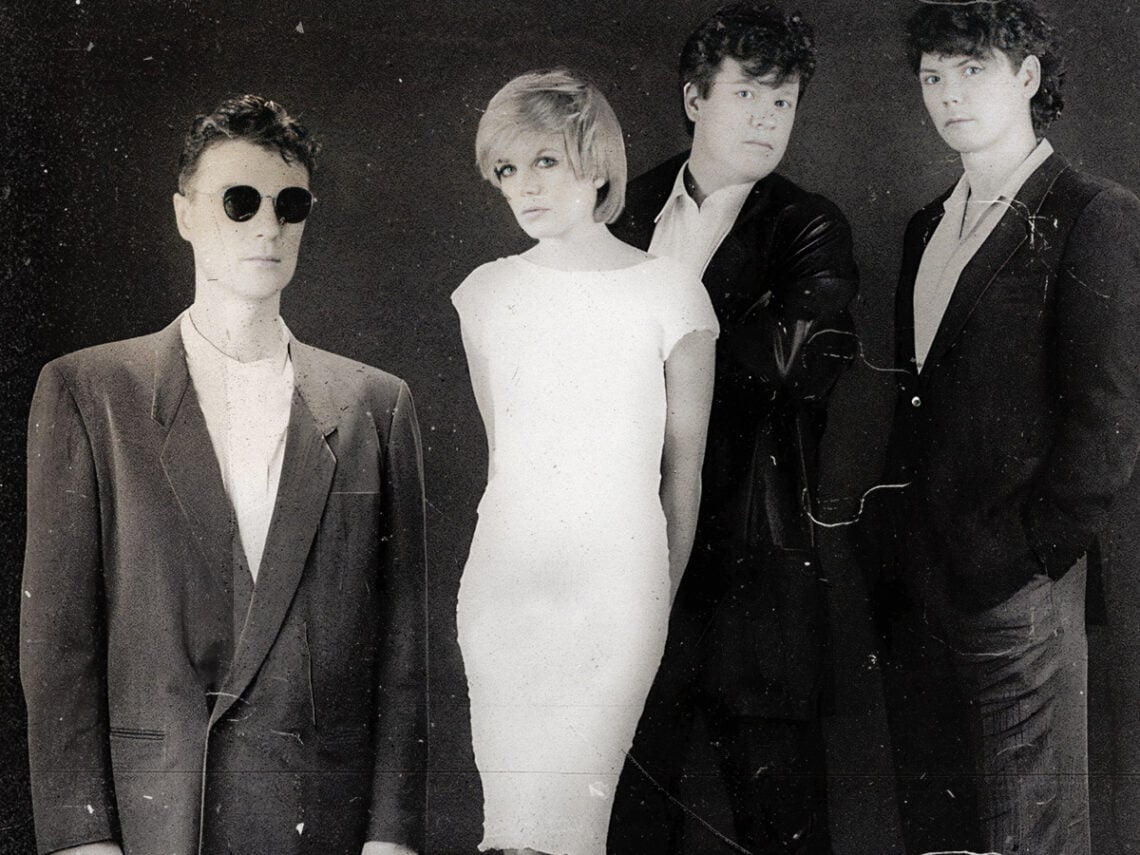
The Talking Heads song inspired by radical evangelists

David Byrne had his fair share of preoccupations. The Talking Heads leader occasionally got his hand’s around a solid love song, but by and large, the band’s material focused on the banalities of life, including paper, food, drugs, and murderers. Byrne’s interests weren’t so much in expressing emotion as they were in interrogating the human condition, which often pushed his stranger observations into downright obsessions.
“I think I write different things now than I did then, in the past,” Byrne said in 2015. “Occasionally, I’ll find bits of paper with old lyrics on, and some of them are still useful – useful because I look at them and I go, ‘I’d never write that today.'”
While contemplating the rise of televangelists and manic preachers in the late 1970s and early 1980s, Byrne became fascinated by the gesticulations and movements of these personalities. Bryne recognised a certain performer’s quality that he, as a performer himself, was interested in. The results would become transformed once Byrne managed to fit a song narrative around those fragmented bursts of creativity.
“Most of the words in ‘Once in a Lifetime’ come from evangelists I recorded off the radio while taking notes and picking up phrases I thought were interesting directions,” Byrne told Time Out. “Maybe I’m fascinated with the middle class because it seems so different from my life, so distant from what I do. I can’t imagine living like that.”
“We’re largely unconscious,” he also told NPR. “You know, we operate half awake or on autopilot and end up, whatever, with a house and family and job and everything else, and we haven’t really stopped to ask ourselves, ‘How did I get here?'”
To double down on the song’s themes of physicality and disjointedness, Byrne sought to replicate that movement for the song’s video. In order to do so, he tapped someone who was having a pop star moment of her own – ‘Mickey’ singer Toni Basil, whose long career as a professional choreographer got her in cahoots with the Talking Heads.
“He [Byrne] wanted to research movement, but he wanted to research movement more as an actor, as does David Bowie, as does Mick Jagger,” Basil explained in the book MTV Ruled the World. “They come to movement in another way, not as a trained dancer. Or not really interested in dance steps. He wanted to research people in trances – different trances in church and different trances with snakes. So we went over to UCLA and USC, and we viewed a lot of footage of documentaries on that subject. And then he took the ideas, and he ‘physicalised’ the ideas from these documentary-style films.”
“When I was making videos – whether it was with Devo, David Byrne, or whoever – there wasn’t record companies breathing down anybody’s neck, telling them what to do, what the video should look like,” Basil adds. “There was no paranoid A&R guy, no crazy dresser that would come in and decide what people should be wearing, and put them in shoes that they can’t walk in, everybody with their own agenda. We were all on our own.”
Check out the video for ‘Once in a Lifetime’ down below.
