


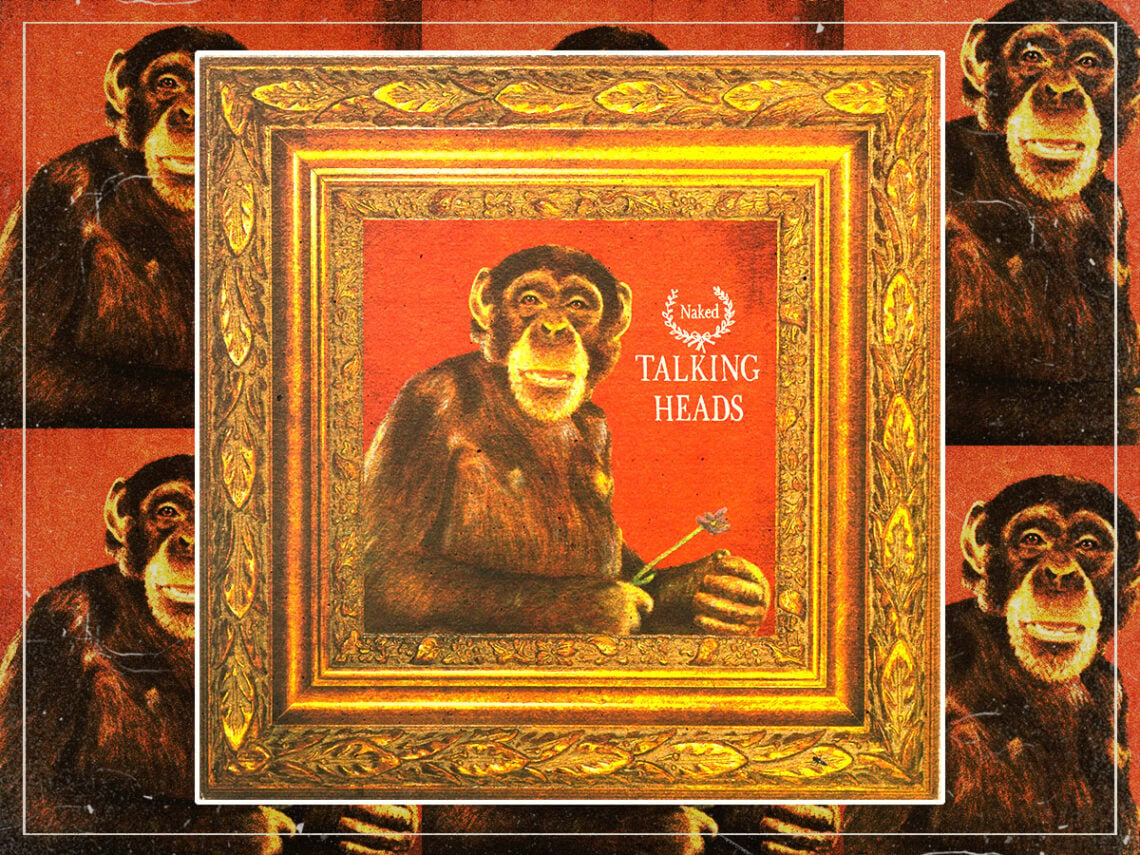
Talking Heads – ‘Naked’

After the success of the eclectic and experimental Speaking in Tongues in 1983, Talking Heads found themselves in a sonic rut. After conquering new wave with their debut, experimenting with minimalism on Fear of Music, and now successfully expanding into funk, it seemed that they weren’t quite sure where to go next. As a result, Little Creatures and True Stories seemed to represent a return to their trusted roots.
In 1988, Talking Heads seemed to regain their sense of adventure. During a trip to Paris, the band had expanded their open approach to musical collaboration and found themselves jamming with the likes of Johnny Marr and Kirsty MacColl. This was partially in response to then-President Ronald Reagan’s isolationist foreign policy. Between their newfound partnerships and a renewed desire for rebellion, they created Naked.
Their eighth and final studio record abandoned the angular sounds of post-punk in favour of an arty amalgamation. Inspired by bouncy Afrobeat and funk, the record took the sonic experimentation of Remain in Light and Speaking In Tongues to new levels. According to Jerry Harrison in the 2005 reissue, the album marked “an attempt to return to the recording techniques” of those albums with “layered, polyrhythmic tracks that interacted with each other to create moving textures as well as melodies and rhythms.”
Movement is certainly at the centre of the album. Opening with ‘Blind’, the record is instantly flowing and free. Over funky percussion and dramatic horns, David Byrne’s exaggerated vocals sing, “No sense of harmony, no sense of time”. His improvised lyrics seem to reflect the political rebellion that drove the album’s sound.
The second single from the record, ‘(Nothing but) Flowers’, remains the highlight of Naked. Comprising two of the record’s most noteworthy collaborators in MacColl and Marr, the song opens with the picturesque imagery of the Garden of Eden – the birds in the trees, waterfalls, and lovers. Sonically, it’s just as picturesque. Shaking sounds and joyous strums reflect the overgrowth of nature. Byrne sings – “There was a shopping mall, now it’s all covered with flowers”.
In a form of green-fingered protest, Byrne imagines a world with the opposite problem to our own – nature is taking over industrial landscapes. In playful lines like “If this is paradise, I wish I had a lawn mower” and “I miss the honky tonks, Dairy Queens, and 7-Elevens”, the song triumphs as a light-hearted, danceable commentary on the state of the world.
‘Totally Nude’ is equally optimistic and summery, but this time, Byrne uses natural imagery to bring humanity back to its roots – “We don’t need clothes, and we don’t need money”. ‘Cool Water’, on the other hand, takes their sonic experimentation into darker territory, with echoey finger-picking and droning vocals. Byrne charts the relentless monotony of modern life, declaring, “Work, work, work, till his life is done”.
Between the jubilant imagery of a nature-filled world in ‘(Nothing but) Flowers’ and the album’s more hard-hitting political criticism, Naked infuses its lyrics with just as much experimentation and rebellion as its instrumentation. Despite its commitment to melodic optimism, funk, and groove, the album didn’t quite hit the mark with audiences and failed to obtain the success or legacy of the band’s earlier work. Neither did it hit the mark for the band, it seems. Their lust for sonic experimentation quickly dissipated as they went on hiatus shortly after. Nonetheless, Naked remains an interesting record to revisit as our last glimpse at Talking Heads, for now.
