


‘Next Goal Wins’ movie review: an endearing format falls flat

Everyone loves an underdog, and it’s a sentiment that’s been richly exploited in a slew of sports films. Most cinemagoers also like to know that the movie they’re about to see is based on actual events. Yet even armed with these two ingredients to ensure surefire success, Next Goal Wins by acclaimed director Taika Waititi misses the target. Based on an irresistible story of complete failure – namely, the American Samoa football team losing 31 – 0 to Australia in the worst loss in World Cup history – and Dutch-American Thomas Rongen being sent to coach them in a hail mary attempt to qualify for the tournament, it’s a clear contender for the underdog canon.
But the film’s primary issue is that it is too self-aware of its place in this sub-genre of emotional triumph. To assure the audience they know that, a laundry list of similar films are referenced: Any Given Sunday, The Karate Kid, and then some with no tangible links at all; Michael Fassbender’s coach Rongen delivers lines from Taken and Dolly Parton’s ‘9 to 5’ theme rings out over an uplifting montage. As it happens, Parton’s no-nonsense southern attitude might’ve made her a smarter casting choice than Fassbender.
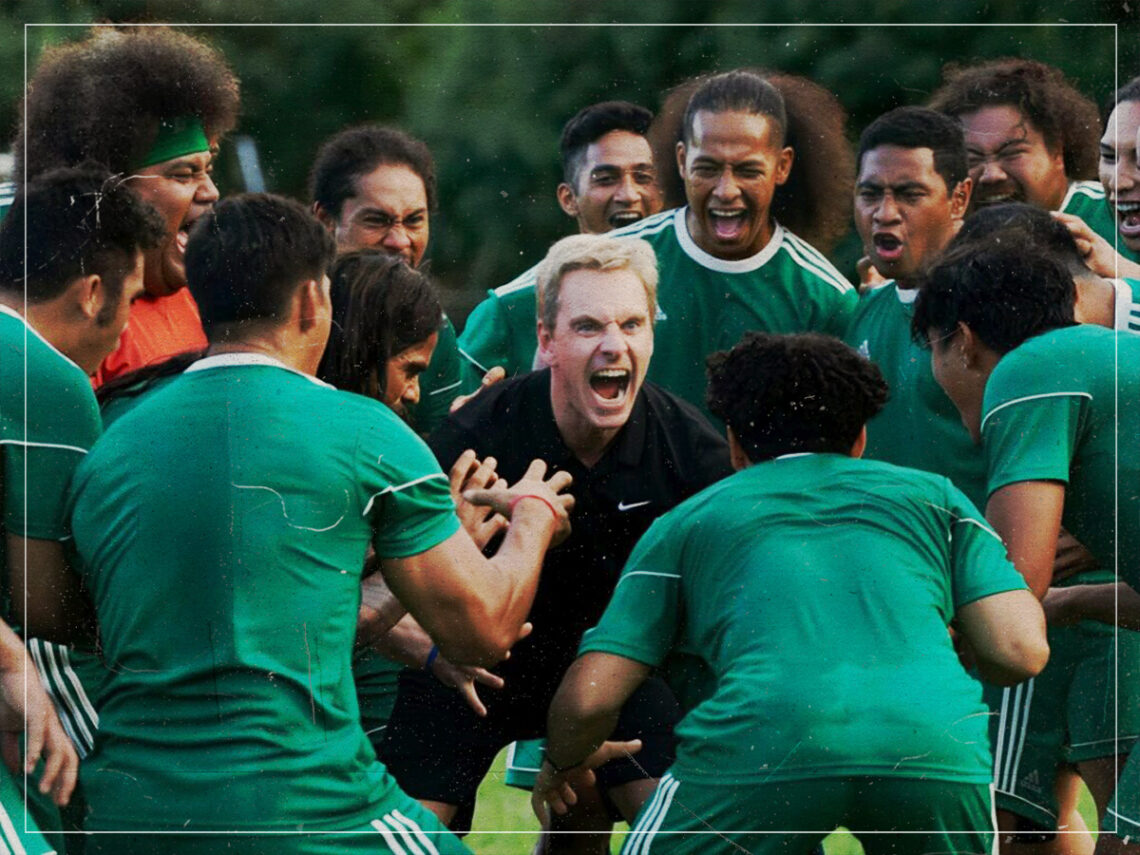
Having claimed to have wanted to make a comedy for years, Fassbender’s performance is curious, to put it kindly. He tries to settle into his angry, alcoholic character plays, and it’s not for lack of heart, but he never entirely manages to look comfortable in the role. After prepping by watching footage of Jurgen Klopp’s outbursts, you see him move through the motions of slapstick anger; chairs are thrown, and players are screamed at, but it’s hollow.
Even in broodier moments when he should be more at home, it’s all so formulaic that it doesn’t work. Likewise, interactions with ex-wife Gail, played by Elisabeth Moss, are stilted. Both of them seem a bizarre choice for such an intentionally uplifting film. That said, he has one moment of genuine villainy that stings.
One of his best players, Jaiaya, is a pre-op trans female. Her teammates dutifully explain she is a Fa’afafine, the Samoan term for people who identify as non-binary and have a fluid relationship to gender. Although, despite being warned not to call her by her dead name, in a heated moment, he does, and it’s genuinely shocking, but the sting is not sustained, and soon enough, he returns to cartoonish freakouts.
Jaiaya, played by the sensational non-binary actor Kaimana, carries the film’s most compelling moments. Gender dysphoria and a lack of belonging are tackled with surprising sensitivity, but it doesn’t stop Jaiaya from being used as a vehicle to make the reluctant coach care. The idea of him bounding in as a white saviour is jokingly referenced; other islanders feed him made-up whimsical sayings that he later adopts, but that’s the extent to which the topic is broached.
There’s no spoiler warning necessary because the nature of the underdog trope ruins it for you. But the build-up to its final moments is both too calculated and too self-conscious to dive into the genre entirely. It’s almost inconsequential that most characters get lost in the shuffle because Kaimana’s Jaiaya outshines them all. Like other players, her story is based on actual events, with Jaiyah Saelua being the first openly non-binary and trans woman to compete in a World Cup qualifier. It’s frustrating that such a compelling story is used only to elevate a dull redemption arc.
Next Goal Wins clumsily tackles a moving tale, condemning itself to endless puns about missed goals that are as on the nose as its narrative.
