


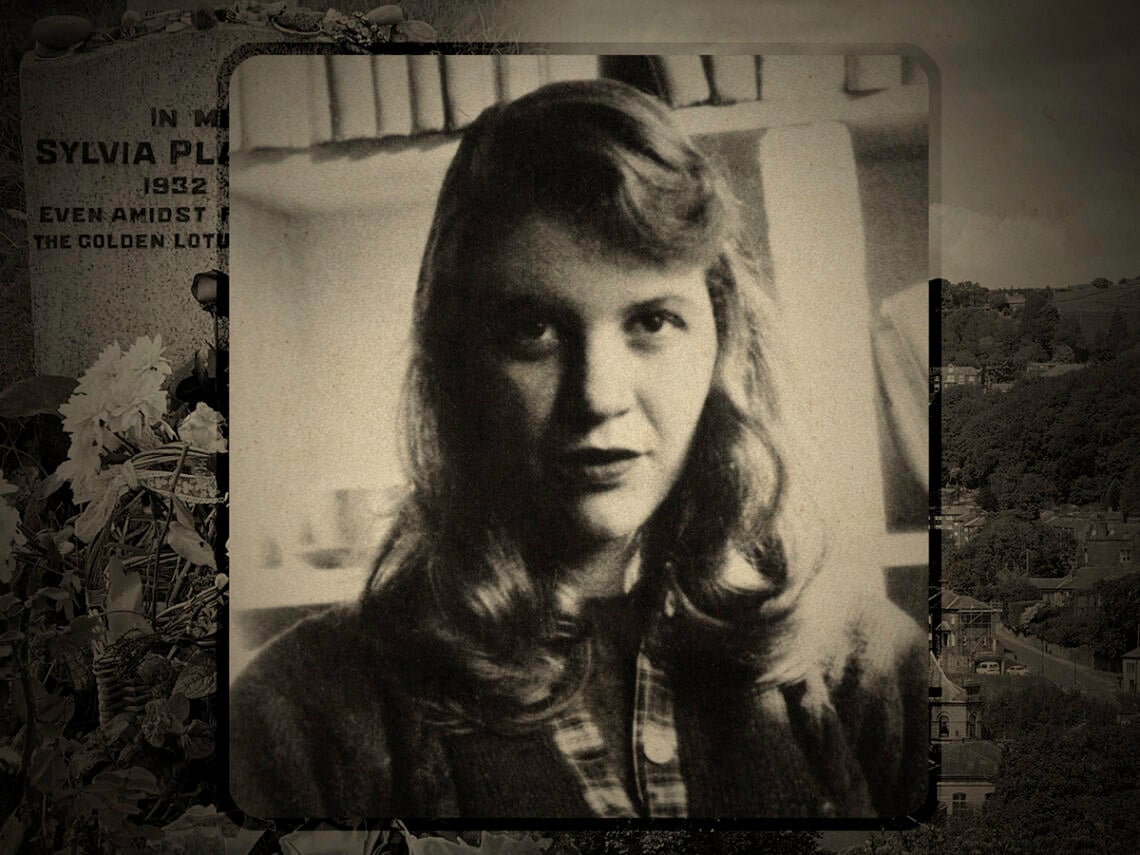
Paying tribute to Sylvia Plath: how did an American literary icon end up buried in West Yorkshire?

At the top of a steep climb from the picturesque town of Hebden Bridge in West Yorkshire is a quiet village that makes everything feel like it’s come to a standstill – whether you take on the pretty arduous walk up to Heptonstall or hop on the rickety minibus, what you’ll find when you arrive is complete silence.
The first time I ever visited Heptonstall, it was a cold day in March a few years back, and I’d spent several hours vintage shopping in Hebden Bridge before making the ascent up to the village. I was going up there for one reason – to visit the grave of Sylvia Plath. Born in Massachusetts in 1932, Plath lived a rather short life as a writer, publishing a handful of poetry collections, short stories, and just one novel, The Bell Jar.
It’s one of the greatest American novels ever written, a searing exploration of depression and the utter destruction of the so-called ‘American Dream’. Plath largely based the story of Esther, a budding writer who spends a summer in New York as an intern for a ladies’ magazine, on her own life. Here, her mental health rapidly deteriorates as she reckons with the futility and cruelty of life, her depression taking hold and resulting in various suicide attempts and electroconvulsive therapy.
The Bell Jar drew heavily upon Plath’s time in New York interning for Mademoiselle, which saw her experience many similar mental struggles that are explored in the novel. The line between Esther and Sylvia blurs, and this makes such a heartbreaking tale even more hard to read. Plath isn’t fabricating anything… instead, she’s offering a window into her own complicated psyche, which she was constantly at war with.

Plath felt passionately and deeply, becoming obsessed with various writers to the point of lingering around their hotels in the hope of meeting them, as was the case with Dylan Thomas. She never did meet him. Yet, when she heard that the successful Ted Hughes, a Yorkshire-born poet, was going to be in attendance at a party, she went with the sole aim of meeting him. That same year, they married.
So, that’s how Plath formed an unlikely connection to West Yorkshire, frequently visiting Hughes’ family there, who lived in Mytholmroyd – their marriage was one of great difficulty, though, with Plath accusing Hughes of physical abuse in letters to her psychiatrist. They had an intense relationship, and he was ultimately unfaithful, leading to their separation in 1962.
Plath wanted to be free; she suffered miscarriages, suicide attempts, and an incredibly unhappy marriage – why then did Hughes have her buried in West Yorkshire, far away from her hometown… Heptonstall had no real connection to Plath, but she resides in the village’s St Thomas à Becket graveyard, forever tied to the family lineage of her abusive husband, rather than her own.
I remember getting off the bus on that cold afternoon, and, like magic, snow began to fall. I looked around, and there in front of me were large patches of glistening white… down in Hebden, which I’d been in just five minutes prior, I’d not seen any snow. It was like stepping into Narnia. There was a perfect stillness, a quiet atmosphere of calm pervading over the village, which provided the perfect backdrop for a pilgrimage of remembrance.
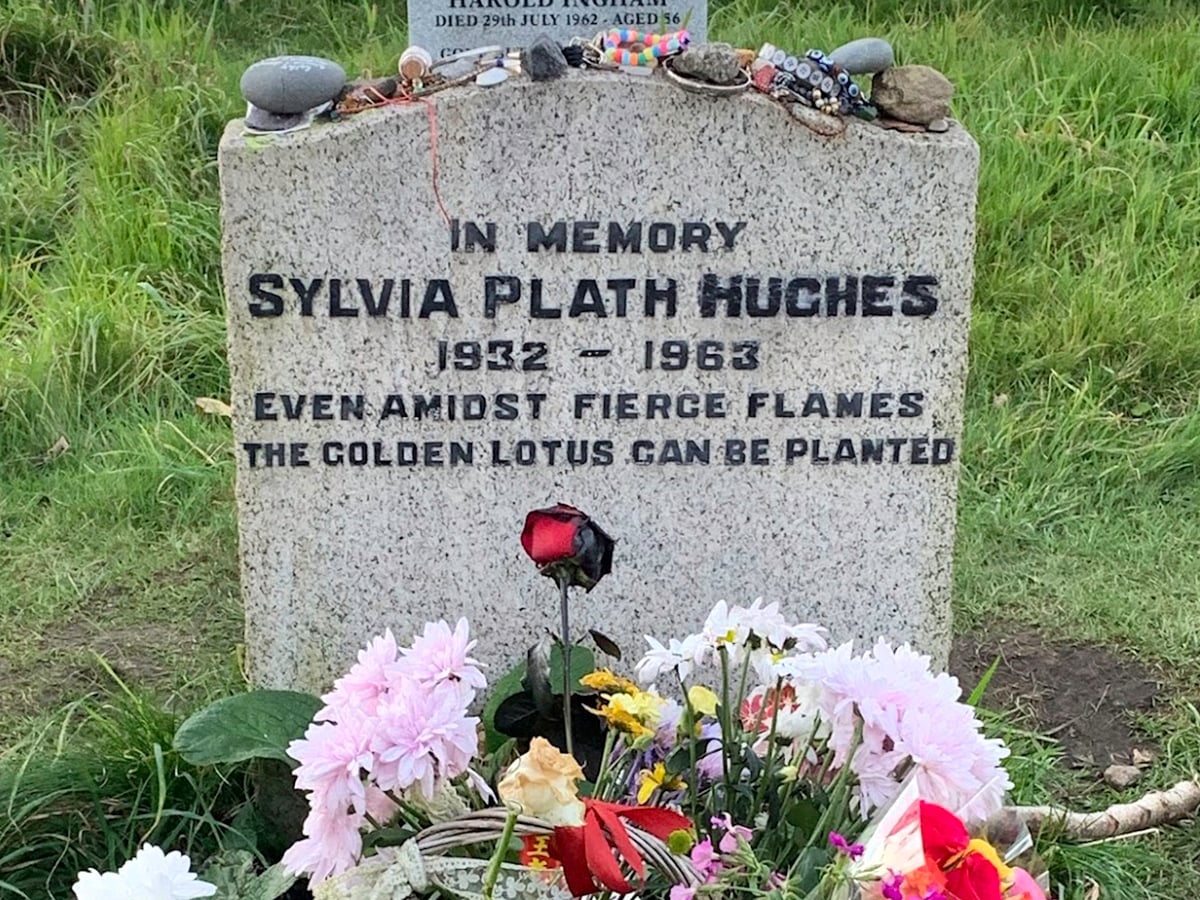
I had to search for the grave, but then I saw it, covered in a thick sheet of snow but with enough flowers poking out to tell it was hers. Getting closer, I saw the words ‘Sylvia Plath Hughes’. A few months later, I returned to show my mum, and this time, ‘Hughes’ had been scratched at. Returning in the winter, I now saw it fully unreadable, with flowers, crystals, and pens covering the grave in celebration, the erasure of ‘Hughes’ a sign of protest.
Whenever I get the chance, I visit her grave, partly to watch it change. Sometimes ‘Hughes’ is scratched out, sometimes it’s restored. Sometimes there are fresh bouquets of flowers and odd trinkets – like lipsticks or bracelets – and other times it looks a little more sparse, with just a few dying flowers resting upon it. It’s a record, anyhow, of people’s continuous appreciation for a woman who was treated so unfairly in both life and death.
Plath never got to see just how successful she’d become, with The Bell Jar’s publication coming just one month before her suicide at the age of 30. Ariel, her most cherished volume of poetry, wasn’t released until two years after her death, yet now it stands as one of the most celebrated collections of poems ever published.
The poet never lived in Yorkshire; rather, much of her literary success would be discovered in Massachusetts, New York, and London – all places that she lived as she dedicated herself to becoming a great writer, yet it’s here that she was laid to rest by the tyrant who contributed to her demise – at least it’s a peaceful spot, one that feels like it exists in its own gentle bubble, away from pain and suffering. There is just quiet.
