


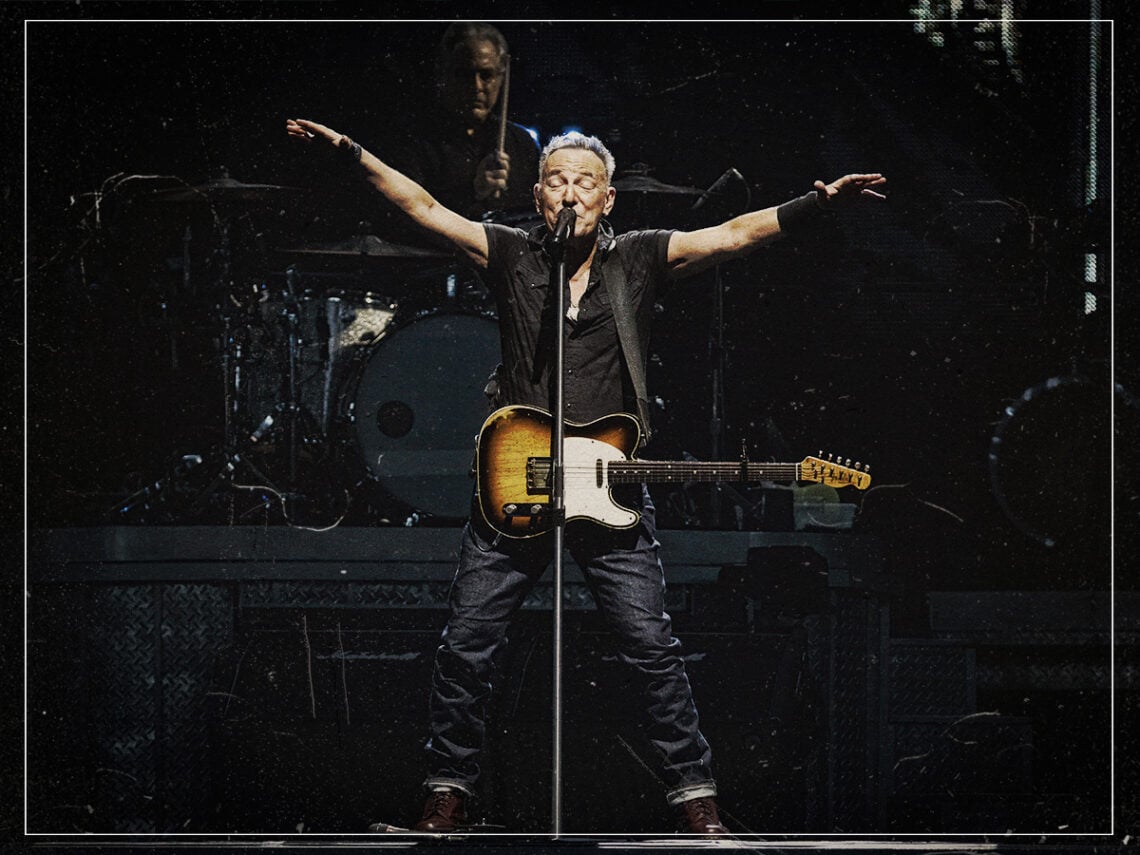
How a need to survive spawned Bruce Springsteen’s live presence

Over half a century has passed since a young Bruce Springsteen picked up his first guitar and began playing small-town gigs in Freehold. In the six decades since then, the instrument has barely left his side, and Springsteen’s love for live performance has only heightened. He’s 74 years old, but he still approaches every single show with the excitement and enthusiasm of a kid just starting out in the industry.
As a result, The Boss has amassed a real reputation for his live presence. Fans still flock to stadiums and arenas to catch the singer and the legendary E Street Band live, desperate to hear their heartland hits first-hand. Each and every time Springsteen takes to the stage, he shows off an ability to completely capture an audience, to keep them firmly in the palm of his hand even when his sets run on for hours on end.
It’s a skill that Springsteen has honed through years of continuous touring, but it’s one that was first born out of necessity. Getting the audience involved and invested was always a focus of his artistry, but not by choice. When he was first starting out, playing with Steel Mill in the late 1960s, they had no physical media to their name, so they relied on the strength of their live set.
“You have to understand that you lived and died by your ability to perform,” Springsteen explained during a conversation with Billboard, “You had no records. To draw 1,000-2,000 people with no album, which is what we did in the late ‘60s, you had to have a thrilling live show.” Along with his bandmates, Springsteen focused on honing this element of their band, enduring that audiences stuck around for their show.
This focus didn’t only direct the band’s approach to gigs; it also informed the way they wrote songs. The Boss cited ‘Rosalita’ and ‘Thundercrack’ as examples of tunes that were penned with performance in mind, songs he described as “almost prog-rock things that I did coming out of Steel Mill.”
“If you heard ‘Rosalita’ or ‘Kitty’s Back’ live and had never heard the record, they still worked.” he asserted, “You had to have live performance to survive.”
This fervour for gigging has continued to drive Springsteen’s approach to music ever since, both in his approach to writing and to live performance. His songs are tailored towards energised live shows, while each choice he makes in his production and stage presence looks to drive audience enjoyment. He has records to his name now, but he still looks to prioritise that more immediate experience.
The music industry has changed markedly since Springsteen began playing local shows, but his methods still work in the current climate. New bands have the opportunity to put out records from the comfort of their own home. And yet, some of the most successful guitar and alternative outfits of the last few years have focused on building up a reputation for their live presence first, from Black Midi to The Last Dinner Party.
As new bands build buzz around their live shows and fans continue purchasing tickets to see Springsteen in the flesh, it’s testament to the enduring importance of live music. As the most immediate way to connect with new audiences and with other fans in the audience, it will always be essential to artists, big and small.
