


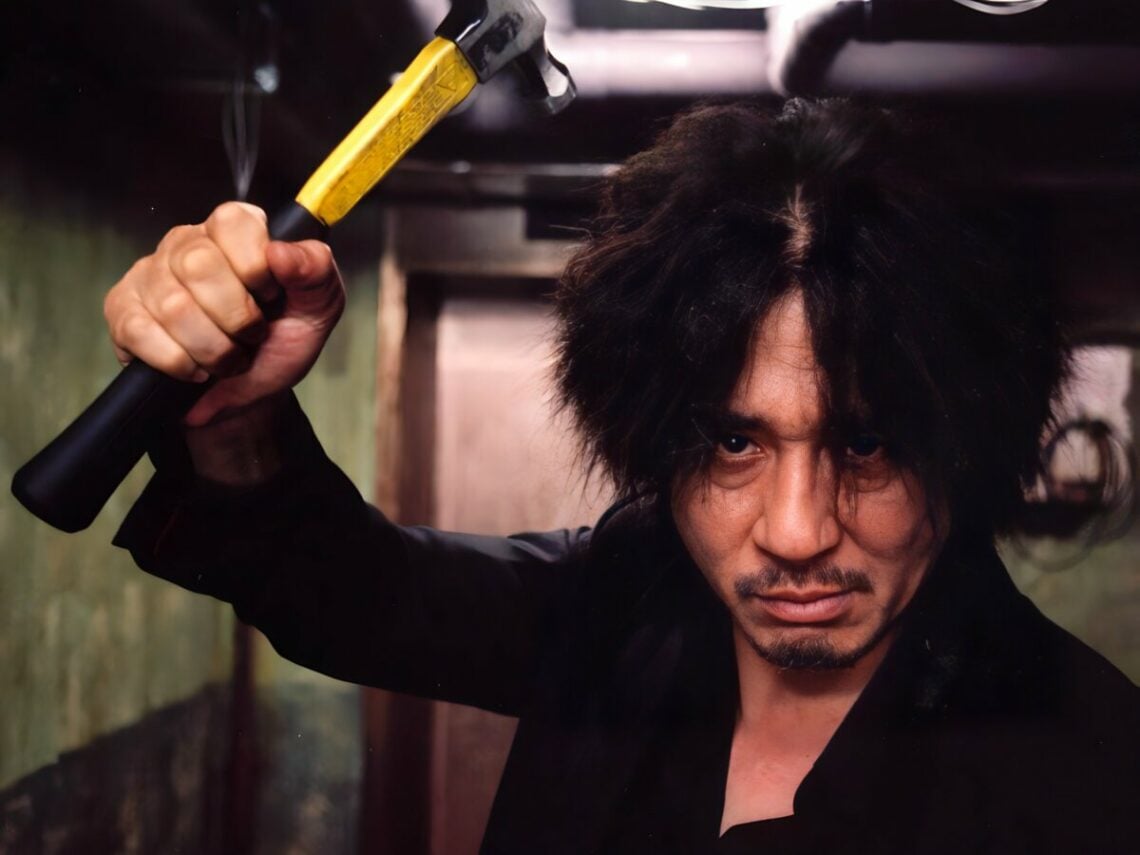
Why the success of ‘Oldboy’ caught Park Chan-wook off-guard

Recounting the plot of Park Chan-wook’s 2003 revenge thriller Oldboy feels like a punishment in its own right. Speaking from personal experience, it’s better to simply say, “You’ll have to watch it for yourself. Just trust me on this one”, and tactfully remove yourself from the room. If this doesn’t work, give the person the superficial version: It’s a story about a guy who is kidnapped and imprisoned for 15 years and then given five days to figure out why. From this bird’s eye view, it all sounds like pretty standard thriller material. Go one step further, however, and you’ll be describing meals of live octopus, the severing of tongues, and, of course, incest.
Based on the more detailed description of the film, it’s hardly any wonder that its director wasn’t expecting it to be an ace in the hole with audiences. “We had a lot of concerns about how the audience would take it,” Park recalled 20 years after the movie’s release. “There are taboo elements in the film, and we were afraid that the audience would be so disgusted by it that they might just walk out of the theatre.”
Despite his fears, however, the director stuck to his guns. “I was younger at the time,” he said. “I had the courage to push forward, regardless of those concerns.”
It’s lucky for moviegoers that he did. When Oldboy debuted at the Cannes Film Festival in 2004, it was met with such adulation that it won the Grand Prix, the second most prestigious honour of the festival. When it made its way to the US in 2008, it was only released in 28 theatres but quickly earned a passionate following due in part to champions like Quentin Tarantino and Spike Lee (the latter of whom tried his hand at a remake in 2013).
At the core of its appeal is the maximalist style that Park brought. Not only does it mix genres at breakneck speed and defy the laws of the traditional Hollywood story arc, but it doesn’t shy away from in-your-face violence. In the hands of a less capable director, it would undoubtedly have been gratuitous, but Park was ready to experiment with a new visual style after the spare revenge thriller that preceded it, and he knew exactly how to make it successful.
“Before Oldboy,” he explained, “I strived for a minimalist style, like when I was making Sympathy for Mr. Vengeance. When I went to make my next film, I wanted to do the exact opposite. As a result, Oldboy was made with excessive visual expression.”
The success of Oldboy helped popularise Korean cinema among global audiences, and it wasn’t long before movies like Bong Joon-ho’s monster movie The Host and Yeon Sang-ho’s zombie thriller Train To Busan became hits.
Following his success with Oldboy, Park completed his so-called Vengeance Trilogy with Lady Vengeance in 2005 and struck gold again with the sensuous and critically-acclaimed The Handmaiden in 2016. Featuring another memorable octopus, The Handmaiden mirrors Oldboy in another respect: a complete disregard for genre conventions. More than any other director, Park is able to use this disregard to constantly surprise the audience instead of simply disorienting and confusing them.
