


‘Strasbourg: 1518’: Jonathan Glazer and the town that danced itself to death

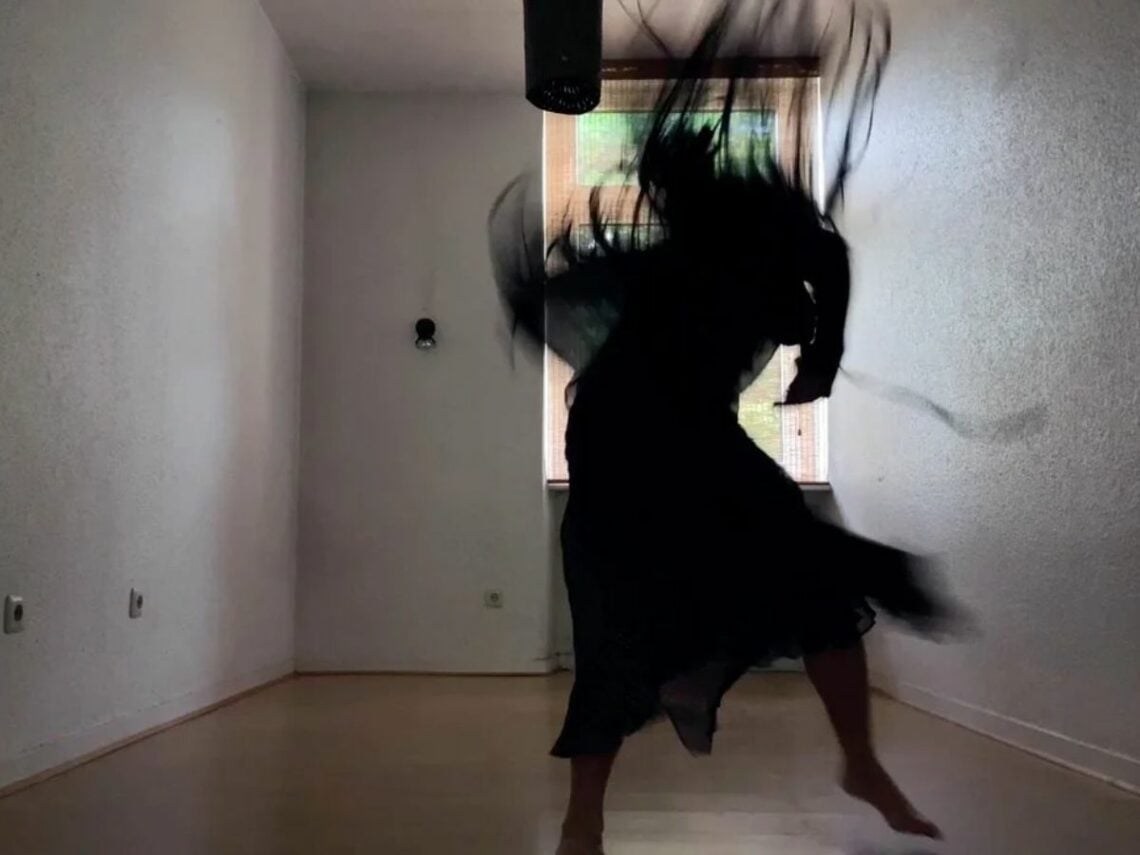
With three-quarters of the world under lockdown, Under The Skin director Jonathan Glazer became fascinated by humanity’s innate restlessness. Strasbourg 1518, his 20-minute experimental short in which dancers from around the world jitter themselves into varying states of mania, was not only reflective of the moment in which it was devised but also tied the Covid-19 pandemic to a long history of pandemic-induced madness.
The springboard for the piece was the “dancing plague” of 1518, in which the inhabitants of Strasbourg in France quite inexplicably decided to dance themselves to death. “What caught my attention was the people of Strasbourg, 500 years ago, dancing in despair,” Glazer told The Guardian. “The connection between them and [choreographer] Pina Bausch saying, centuries later, ‘dance, dance or we are lost’. This all came back to mind as Covid-19 swept the globe.”
The physician Paracelsus tells us that Strasbourg’s frenetic mass rave began when a lone woman walked out of her front door, strolled over to the town square and began to jig. A week later, she was just one of several hundred dancers moving without rhyme or reason. Crowds gathered to watch and were shocked to see some dancers – broiled in the midday sun – collapsing and perishing where they stood.
Mystified and not a little concerned, the town council attempted to uncover the root cause of the contagion. After consulting a local doctor, who put the mania down to a bad case of “overheated blood”, it was decided that the only way of curing the afflicted was to allow them to continue. A stage was constructed in the marketplace, and musicians – pipers, drummers and lutists – were hired to encourage yet more dancing. According to eyewitnesses, the dancers looked as though they were trying to keep their feet from being burnt by some hellish fire crackling below.
With the townspeople dropping like flies, the council concluded that this madness was not man-made but some divine punishment. Enforcing a period of penance, they banned music and dancing and exiled prostitutes, gamblers, and drunkards. The dancers were then led to the shrine of St Vitus (the patron saint of dancers) in the hills above Saverne, where their bruised and bloodied feet were forced into red shoes – a detail Hans Christian Anderson included in his fairytale The Red Shoes. After a week of being led around a wooden statue of the saint, the dancers had come to their senses. The fever had passed.
Glazer’s film taps into a long history of dancing outbreaks, almost all of which occurred in towns and cities along the river Rhine – leading some to conclude that the dancers were high on a species of mould that contaminates damp rye and produces a chemical related to LSD.
Most modern academics believe that the outbreak was a case of mass psychogenic illness (formerly known as mass hysteria). These people were raised in a society in which spirit possession was taken as a matter of fact, and it’s been suggested that the afflicted thought they had been cursed by Saint Vitus. They may have been especially susceptible because of unsettled social conditions, poor harvests and high grain prices. The nature of Glazer’s lockdown project highlights another possible motivation: disease. “You also have a fear of the new disease of syphilis, as well as of the plague,” John Waller writes in A Time to Dance, A Time to Die, “and something called the English sweat, which no one really knows what it was.” Interestingly, the 1518 Strasbourg dancing epidemic was the last of its kind in Europe.
You can watch a clip from Strasbourg: 1518 below.
