


‘Greaser’s Palace’: The strange acid western made by Robert Downey Sr

His son may have outstripped him in terms of fame, fortune, and standing in the industry, but Robert Downey Sr made his own mark on cinema through a string of counterculture films that regularly flirted with absurdity.
The late 1960s and 1970s heralded the dawn of a new era, with a wave of auteurs exercising creative freedom that had never been afforded to directors under the archaic studio system, with Downey revelling in those liberties to craft a series of anti-establishment tales that intentionally laughed in the face of conformity, with many of them becoming cult favourites as a result.
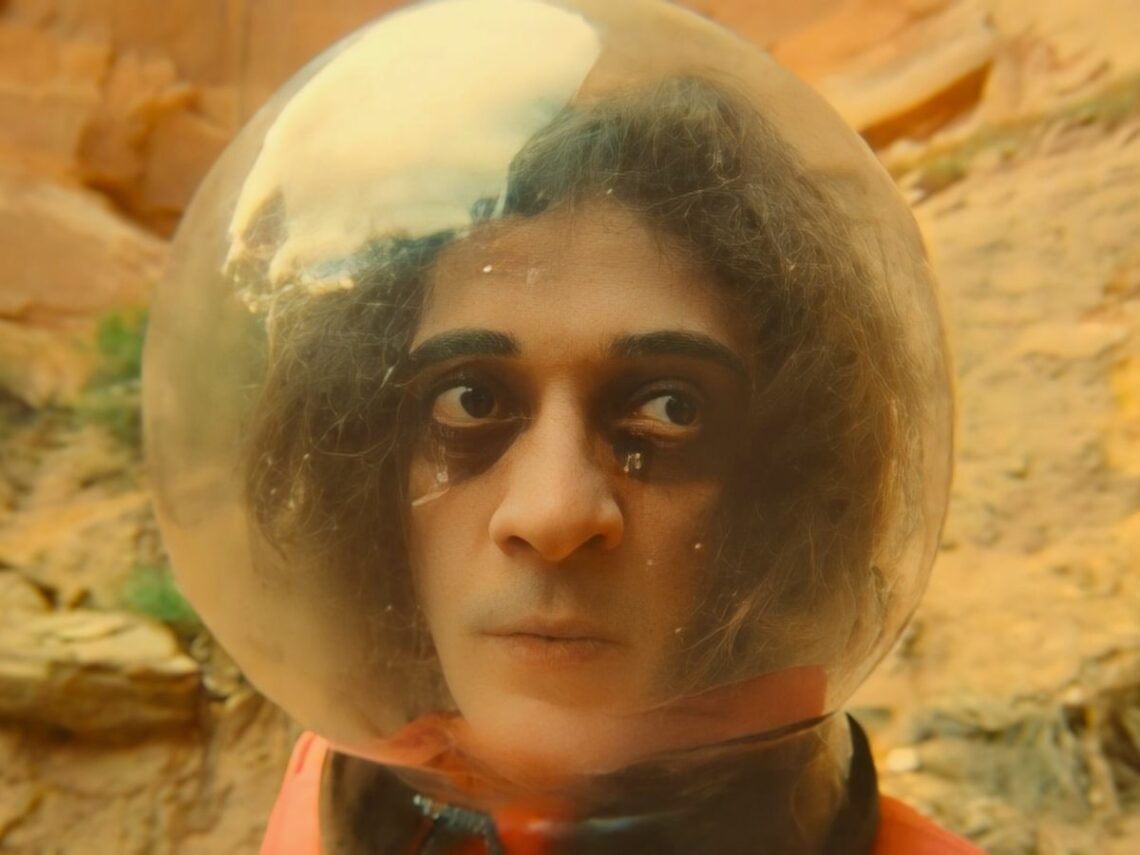
1972’s Greaser’s Palace marked the second on-screen credit of Robert Downey Jr’s career, where he played the pivotal role of ‘Small Boy in Covered Wagon’. Aping the New Testament, the film starred Allan Arbus as Jesse, an amnesiac with a penchant for tap dancing in the Old West who heals the sick, resurrects the dead, and even utilises his dancing prowess while walking on water.
Clearly, subtlety isn’t the strongest point of Greaser’s Palace, although it’s never quite clear what point its director is actually trying to make. Jesse paraglides into town and instantly makes an enemy of Albert Henderson’s Seaweedhead Greaser, a taxation tycoon who keeps both his mother and mariachi band in cages, with a recurring plot point being his issues with constipation.
Jesse informs the locals that he’s on his way to Jerusalem to become a singer, dancer, actor, and all-round showman, but performs the first of his miracles by bringing Seaweedhead’s son back from the dead after he’s murdered by his father for being a homosexual, with the character’s given name quite literally being Lamy ‘Homo’ Greaser.
Seaweedhead’s daughter carries the quaint name of Cholera, but her singing performances aren’t bringing in the crowds like they used to, which gains Jesse a job as a performing act. An act, it should be noted, that concludes through the means of stigmata. He begins a relationship with a woman played by Downey’s wife, Elsie, who ends up having him crucified so she can bring her son – played by Robert – back from the dead, and it’s all very strange.
“If you feel, you heal” is Jesse’s mantra, one that he puts to good use by effectively being Jesus within the context of an acid Western that ambles from one scene to the next with little in the way of coherence. Subversive, satirical, and oftentimes incomprehensible, it’s hard to imagine that such a film could even exist were it not for the aid of hallucinogenic substances.
Somewhere between a parody and critique of Christianity, Greaser’s Palace seems unsure of what it wants to be, leaving the audience in a very similar boat. In the broadest strokes it’s a pseudo-western with a religious bent that’s evocative of counterculture cinema as a whole, which is every bit as off-kilter as it sounds. Few made movies quite like Downey Sr, and this is just one of many examples as to why.
