


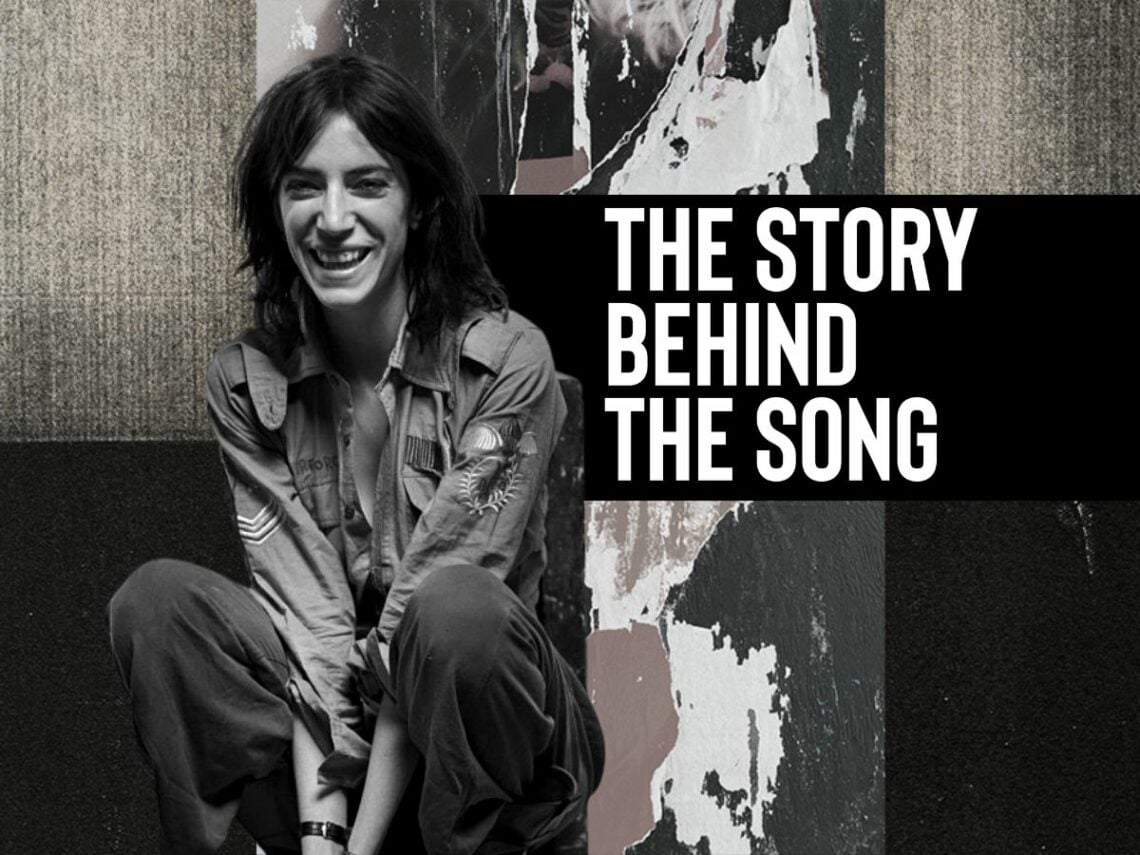
The Story Behind The Song: how Patti Smith created the reggae-inspired ‘Redondo Beach’

In 1975, Patti Smith released one of punk rock’s most influential records: Horses. After moving to New York City in 1967, Smith began writing and performing in underground venues, such as CBGBs and Max’s Kansas City. By 1974, she had released her debut single, ‘Hey Joe/Piss Factory’, which was followed by a two-month residency at CBGBs alongside Television, performing live every weekend.
Soon enough, Smith was ready to record her debut album, with production carried out by The Velvet Underground’s very own John Cale. The artist’s unique blend of spoken word poetry, raw instrumentation, and a distinctively feminine perspective made Smith stand out among her predominantly male contemporaries.
Discussing the work, Smith later told Mojo Magazine: “I was young, but I felt our cultural voice was in jeopardy and needed an infusion of new people and ideas. I didn’t feel like I was the one. I didn’t consider myself a musician in any way, but I was a poet and performer, and I did feel that I understood where we were at, what we’d been given and where we should go, and if I could voice it, perhaps it could inspire the next generation.”
The album took musical cues from avant-garde and experimental influences, often working with minimal chord progressions, leaving much of the emphasis on Smith’s poetry. Lyrically, she divulged themes from her own life and kept the gender of her songs’ protagonists vague and open to interpretation. Poets and authors were as big an influence on the album as musicians were, such as Arthur Rimbaud and Albert Camus. Writing in her memoir, Just Kids, Smith said: “Rimbaud held the keys to a mystical language that I devoured even as I could not fully decipher it”. She took these influences and crafted a unique album that merged literature and music with vivacity, subsequently leaving an indelible mark on the punk scene.
One of the album’s standout tracks is ‘Redondo Beach’, a track which contains lyrics inspired by an incident between Smith and her sister, Linda. In Smith’s lyric book Complete, she explained: “The words for ‘Redondo Beach’ were written in 1971. I was sharing a space near the Chelsea Hotel with Robert [Mapplethorpe] and my sister Linda. One afternoon I had a rare argument with my sister, and she left. She didn’t return, and by nightfall, I was worried. Needing time to think, I took an F train to Coney Island and sat on the littered beach until the sun rose. I came back, wrote the draft and fell asleep. When I awoke, she had returned. I showed her what I had written, and we never quarrelled again.”
The lyrics of ‘Redondo Beach’ take a rather dark turn, with Smith singing about a girl that commits suicide by the sea following an argument. She sings, “Everyone was singing, girl is washed up/ On Redondo Beach and everyone is so sad” and “Pretty little girl everyone cried/ She was the victim of sweet suicide,” painting a picture of her worst fears coming to life. Smith has expressed her closeness with Linda in the past, describing her as “so dear to me” in a video posted to her Substack account.
Smith published the lyrics as a poem entitled ‘Radando Beach’ in her 1972 book, kodak, before turning them into a song for her debut album. Keyboardist Richard Sohl and guitarist Lenny Kaye, members of The Patti Smith Group, helped her to create the reggae-inspired instrumentation. There is a fascinating dichotomy between Smith’s miserable lyrical content and the upbeat sound of the track, propelled by bouncing keys that evoke the feeling of being by the sea.
Many fans have speculated that the song is sung from the perspective of a lesbian, saddened to find out that her girlfriend has died. Smith often introduced the track at live shows by saying, “Redondo Beach is a beach where women love other women,” seemingly encouraging this alternative interpretation. The track takes on many different forms thanks to Smith’s ambiguous writing style. However, at its crux, ‘Redondo Beach’ is a beautiful lament on losing a loved one. She ends the track by singing, “You’ll never return into my arms/’Cause you are gone, gone”.

Never Miss A Beat
The Far Out Punk Newsletter
All the latest Punk content from the independent voice of culture.
Straight to your inbox.